

To protect classic car upholstery from sun and UV damage, reduce direct sunlight, use a properly fitted windshield shade or suitable automotive window film, keep the material clean, and apply only products designed for the specific leather, vinyl, or cloth.
UV protection can slow fading, drying, cracking, and splitting, but it cannot completely stop age-related deterioration or repair upholstery that is already structurally damaged.
The most effective strategy combines reduced exposure, careful cleaning, material-specific protection, and early repair.
How Does Sunlight Damage Classic Car Upholstery?
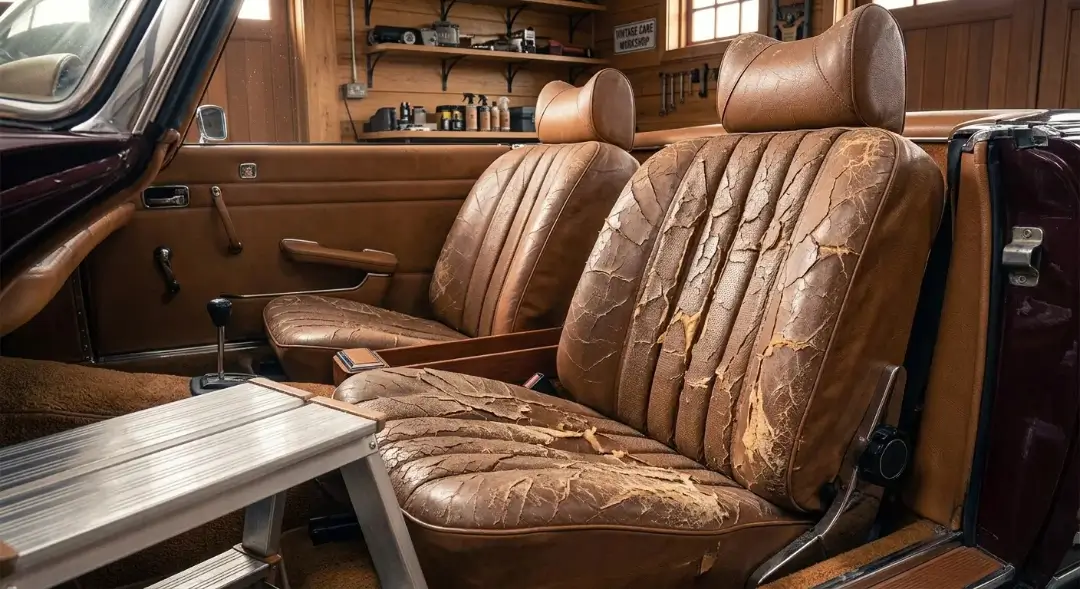
Classic car upholstery is affected by ultraviolet radiation, visible light, solar heat, and repeated temperature changes.
Over time, these conditions may cause:
- Faded or uneven color
- Dry or stiff leather
- Hardened vinyl
- Cracks around bolsters and seams
- Splitting along piping
- Weakened cloth fibers
- Brittle stitching
- Shrinkage around inserts
- Deteriorated backing or adhesives
Sun damage is cumulative.
A vehicle does not need to remain outdoors every day for deterioration to occur. Years of occasional exposure can gradually change the material’s color, flexibility, and strength.
Heat may accelerate the process by repeatedly expanding and contracting upholstery, foam, thread, and adhesives.
However, heat and UV exposure are separate factors, which is why a complete protection plan should address both sunlight and cabin temperature.
Which Areas Usually Deteriorate First?
Sun damage is rarely uniform throughout the cabin.
The most exposed areas often include:
- Upper seat backs
- Outboard seat bolsters
- Headrests
- Door-panel tops
- Package trays
- Convertible rear seats
- Cloth inserts facing the windshield
- Piping near side glass
- Upholstery beside rear or quarter windows
Protected material beneath a seat, behind trim, or inside a folded seam may retain a darker and more accurate version of the original color.
This is important when choosing replacement material. A faded seat surface should not automatically be treated as the vehicle’s original color reference.
Several concealed areas should be compared before selecting leather, vinyl, or cloth for classic car upholstery, along with the appropriate piping and thread.
What Is the Best Way to Limit Sun Exposure?
The strongest protection is to reduce the amount of direct light that reaches the upholstery.
Store the vehicle indoors
A dry, ventilated garage limits sunlight and prolonged solar heating.
The storage area should remain free from excessive moisture and condensation, since poor ventilation can create separate carpet, padding, and corrosion problems.
A breathable vehicle cover may provide additional protection. Both the vehicle and cover should be clean before use so trapped dirt does not abrade paint, glass, or trim.
Park in shade when practical
Shade reduces direct exposure but does not eliminate UV radiation or cabin heat. Sun position also changes throughout the day, so upholstery that begins in shade may become exposed later.
Avoid parking beneath trees that may introduce sap, debris, birds, or falling branches.
Use a windshield shade

A properly fitted windshield shade helps protect the dashboard, steering wheel, front seats, and console.
Choose one that:
- Fits without pressing against fragile trim
- Does not scratch the dashboard or pillars
- Can be installed without excessive force
- Does not transfer dye or residue
- Can be stored without damaging the interior
Removable side- or rear-window shades may provide additional protection during storage or display, provided they do not damage seals, regulators, glass, or trim.
Does Automotive Window Film Help?
Automotive window film can reduce UV exposure, glare, and solar energy entering through the glass.
A clear or lightly tinted film may be useful when the owner wants protection without noticeably changing the vehicle’s appearance. Before installation, consider:
- Whether the glass is original
- Existing scratches or delamination
- Visible-light transmission
- Local window-film regulations
- The vehicle’s originality goals
- Whether the film can be removed later
- Installer experience with vintage glass and trim
Window film can reduce a major source of fading, but it should not be treated as complete protection. Light may still enter through untreated glass, and heat can continue affecting the cabin.
A preservation or concours vehicle may require a more conservative solution if modern film conflicts with the restoration standard.
How Should Leather, Vinyl, and Cloth Be Protected?
Different upholstery materials require different care. One cleaner or protectant should not be used automatically across every surface.
Leather
Classic automotive leather may have a coated, dyed, painted, or previously restored finish.
A cautious care process includes:
- Vacuuming loose dust with a soft attachment
- Wiping the surface with a clean microfiber cloth
- Testing the cleaner in a concealed area
- Using a product compatible with the leather finish
- Avoiding saturation around perforations and seams
- Applying a compatible conditioner or protectant sparingly.
Conditioner should not be applied only because leather looks old. Excessive or incompatible products may change its color, sheen, feel, or ability to accept future repair materials.
Rare or historically important leather should be evaluated before aggressive cleaning or conditioning.
Vinyl
Vinyl may fade, harden, shrink, and crack after extended exposure.
Protect it by:
- Removing abrasive dust regularly
- Using an automotive vinyl cleaner
- Testing products in a hidden area
- Avoiding household solvents and strong detergents
- Applying a compatible UV protectant lightly
- Preventing heavy buildup in seams and grain patterns
Avoid products that leave the surface excessively glossy, greasy, or slippery. A heavy coating can attract dust, transfer to clothing, and change the upholstery’s period-correct appearance.
Cloth
Cloth upholstery may fade, weaken, stain, or become brittle.
Useful precautions include:
- Vacuuming with a soft upholstery attachment
- Removing dirt before it becomes embedded
- Blotting spills rather than scrubbing
- Testing cleaners for dye transfer
- Avoiding oversaturation
- Using only a compatible fabric protectant
- Limiting prolonged sunlight
Plaid, houndstooth, velour, and woven inserts may fade unevenly. A protectant should not be used if it darkens the fibers, stiffens the weave, leaves residue, or changes the texture.
Can UV Protectants Prevent Cracking and Fading?
Protectants may help slow future deterioration, but they have clear limits.
A protectant cannot:
- Restore faded dye
- Repair cracked vinyl
- Reconnect torn leather fibers
- Strengthen deteriorated cloth
- Replace weakened thread
- Correct collapsed foam
- Reverse permanent light damage
Products labeled for UV protection should be treated as part of a broader preservation plan—not as a permanent barrier.
Their performance may also decrease through age, abrasion, cleaning, exposure, or incorrect application.
The best protection combines limited sunlight, controlled heat, regular inspection, gentle cleaning, compatible products, and timely repair.
Can Existing Sun-Damaged Upholstery Be Repaired?
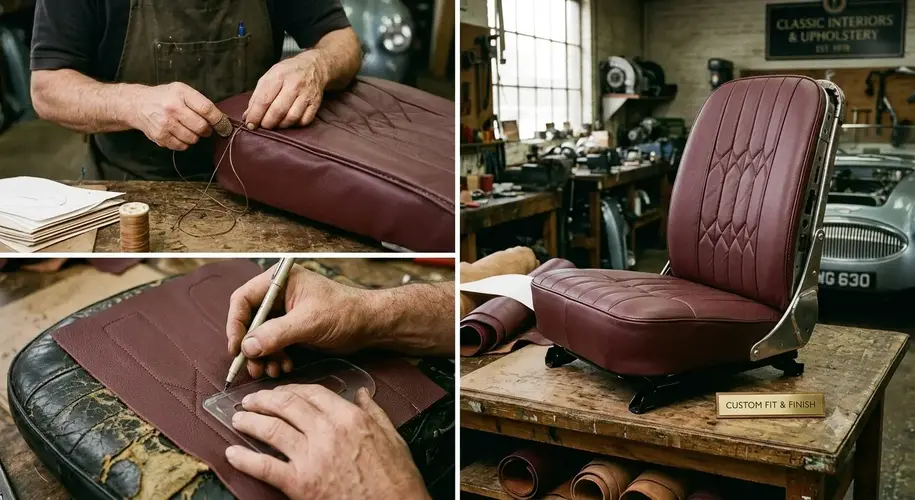
Some localized deterioration can be repaired when the surrounding material remains strong enough to support the work.
Possible repairs include:
- Re-stitching an open seam
- Replacing weakened thread
- Repairing or replacing piping
- Replacing one leather or vinyl panel
- Reproducing a faded cloth insert
- Reinforcing the cover from underneath
- Correcting collapsed foam that is stretching the material
- Recovering the complete seat when damage is widespread
A split should not automatically be closed with new stitching. Brittle leather or vinyl may tear beside the new needle holes.
The seat cover, backing, foam, springs, and frame should be evaluated together. A cover may continue splitting if compressed foam or broken support components are placing excessive tension on it.
Learn more about repairing sagging or collapsed classic car seats before installing or preserving the final upholstery.
Conditioner may temporarily improve flexibility or appearance, but it cannot restore the original strength of cracked or torn upholstery.
How Can You Protect Originality?
UV protection should match the vehicle’s restoration goal.
A driver-quality classic may use:
- A removable windshield shade
- Clear or lightly tinted window film
- Material-specific protectants
- Clean storage covers
- Localized panel replacement
A factory-correct or preservation-focused vehicle may require:
- Minimal visible modification
- Reversible protection methods
- Conservative cleaning
- Documentation before treatment
- Product testing on concealed areas
- Material matching from protected samples
- Preservation of original covers as patterns
Before cleaning, repairing, or replacing upholstery, document:
- Seat-panel layouts
- Pleat spacing
- Piping
- Stitching
- Grain direction
- Cloth-pattern alignment
- Fastener locations
- Original labels and markings
Material beneath a seat, trim edge, or seam may provide a better reference for the original color and texture than an exposed surface.
How Often Should Upholstery Be Inspected?
Inspect the upholstery during routine cleaning and before or after extended storage.
Look for:
- New fading
- Dryness or stiffness
- Fine surface cracks
- Loose seams
- Frayed thread
- Shrinking inserts
- Hardening around piping
- Product buildup
- Changes in flexibility
- Foam collapse beneath the cover
Early action may allow a seam, piping section, insert, or individual panel to be repaired before the complete seat cover fails.
Addressing localized damage early may also reduce the scope and time required for classic car upholstery restoration.
For rare, original, or concours interiors, keep dated photographs taken under similar lighting. This can make gradual fading and material changes easier to identify.
Frequently Asked Questions
Can classic car upholstery fade while the vehicle is stored indoors?
Yes. Upholstery can still receive damaging light through garage windows, glass doors, or skylights. Position the vehicle away from direct sunlight, use window coverings where practical, and consider a clean, breathable interior or vehicle cover during extended storage.
How often should UV protectant be applied to classic car upholstery?
There is no universal application schedule. Follow the product manufacturer’s directions and consider the upholstery material, vehicle use, cleaning frequency, and sun exposure.
Applying too much product can create buildup, change the sheen, attract dust, or make the surface slippery.
Can the same UV protectant be used on leather, vinyl, and cloth?
Not automatically. Leather, vinyl, and cloth have different finishes, fibers, and care requirements.
Use a product specifically approved for the material and test it in a concealed area before treating an entire seat, panel, or insert.
Should cracked or split upholstery be conditioned before it is repaired?
Not without evaluating the damage first. Conditioner cannot restore the strength of cracked leather or split vinyl, and some products may interfere with adhesives, coatings, or repair materials. The damaged panel, stitching, foam, and surrounding upholstery should be inspected before treatment.
Classic Car Upholstery Preservation in Huntington Beach
Coastline Classic Car Restorations evaluates leather, vinyl, cloth, seat covers, upholstered panels, headliners, and related soft trim in Huntington Beach and throughout Orange County.
Our upholstery evaluation may include:
- Identifying the existing upholstery material
- Evaluating fading, stiffness, cracking, and splitting
- Matching period-correct replacement materials
- Preserving reusable covers and original hardware
- Planning repairs around driver-quality or factory-correct goals
- Test-fitting repaired or replacement upholstery
Sun protection can slow future deterioration, but existing damage should be evaluated before the material becomes too brittle to preserve.
The condition of the covers, foam, support components, and surrounding panels can also affect how much classic car upholstery restoration costs.
Call (657) 540-8792 to schedule a classic car upholstery evaluation at our Huntington Beach facility.