

Why Are My Classic Car Lights Flickering?
Classic car lights flicker when voltage becomes unstable in the electrical system.
The most common causes are:
- Weak battery or low voltage at idle
- Faulty alternator or voltage regulator
- Bad ground connections (very common)
- Corroded or aging wiring harness
- Electrical overload from modern upgrades
Yes—flickering lights are one of the earliest signs of electrical system failure in classic cars.
What Flickering Lights Usually Mean (Quick Diagnosis)
- At a stoplight (idle) → low alternator output or weak battery
- When revving engine → faulty alternator or regulator
- Random flickering → wiring or ground issue
- When using brakes or accessories → voltage drop or poor grounding
These patterns help you quickly identify where the problem is coming from.
How the Electrical System Actually Works (Why Flicker Happens)
Your classic car depends on four key components:
- Battery → supplies base voltage
- Alternator → maintains voltage while driving
- Wiring harness → distributes power
- Grounds → complete the circuit
If any one of these becomes unstable, the entire system voltage fluctuates—causing lights to flicker.
The Huntington Beach “Green Death” Problem
If you’re near PCH or the Huntington Beach pier, salt air accelerates corrosion.
This causes:
- Copper oxidation (“green death”)
- Increased resistance
- Poor current flow
Corrosion doesn’t just block power—it creates unstable voltage, which leads directly to flickering lights.
Look for:
- Green crust on connectors
- Dull or oxidized wires
Most Common Causes of Flickering Lights
1. Weak Battery or Low Voltage at Idle
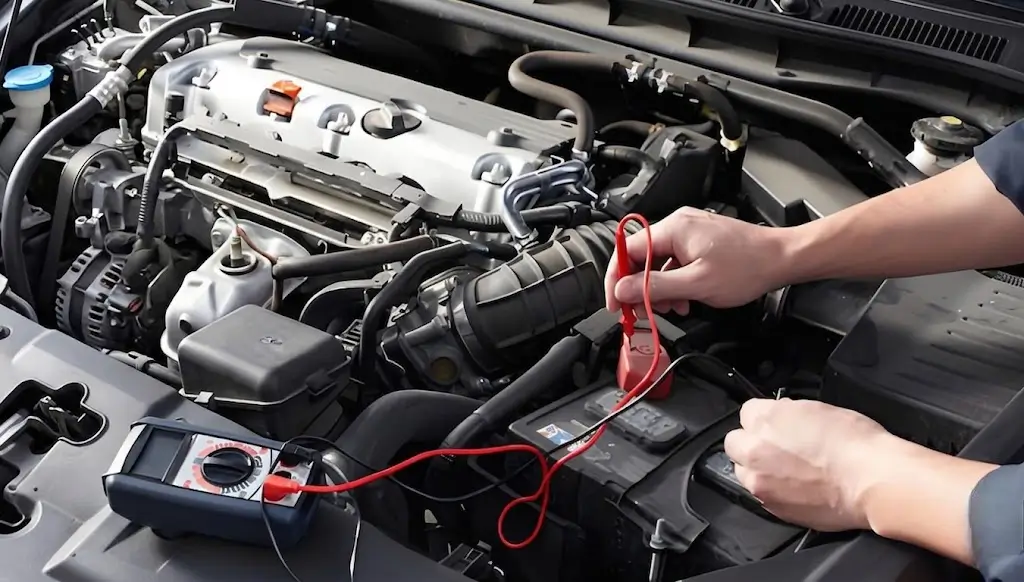
At low RPM:
- Alternator produces less power
- Battery must compensate
If the battery is weak, voltage drops → lights flicker
If you’re noticing repeated battery issues, it may be tied to deeper problems like why your classic car battery dies overnight.
Why do my headlights dim at a stoplight?
Because at idle, the alternator output is low. A weak battery or poor wiring can’t maintain stable voltage.
2. Faulty Alternator or Voltage Regulator
The alternator and regulator control system voltage.
If they fail:
- Voltage spikes or drops
- Lights brighten and dim
Pro Insight:
If flickering changes with RPM, troubleshooting the charging system is essential, as the alternator or regulator is almost always the cause.
Advanced Tip: AC Ripple (Hidden Cause)
A bad alternator diode can leak AC current into your DC system.
This causes:
- Rapid “strobe-like” flickering
- Unstable electrical behavior
This is often missed in basic testing.
3. Bad Ground Connections (Most Overlooked Cause)
Yes—bad grounds are one of the most common causes of flickering lights.
Poor grounding leads to:
- Voltage drops
- Incomplete circuits
- Unstable current flow
Real Fix (Not Just Tightening Bolts)
Proper ground repair means:
- Remove connection
- Sand to bare shiny metal
- Reinstall tightly
- Apply dielectric grease
Tightening a rusty ground does nothing.
“I’ve seen this a hundred times…”
Most flickering issues come down to one bad ground point, not the entire system.
4. Corroded or Loose Wiring
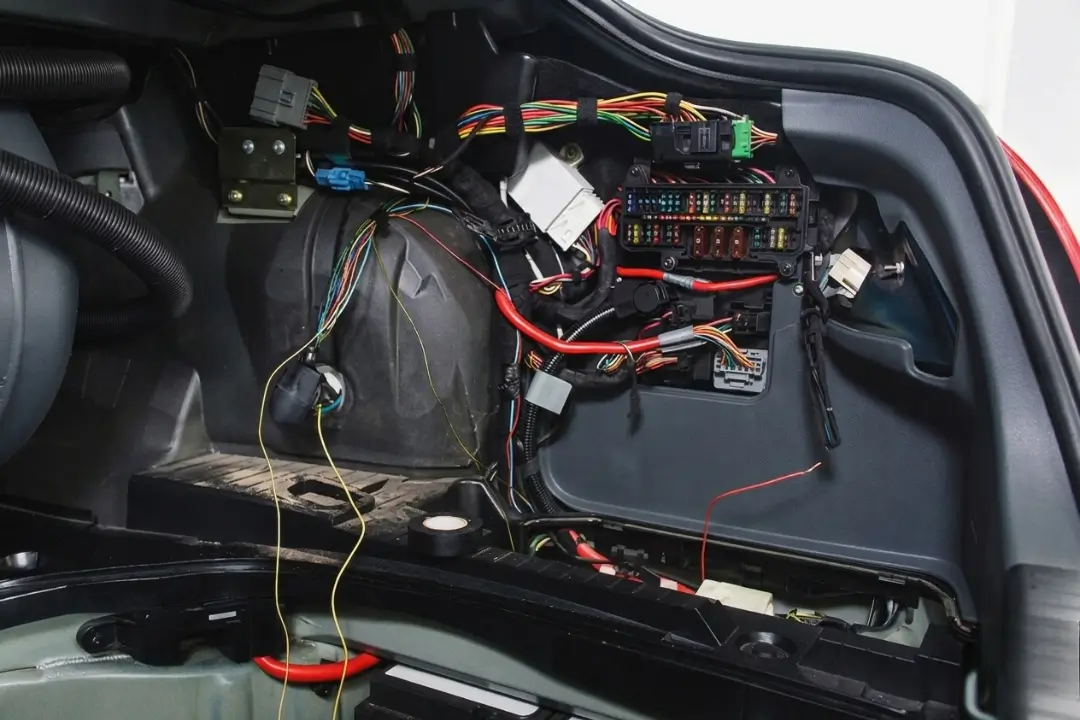
As wiring ages:
- Connectors loosen
- Corrosion builds
- Resistance increases
This creates intermittent voltage → flickering
Fix: The Wiggle Test
- Turn lights on
- Wiggle wiring harness
If flicker changes → you found the fault
5. Aging Wiring Harness (System-Wide Problem)
Old wiring causes:
- Voltage loss
- Heat buildup
- Unstable current flow
This leads to random flickering across multiple systems
If you’re seeing multiple electrical symptoms, it may be time to review signs your classic car needs a wiring harness.
6. LED Conversion Problems (Modern Issue)
If you installed LEDs:
Your system may not be compatible
Why:
- LEDs draw less current
- Old systems expect higher load
Result:
- Flickering
- Hyper flashing
Why did my lights start flickering after installing LEDs?
Because your system doesn’t detect enough resistance. You need load resistors or an upgraded relay system.
7. Overloaded Electrical System
Adding:
- Audio systems
- Electric fans
- Modern accessories
Can overload factory wiring → causing voltage instability
In extreme cases, overload can even lead to overheating—similar to issues described in burning smell in a classic car.
8. Worn Headlight Switch (Hidden Problem)
Classic systems often route power through the switch.
Over time:
- Resistance builds
- Heat increases
- Voltage drops
This leads to flickering and dim lights
Pro Upgrade: Headlight Relay Conversion
A headlight relay conversion bypasses the old switch and delivers full voltage directly from the battery.
-
Benefits: Brighter lights, stable voltage, and eliminated flicker from switch resistance.
Further Reading: For a deep dive into the mechanics of how these components work, check out this guide on understanding automotive relays.
How to Diagnose Flickering Lights (Step-by-Step)
Step 1: Check Voltage
- Engine off → ~12.6V
- Running → ~13.5–14.5V
Fluctuating voltage = system problem
Step 2: Check Grounds FIRST
Always start here—most issues originate at ground points.
Step 3: Inspect Wiring
Look for:
- Corrosion
- Frayed wires
- Loose connectors
Step 4: Voltage Drop Test
Measure voltage across connections.
If drop is high:
- Resistance is present
- Wiring or connections are failing
Step 5: Load Test the System
Turn on:
- Lights
- Fans
- Accessories
If flickering increases → system is overloaded or weak
Quick Fix vs Real Fix
| Fix | Result | Long-Term Outcome |
|---|---|---|
| Tighten connection | Temporary | Issue returns |
| Replace battery | Partial | Not root cause |
| Clean grounds | Often solves | Good |
| Relay upgrade | Excellent | Stable system |
| Replace wiring harness | Best | Permanent fix |
Fixing the root cause ensures stable voltage across the entire system.
When Flickering Lights Indicate Bigger Problems
If flickering happens with:
- Burning smell
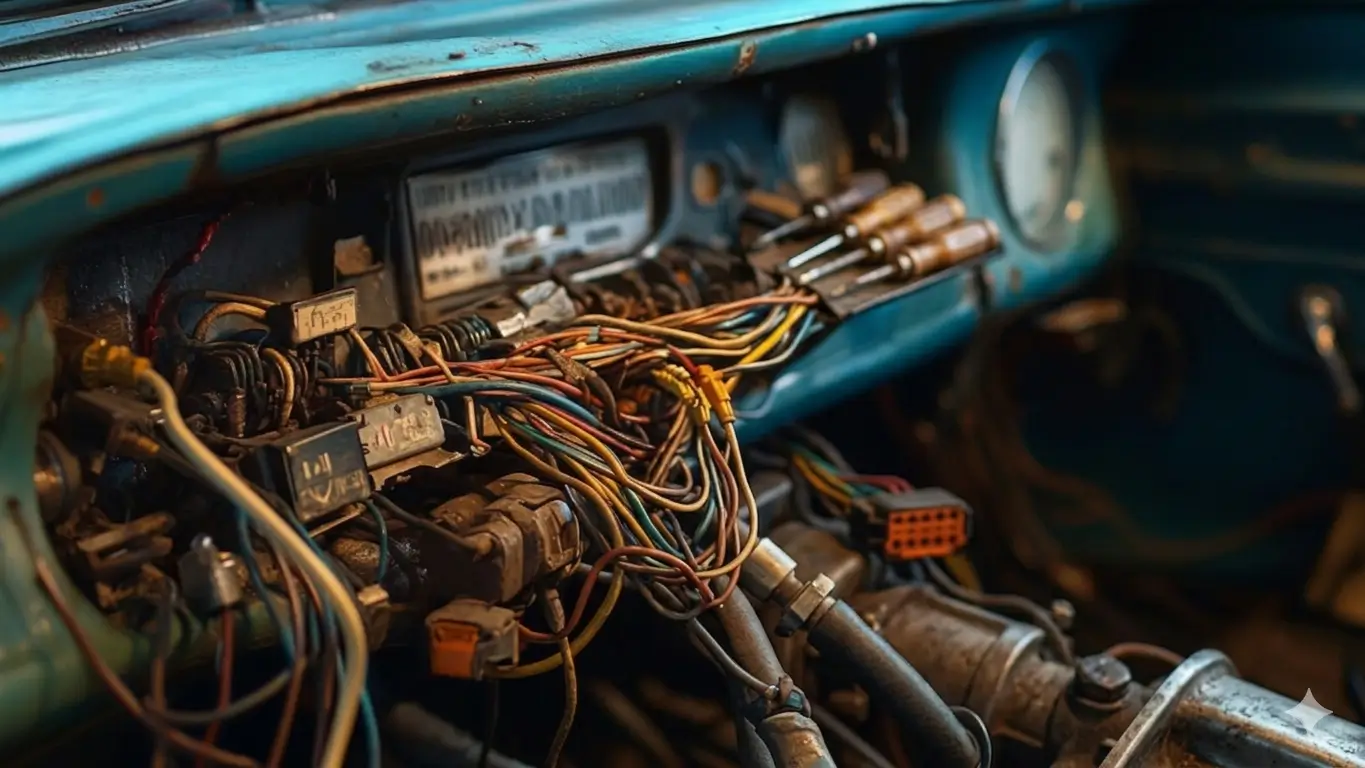
- Battery drain
- Blown fuses
This indicates a larger electrical failure.
Is It Safe to Drive with Flickering Lights?
No.
Flickering lights mean:
- Reduced visibility
- Unstable electrical system
- Potential fire risk
No—this can lead to sudden light failure and may indicate wiring overheating or electrical instability.
What Happens If You Ignore It
- Electrical problems worsen
- Components fail
- Wiring overheats
- Fire risk increases
Flickering lights are often the first warning sign of serious failure.
Final Thoughts: Flickering Lights Are Not Normal
If your lights flicker, your system is unstable.
Fixing it early:
- Prevents bigger repairs
- Improves reliability
- Protects your vehicle
Get a Professional Electrical Inspection
If your classic car is experiencing flickering lights or electrical instability, it’s important to address the root cause before it leads to bigger issues.
Schedule a professional evaluation with our team at classic car electrical wiring repair to diagnose and fix the problem correctly the first time.
At Coastline Classic Car Restorations in Huntington Beach, we specialize in:
- Electrical diagnostics and voltage testing
- Grounding corrections and system stabilization
- Long-term solutions—not temporary fixes
Further Reading
If you want to go deeper into classic car electrical issues, see our related guides: