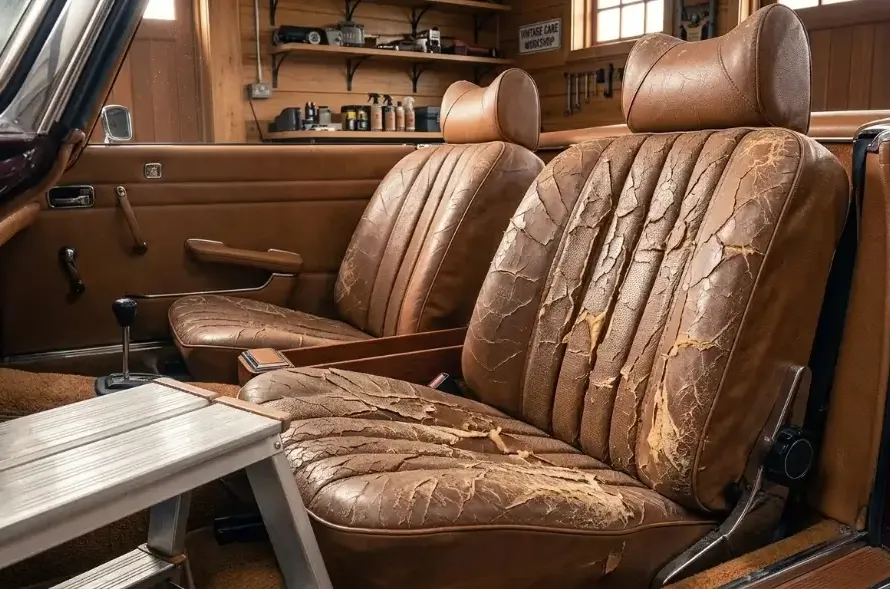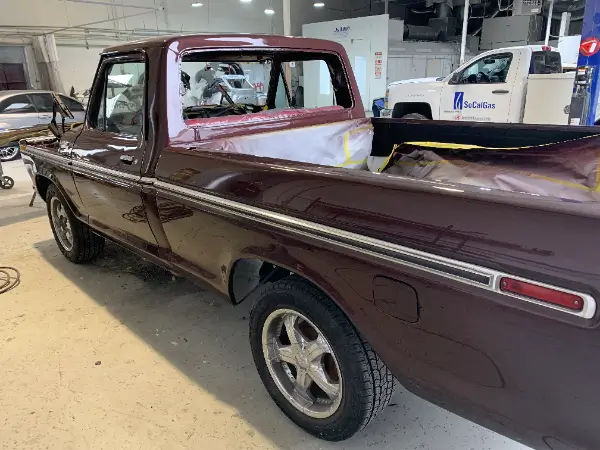


Choosing period-correct classic car upholstery starts with identifying the vehicle’s original trim specification. Leather is not automatically better than vinyl or cloth.
The correct material depends on the model year, body style, trim level, factory pattern, restoration standard, and intended use of the vehicle.
Some vehicles originally used full vinyl interiors. Others combined cloth inserts with vinyl bolsters or leather seating surfaces with vinyl sides and backs.
For a factory-correct restoration, the goal is to reproduce the original material placement, color, grain, pattern, stitching, and seat construction—not simply choose the most expensive material.
Leather vs. Vinyl vs. Cloth at a Glance
| Attribute | Leather | Vinyl | Cloth |
|---|---|---|---|
| Typical appearance | Natural grain and premium finish | Consistent grain and factory-style texture | Woven, solid, or patterned surface |
| Common factory use | Luxury models, premium packages, and selected seating surfaces | Seats, bolsters, door panels, dashboards, and trim | Full seating surfaces or inserts in many classic vehicles |
| Comfort | Soft and breathable when maintained | Less breathable and may become hot in sunlight | Generally comfortable in changing temperatures |
| Maintenance | Requires suitable cleaning and conditioning | Usually easier to clean | More susceptible to stains and embedded dirt |
| Common deterioration | Drying, fading, cracking, and surface wear | Shrinking, hardening, splitting, and seam failure | Fading, thinning, staining, and fraying |
| Authenticity factors | Hide, grain, finish, sheen, and placement | Grain, sheen, backing, thickness, and embossing | Weave, color, pattern scale, and insert placement |
No material is universally best. The correct choice is the one that matches the vehicle’s documented configuration and restoration goals.
What Does Period-Correct Upholstery Mean?
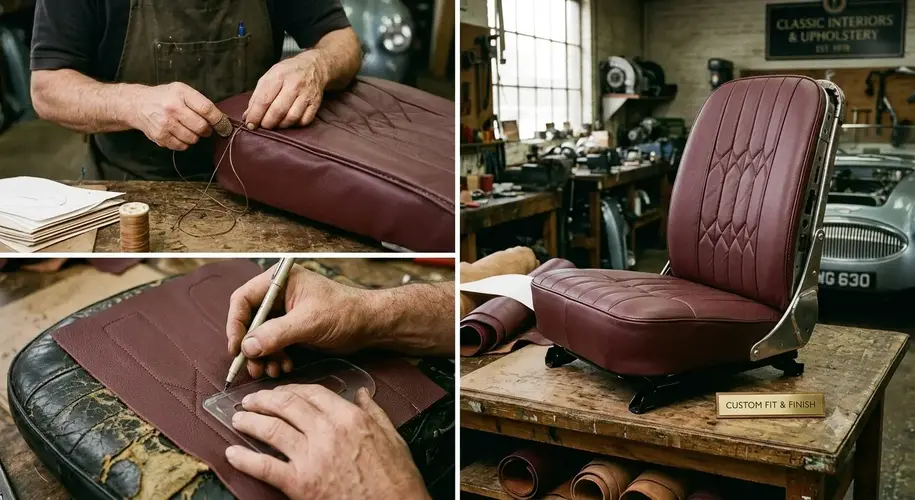
Period-correct upholstery reflects the materials and construction associated with the vehicle’s original production period.
Depending on the restoration standard, this may require matching:
- Leather, vinyl, or cloth type
- Factory interior color
- Grain or embossed texture
- Cloth weave and pattern scale
- Perforation style
- Seat-panel layout
- Pleat width and direction
- Piping or welt construction
- Stitching pattern
- Insert placement
- Seat shape and foam profile
- Door-panel and headliner coordination
Matching the color alone is not enough. Two black vinyls can have different grains, sheen levels, thicknesses, and stretch. Two cloth patterns may look similar in a photograph but differ significantly in weave and scale once installed.
How Do You Identify the Original Upholstery?
The most reliable approach combines factory documentation with physical evidence from the vehicle.
Check trim codes and factory records
A trim tag, data plate, build sheet, window sticker, dealer brochure, upholstery book, or parts catalog may identify the original material and color combination.
Trim codes should be interpreted using references for the specific manufacturer, model, and production year.
Inspect protected material
Material beneath seat tracks, piping, folded seams, trim panels, or rear-seat sections may retain a more accurate color and texture than exposed upholstery.
Sunlight, heat, cleaning products, and decades of use can change the visible material. A protected sample is often the best physical reference.
Document the original construction
Before disassembly, photograph:
- Seam locations
- Insert shapes
- Pleat spacing
- Piping
- Material transitions
- Fastener and listing positions
- Seat-back construction
- Door-panel patterns
Even deteriorated upholstery can provide valuable evidence about the original panel layout.
Do not assume an older-looking interior is original. Many classic vehicles have been reupholstered using non-factory materials or patterns.
How Can You Tell Leather From Vinyl?
Leather and vinyl can look similar, especially when leather has a corrected grain or the vinyl is a high-quality automotive reproduction.
Possible indicators include:
Grain variation: Leather usually has natural variation, while embossed vinyl may show a more consistent pattern.
Backing: Vinyl often has a woven fabric backing. Leather has a natural fibrous underside.
Cut edges: An exposed edge may reveal whether the material is natural hide or a synthetic layer.
Surface characteristics: Leather may show natural pores, wrinkles, and subtle differences between panels.
Factory placement: Documentation may show that leather was used only on seat faces while vinyl covered the sides and backs.
Appearance alone may not provide a definite answer. Coatings, previous repairs, and aging can make identification difficult, so physical inspection should be compared with vehicle-specific records.
When Is Leather the Correct Choice?
Leather is appropriate when the vehicle’s original specification confirms that leather was used.
It was often found in luxury models, premium packages, and selected seating areas. However, a factory “leather interior” did not always mean every upholstered surface was leather.
Leather may have been limited to:
- Seat centers
- Seating contact surfaces
- Selected inserts
- Front seat faces
Vinyl may still have covered the seat sides, backs, door panels, consoles, and secondary trim.
Using leather on every panel can therefore make an interior less authentic, even when the car originally had leather seats.
The leather’s grain, thickness, finish, sheen, color, and softness also matter. A smooth modern leather may look out of place in a vehicle that originally used a more pronounced grain or period-specific surface finish.
When Is Vinyl the Correct Choice?
Vinyl is period-correct when it matches the vehicle’s original specification. It should not automatically be considered an inferior substitute for leather.
Automotive manufacturers used vinyl extensively on seats, bolsters, door panels, dashboards, consoles, armrests, and trim panels. Some interiors used more than one vinyl texture within the same cabin.
Correct automotive vinyl can provide:
- Consistent grain and color
- Good durability
- Easier cleaning
- Appropriate stretch for shaped panels
- Strong reproduction availability
- A factory-correct appearance
Its disadvantages include reduced breathability and higher surface temperatures after sun exposure. Aged or unsuitable vinyl may also shrink, harden, split, or pull at seams.
For an originality-focused restoration, replacing factory vinyl with leather simply because leather appears more luxurious may be the wrong decision.
When Is Cloth Upholstery Period-Correct?
Cloth was used in many sedans, coupes, muscle cars, European classics, and model-specific trim packages. It was also commonly combined with vinyl on bolsters, seat sides, and door panels.
Period-style patterns may include:
- Houndstooth
- Plaid or tartan
- Bedford cord
- Velour
- Tweed
- Basketweave
- Striped cloth
- Geometric inserts
Cloth is usually more breathable than vinyl and can give a particular model much of its interior identity.
The challenge is sourcing the correct reproduction. Pattern scale, weave direction, thread color, and repeat spacing should remain consistent across the front seats, rear seats, and trim panels.
Cloth should also be checked for structural strength. Original material may look usable but tear when stretched during repair.
Can Leather, Vinyl, and Cloth Be Combined?
Yes. Mixed-material interiors were common and may be completely factory correct.
Examples include:
- Leather seat faces with vinyl sides and backs
- Cloth inserts with vinyl bolsters
- Vinyl seats with cloth door-panel inserts
- Different vinyl grains on seats and trim
This is why ordering a “full leather interior” without verifying the original material placement can create an inaccurate result.
The materials also behave differently during installation. Leather, vinyl, and cloth vary in thickness, stretch, backing, seam requirements, and edge construction.
Changing one material can affect how the seat cover fits and how adjoining panels meet.
Does Leather Increase a Classic Car’s Value?
Not automatically.
Leather may improve personal enjoyment, but it does not guarantee greater collector value.
On an originality-focused, judged, or historically significant vehicle, replacing documented factory vinyl or cloth with leather may reduce authenticity.
The correct decision depends on the restoration goal:
Factory-correct restoration
Match the original material, grain, pattern, color, stitching, and construction as closely as practical.
Preservation
Retain serviceable original upholstery when possible. Usable original material may have more historical value than a complete replacement.
Regularly driven classic
Preserve the period appearance while considering heat, comfort, durability, cleaning, and material availability.
Restomod
Modern leather, performance vinyl, or custom cloth may be appropriate, provided the materials complement the vehicle’s era and interior design.
Should Original Upholstery Be Repaired or Replaced?
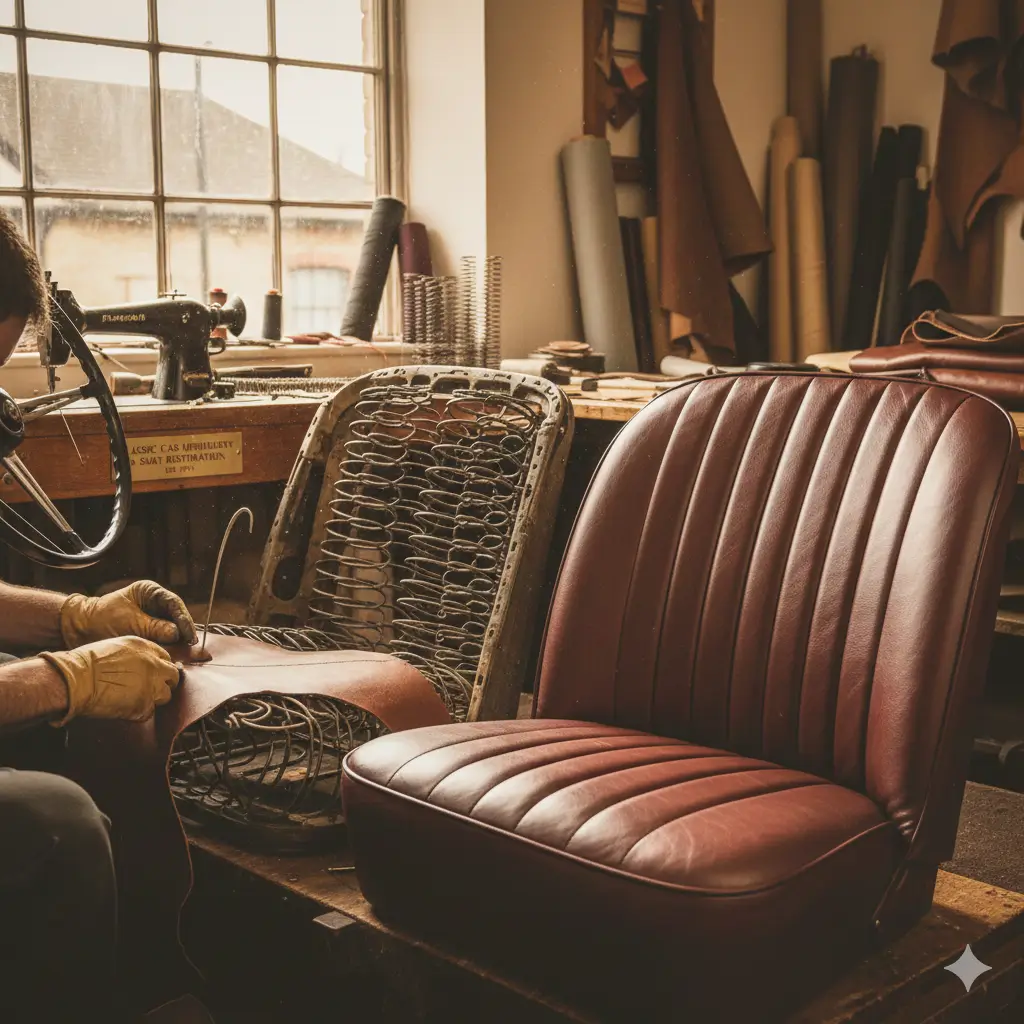
Original upholstery should be inspected before complete replacement.
Localized seam separation, damaged piping, small tears, or worn individual panels may sometimes be repaired.
Replacement may be more appropriate when:
- Leather is severely cracked or brittle
- Vinyl has hardened, shrunk, or split
- Cloth tears under light tension
- Water or mold has affected hidden layers
- Previous repairs changed the original pattern
- Seat foam deterioration has distorted the cover
- A uniform factory-style result is required
Partial repairs must account for fading. Newly matched material may look different beside upholstery that has experienced decades of sun exposure.
The underlying seat structure also matters. Correct upholstery installed over collapsed foam, broken springs, damaged frames, or altered padding will not reproduce the factory shape.
Common Upholstery Selection Mistakes
Assuming leather is always better
Leather may cost more, but it is not more authentic when the vehicle originally used vinyl or cloth.
Matching color but ignoring texture
The correct color cannot compensate for the wrong grain, weave, perforation, pattern, or sheen.
Replacing mixed materials with one material
Factory interiors may use different materials on seat faces, bolsters, backs, and trim panels.
Ordering by model name alone
Body style, trim level, production date, interior code, and optional equipment can change the correct specification.
Copying another restored car
The reference vehicle may have a different trim package or an inaccurate replacement interior.
Ignoring the seat structure
Worn foam, broken springs, and damaged frames can prevent an accurate cover from fitting properly.
Choosing Upholstery for the Complete Interior
Seat upholstery should coordinate with the rest of the cabin, including:
- Door and quarter panels
- Carpet
- Headliner
- Sail panels
- Dash and console coverings
- Armrests
- Windlace
- Piping and binding
- Package tray
A technically accurate seat material can still look incorrect when the surrounding grain, color, stitching, or trim construction does not match.
For information about coordinating the roof liner with the rest of the interior, read our guide to Bow-Style vs. Board-Style Classic Car Headliners.
Frequently Asked Questions
Can a trim code identify the exact original upholstery by itself?
Not always. A trim code may identify the factory color and material family, but production changes, optional packages, body style, and previous restoration work can affect the correct specification.
Compare the code with factory references and protected material from the vehicle whenever possible.
Should the front and rear seats be restored at the same time?
Restoring them together can make it easier to maintain consistent color, grain, cloth pattern, pleat spacing, piping, and material aging.
When work is completed in separate stages, retain approved samples and detailed records so later components can be matched accurately.
Can modern seat foam be used with period-correct upholstery?
Yes, when the foam reproduces the original cushion shape, height, bolster profile, and cover attachment points.
Foam that is too thick, firm, or differently shaped can distort pleats, seams, piping, and the overall factory appearance.
What happens if the exact original cloth or vinyl is unavailable?
The closest suitable reproduction should be selected by comparing grain, weave, pattern scale, color, sheen, thickness, stretch, and material placement.
For originality-focused vehicles, document the unavailable specification and preserve original samples before choosing an alternative.
Classic Car Upholstery Restoration in Huntington Beach
Coastline Classic Car Restorations in Huntington Beach helps owners identify and restore leather, vinyl, cloth, and mixed-material interiors for classic, vintage, collector, and restored vehicles.
Our evaluation may include:
- Reviewing trim codes and available documentation
- Inspecting protected original material
- Identifying grain, weave, pattern, perforation, and color
- Sourcing period-appropriate reproduction materials
The correct upholstery depends on the vehicle, its documented configuration, and the purpose of the restoration—not on whether leather, vinyl, or cloth is generally considered better.
Call (657) 540-8792 to schedule a classic car interior evaluation at our Huntington Beach facility.
Learn more about our Classic Car Upholstery Restoration in Huntington Beach services for seats, door panels, carpet, headliners and complete upholstery restoration.