

To protect your classic car upholstery investment against a covered total loss, document the restoration, disclose it to your insurer, and confirm that the vehicle’s insured value reflects its restored condition.
Ask about agreed-value coverage and protection while the car is being restored.
New leather, period-correct cloth, rebuilt seats, and custom panels do not automatically increase your policy’s payout. The settlement depends on the valuation terms, covered cause of loss, deductibles, and applicable endorsements.
Does Car Insurance Cover Restored Upholstery?
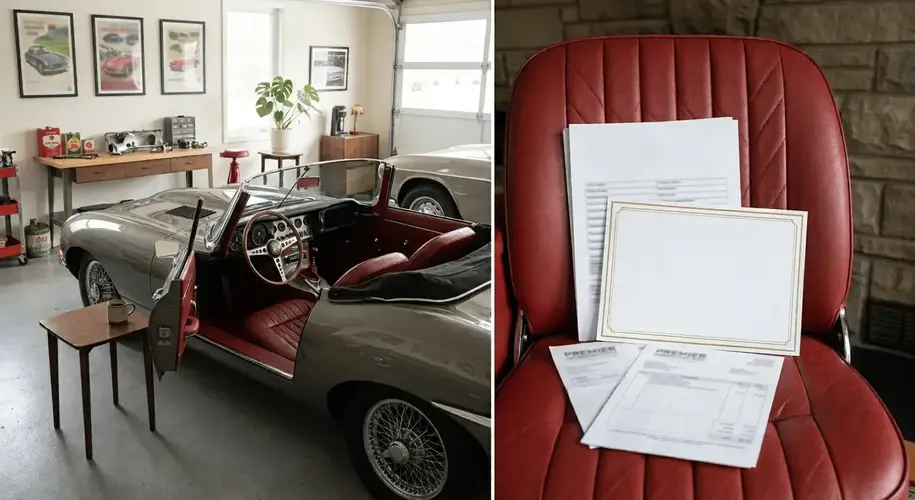
Restored upholstery may be covered as part of the insured vehicle when it is damaged by an event covered under the policy. Collision generally addresses crash damage, while comprehensive may cover events such as theft, fire, vandalism, or flood.
Insurance generally does not pay to correct ordinary wear, gradual deterioration, or maintenance needs. Replacing aging upholstery is different from repairing upholstery damaged in a covered incident.
The California Department of Insurance explains these distinctions in its automobile insurance guide.
For custom seats, nonfactory materials, or modified interior components, ask whether additional equipment coverage or specific disclosure is required. Do not assume a general description such as “full coverage” answers that question.
Agreed Value vs. Stated Value vs. Actual Cash Value
The valuation method matters because a total-loss settlement usually addresses the vehicle as a whole.
| Valuation method | General approach | What to confirm |
|---|---|---|
| Actual cash value | Determines the vehicle’s value immediately before the loss | How restored condition and modifications will be considered |
| Stated value or stated amount | May pay the lower of the stated amount or actual cash value | Whether the listed amount is only a ceiling |
| Agreed value | Establishes the vehicle’s value with the insurer before a loss | The covered total-loss payment and applicable deductions |
Hagerty’s explanation of actual cash value, stated value, and agreed value describes how these methods affect a covered total-loss settlement. A stated amount may be a ceiling rather than a guaranteed payment. Review the valuation clause and applicable deductions.
Ask your agent directly: “If this vehicle suffers a covered total loss, how is the payment calculated, and does the insured value include the restored interior?”
Will Insurance Reimburse Every Dollar Spent on Upholstery?
Classic car upholstery restoration costs depend on the materials, condition, and scope of work.
Restoration receipts document that spending, but they do not guarantee dollar-for-dollar reimbursement. With agreed-value coverage, obtain the insurer’s approval of the insured value before a loss.
Under actual-cash-value coverage, the vehicle’s pre-loss condition and supporting records can inform its valuation after the loss.
For example, spending $12,000 on upholstery does not automatically add $12,000 to an existing agreed-value policy. Submit the completed work for review and obtain confirmation of any approved change.
Specialist insurers may use photographs, restoration receipts, and comparable vehicle information when reviewing a requested value. Grundy describes this process in its collector-car insurance guidance.
Review the value after substantial restoration work and at renewal. A policy established for an unfinished project may no longer reflect the completed car.
What Upholstery Records Should You Keep?
Build a restoration file that connects the work to the insured vehicle. Include:
- The vehicle identification number and identifying photographs.
- Before, during, and after photographs of the interior.
- Itemized invoices showing completed work and materials.
- Receipts for separately purchased upholstery and components.
- Material specifications, supplier details, and original trim information.
- Any appraisal and written confirmation of approved insurance changes.
Photograph more than the finished seat surfaces. When restoring sagging classic car seats, document frame repairs, spring replacement, and cushion rebuilding before the covers are fitted.
Photograph panel construction and installation, too, so your records include work that becomes hidden after assembly.
Keep digital copies away from the vehicle and workshop. A receipt stored inside a stolen or fire-damaged car may be unavailable when needed.
An appraisal can support a request to increase the insured value or provide evidence in a valuation dispute. It does not automatically amend the policy or increase its limits.
Is the Interior Covered While the Car Is Being Restored?
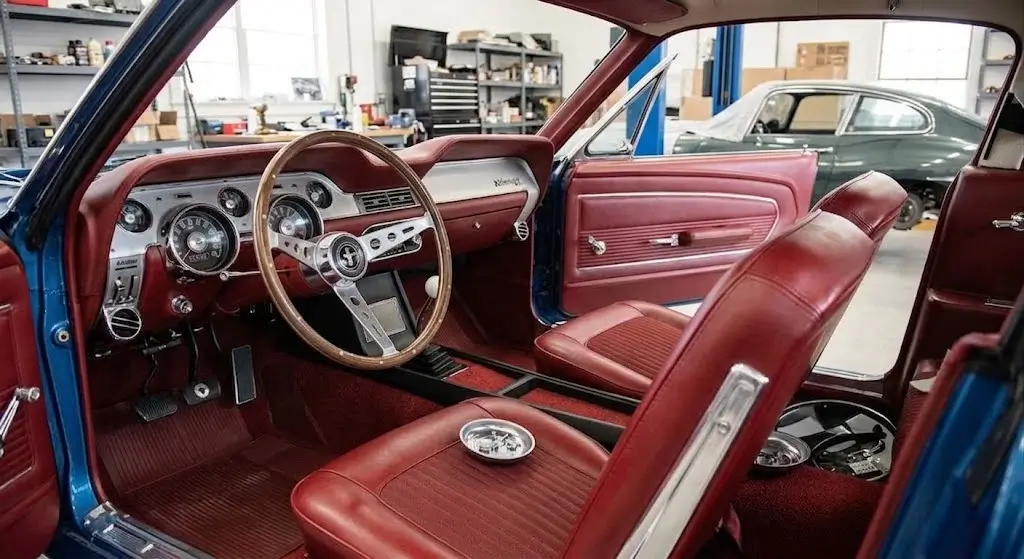
Confirm coverage before the vehicle is dismantled or delivered to a shop. Ask specifically about:
- The vehicle at the restoration facility.
- Removed seats, panels, and other components.
- Materials or replacement parts stored elsewhere.
- Transport between your home, the shop, and subcontractors.
- Changes in value as work progresses.
Some insurers offer restoration-specific endorsements. For example, Hagerty’s Vehicle Under Construction coverage recognizes increasing value during an active restoration, subject to its limits and conditions. Such protection is not automatic under every collector policy.
Ask the shop about its insurance, too, but do not assume its policy replaces your own coverage. Have your insurer explain how your vehicle and detached components are protected.
Also confirm the policy’s permitted use and storage requirements. Collector policies can impose conditions on regular transportation, drivers, and storage. Tell the insurer how the vehicle will actually be used and where it will be kept during and after restoration.
What Happens to the Upholstery in a Total-Loss Settlement?
If the vehicle is declared a total loss, do not assume there will be a separate payment for every restored interior component. Request the settlement calculation and confirm how the policy treats the vehicle’s restored condition.
In California, the Department of Insurance explains that actual cash value generally means fair market value unless the policy defines it differently. Its claims guide also describes appraisal provisions that may help resolve valuation disputes.
If you want to keep the damaged car or recover its seats and trim, discuss this before accepting a settlement or removing components. Keeping salvage can reduce the payment; special salvage-retention endorsements may change that treatment. Title and registration consequences also need checking.
Get Upholstery Restoration Services
Before restoration begins, ask the upholstery shop for a written scope and arrange progress photographs. After completion, retain the final invoice and submit updated documentation to your insurer.
Planning an interior restoration? Chuck, owner of Coastline Classic Car Restorations in Huntington Beach, brings more than 14 years of classic car restoration experience.
Contact Chuck and the team to discuss your upholstery project and the scope of work, and ask what invoices and progress photographs can be provided for your records.
Share those records with your licensed insurance agent to review the finished vehicle’s insured value and coverage.