


Restoring a classic car is more than a mechanical project—it’s a careful balance of craftsmanship, planning, authenticity & passion.
Whether you’ve uncovered a barn find or are restoring a lifelong dream car, understanding the full restoration process is essential.
This includes costs, timelines, and how to choose the right shop before the first wrench is turned.
At Coastline Classic Car Restorations in Huntington Beach, we guide owners through each stage of the process—from initial inspection to final road testing.
Our team approaches every project with technical precision, structured planning, and respect for classic automotive craftsmanship.
This 2026 guide explains each step in detail so you know exactly what to expect, how long it takes, and why professional expertise matters.
Understanding the Scope of a Classic Car Restoration
Not all restorations are the same. Before work begins, it’s important to define the scope of restoration, which typically falls into one of these categories:
- Preservation restoration – Maintaining originality & patina
- Partial restoration – Addressing specific systems (engine, paint, interior)
- Frame-off restoration – Complete disassembly & rebuild from the chassis up
- Restomod restoration – Classic appearance with modern performance upgrades (learn more about whether to restore, preserve, or restomod)
Choosing the right approach depends on the car’s condition, historical value, intended use & budget.
In many cases, owners initially underestimate the level of corrosion or mechanical fatigue present beneath cosmetic surfaces, which can significantly affect the appropriate restoration path.
Step 1: Initial Inspection & Vehicle Assessment
Every professional restoration begins with a comprehensive inspection.
What’s evaluated:
- Body condition and rust damage
- Frame integrity & structural alignment
- Engine, transmission & driveline health
- Suspension, steering, & braking systems
- Electrical wiring and safety components
- Interior condition & originality
For coastal areas like Huntington Beach, special attention is given to corrosion caused by salt air and humidity. Owners should understand rust causes & prevention methods early in the process.
Salt exposure often affects undercarriage components & hidden metal surfaces.
In our experience, corrosion is frequently discovered in structural areas that appear visually sound, making a professional inspection critical before committing to a restoration budget.
This inspection determines whether the vehicle is a good restoration candidate and helps prevent unexpected costs later.
Step 2: Restoration Planning & Budgeting
Once the inspection is complete, a detailed restoration plan is created.
Planning includes:
- Defining restoration goals (factory original vs customized)
- Parts sourcing strategy (OEM, reproduction, custom fabrication) especially when learning how to source rare classic car parts
- Labor estimates & timelines
- Paint, upholstery & finishing decisions
- Compliance with California regulations (emissions, safety)
A transparent plan ensures owners understand restoration costs, expected timelines & potential challenges before work begins.
Clear planning also helps avoid mid-project changes that can significantly extend timelines or compromise historical accuracy.
Step 3: Disassembly & Documentation
For full or frame-off restorations, the vehicle is carefully disassembled.
Each component is:
- Removed methodically
- Cataloged and labeled
- Photographed for reference
- Evaluated for reuse, restoration, or replacement using professional-grade restoration tools
This documentation process is critical for maintaining authenticity & ensuring accurate reassembly later in the project.
Detailed records also preserve valuable reference data for future maintenance or resale documentation.
Step 4: Bodywork, Rust Repair & Structural Restoration
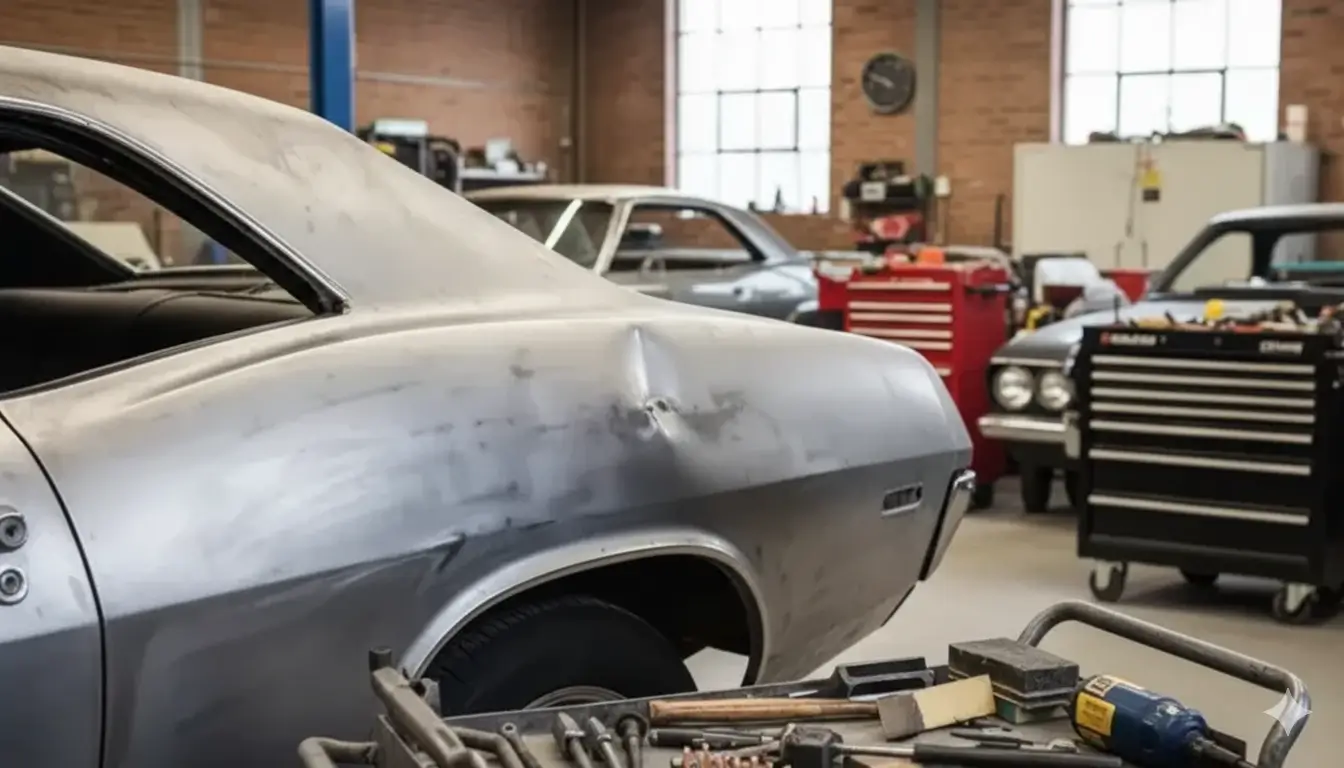
Body & structural restoration is one of the most important—and time-intensive—stages.
This phase includes:
- Rust removal and corrosion treatment
- Metal fabrication & panel replacement
- Frame straightening and reinforcement
- Welding and surface preparation
In coastal environments like Orange County, corrosion repair must be done correctly to prevent rust from returning.
Improper rust repair or insufficient sealing is one of the most common causes of premature restoration failure.
Professional shops use proper sealing, coatings & rust-prevention techniques designed for long-term durability.
Step 5: Engine, Transmission & Mechanical Rebuild
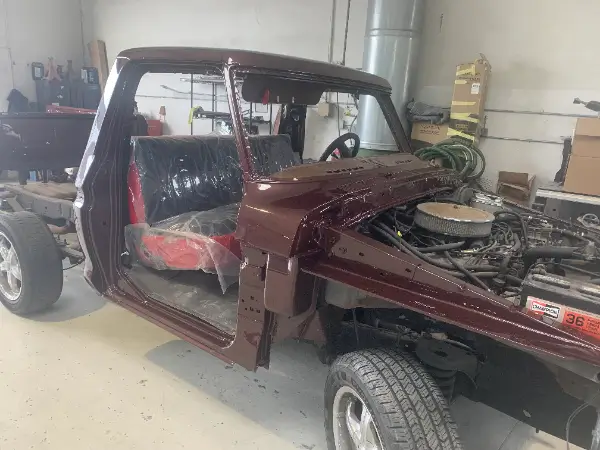
Mechanical restoration ensures the vehicle performs as well as it looks.
Typical work includes:
- Engine rebuild or replacement
- Transmission overhaul
- Differential and drivetrain restoration
- Suspension and steering rebuild
- Brake system modernization (while maintaining authenticity)
Whether preserving original numbers-matching components or upgrading for reliability, this stage determines how the car drives once complete. Decisions made here directly impact drivability, long-term reliability & overall ownership satisfaction.
Step 6: Electrical System Restoration
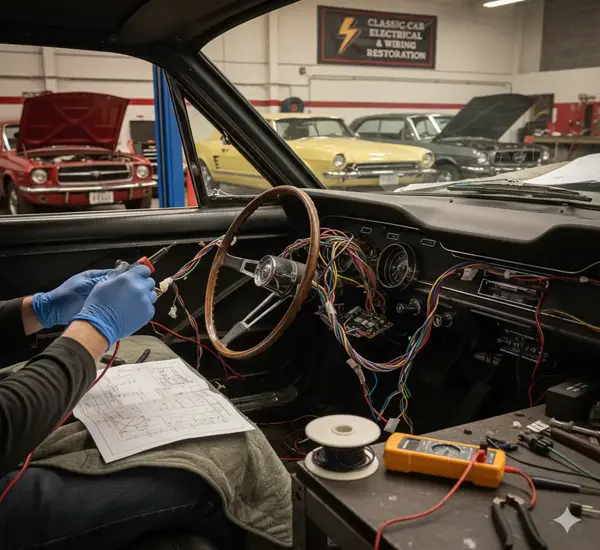
Classic car electrical systems often require full attention.
Electrical restoration may involve:
- Replacing brittle or unsafe wiring
- Restoring gauges and instrumentation
- Upgrading charging and ignition systems
- Integrating modern safety features discreetly
Proper electrical work ensures reliability without compromising the vehicle’s vintage character.
Electrical failures are among the most common issues in unrestored classics & are often overlooked in DIY projects.
Step 7: Paint Preparation & Refinishing
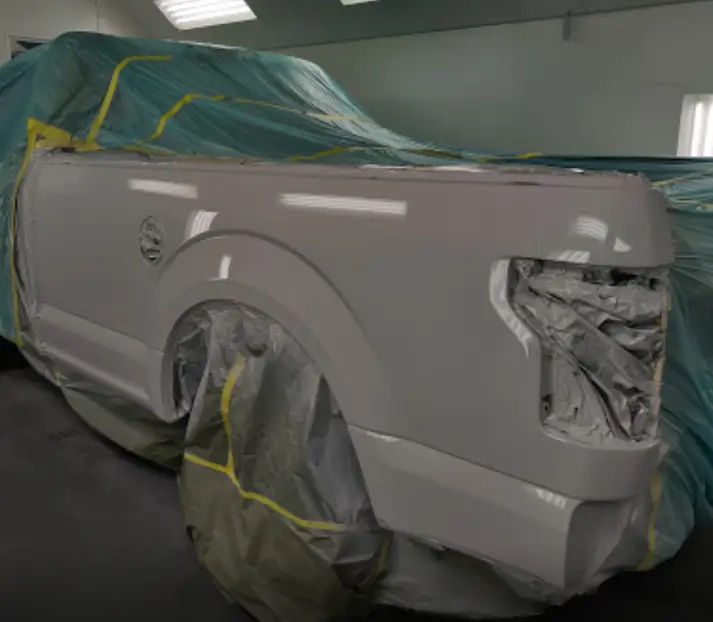
Paintwork defines the final appearance of a restored classic.
The process includes:
- Surface preparation and primer application
- Paint matching for period-correct finishes
- Multi-stage paint application
- Clear coating and curing
- Wet sanding and polishing
For Huntington Beach clients, UV-resistant coatings are especially important to protect paint from sun exposure.
High-quality paint systems & controlled application environments are essential to achieving long-term finish durability.
Step 8: Interior Restoration & Trim Work
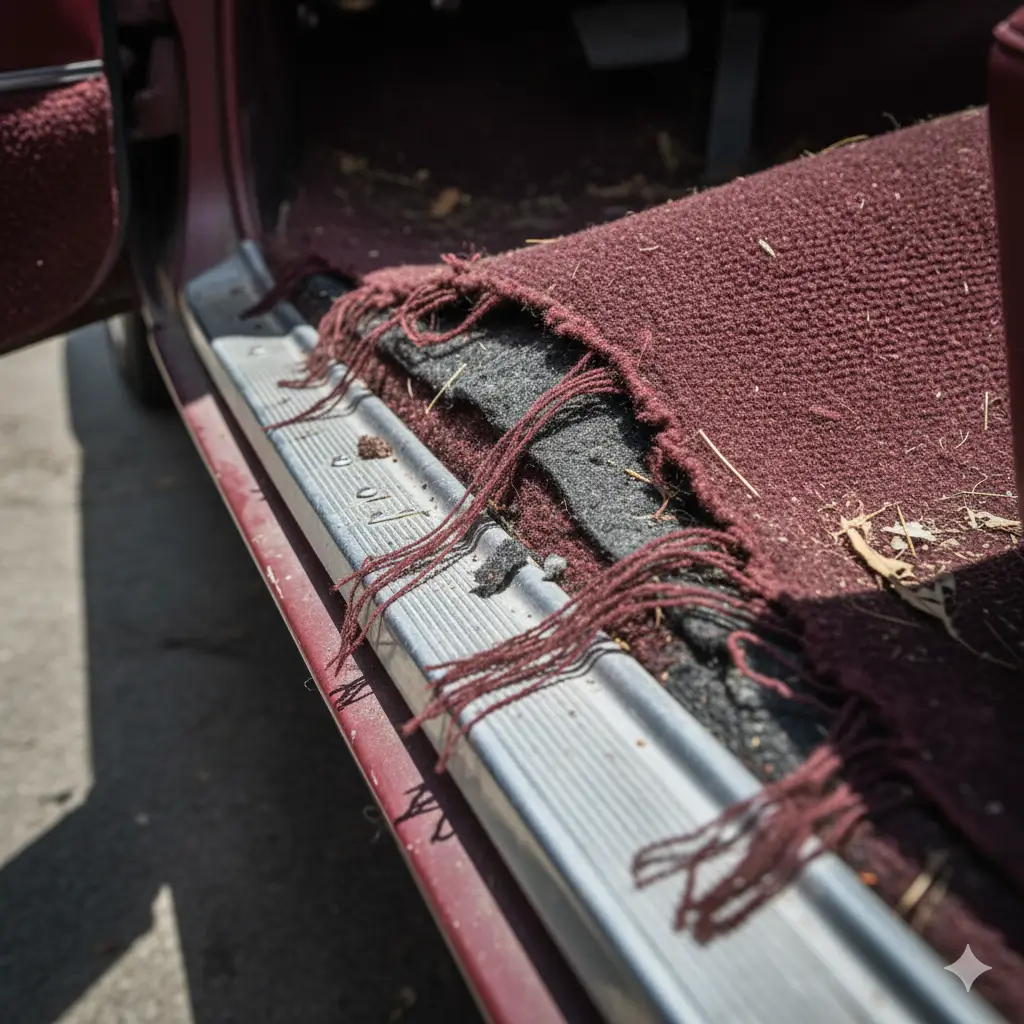
Interior restoration brings comfort & authenticity together.
Interior work often includes:
- Seat upholstery restoration or replacement
- Dashboard and gauge refurbishment
- Headliner, carpet & door panel installation
- Chrome, trim & emblem restoration
Materials are carefully selected to match factory specifications or upgraded tastefully when requested.
Attention to correct materials & finishes helps preserve the vehicle’s historical integrity & resale value especially when paired with proper post-restoration maintenance.
Step 9: Reassembly & Quality Control
Once all components are restored, the vehicle is reassembled with precision.
Every system is:
- Installed to factory specifications
- Torque-checked and tested
- Adjusted for proper operation
Quality control ensures no detail is overlooked before the vehicle is road-ready. Multiple inspection stages are often performed to catch issues that may only become apparent during final assembly.
Throughout the build, owners receive staged updates & quality checkpoints to ensure full transparency
Step 10: Final Testing, Tuning & First Drive
Before delivery, the car undergoes extensive testing.
Final checks include:
- Engine tuning and calibration
- Road testing under real driving conditions
- Brake, suspension, and steering evaluation
- Leak inspections and safety verification
Only after passing all checks is the car ready for its final drive—the moment every restoration is built toward.
This phase confirms that the vehicle not only looks correct but performs safely and reliably in real-world conditions as shown in our restoration case study.
How Long Does a Classic Car Restoration Take?
Restoration timelines vary depending on scope:
- Partial restoration: 3–6 months
- Full restoration: 9–18 months
- Frame-off restoration: 12–24+ months
Factors such as parts availability, customization, and vehicle condition affect completion time.
Unexpected discoveries during disassembly are a common reason timelines evolve during high-quality restorations.
Why Professional Restoration Matters
A classic car restoration requires:
- Technical expertise
- Specialized tools
- Historical knowledge
- Proven craftsmanship
At Coastline Classic Car Restorations, our Huntington Beach shop combines experience, attention to detail & respect for classic automotive history to deliver results that last.
Professional restoration reduces long-term risk and protects vehicle value. It also strengthens documentation and insurance valuation while ensuring safety and authenticity standards are met.
Frequently Asked Questions
How do I know if my classic car is worth restoring?
A professional inspection determines structural integrity, rust severity, originality & parts availability. Vehicles with solid frames & manageable corrosion are typically strong restoration candidates, even if cosmetic damage is present.
Can a heavily rusted classic car be restored?
Yes, but extensive rust increases cost, labor & timeline. Structural corrosion often requires metal fabrication or frame repair, which must be evaluated before committing to a full restoration.
Is a frame-off restoration always necessary?
No. Frame-off restorations are ideal for severely deteriorated vehicles, while partial restorations are often sufficient for drivable classics with localized issues. The correct approach depends on condition & restoration goals.
How accurate are restoration timelines & estimates?
Estimates are based on visible condition, but timelines may change once disassembly reveals hidden damage or parts challenges. Experienced shops provide staged updates to manage expectations throughout the project.
Will restoration improve drivability as well as appearance?
Yes. Mechanical, electrical & suspension restoration ensures the vehicle performs safely and reliably, not just cosmetically, especially when worn components are addressed correctly.
Can modern upgrades be added without affecting originality?
Yes. Discreet upgrades such as improved braking or ignition systems can enhance safety and reliability while preserving a factory-correct appearance when properly integrated.
Start Your Classic Car Restoration in Huntington Beach
If you’re considering restoring a classic car in Huntington Beach or Orange County, understanding the process is the first step toward success.
Whether you’re planning a full frame-off restoration or selective upgrades, working with an experienced restoration shop ensures your investment is protected—& your classic is restored the right way.
📞 Contact Coastline Classic Car Restorations today to schedule an inspection & begin your restoration journey with confidence.


