

Restoring a classic car is an exciting project. However, small mistakes can quickly turn into expensive regrets. Many restoration problems don’t come from bad intentions.
They come from rushed decisions, incomplete planning, or misunderstanding how restoration actually works.
This 2026 guide breaks down the most common classic car restoration mistakes and explains why they happen.
It also shows how to avoid them—especially for owners in Huntington Beach and coastal Orange County, where environmental factors add extra risk.
Why Restoration Mistakes Are So Common
Classic car restoration is very different from modern vehicle repair. Owners often underestimate:
- The complexity of older vehicles
- The impact of hidden rust or prior repairs
- How decisions early in the process affect cost, quality & longevity
Most costly mistakes happen before work even begins.
Mistake #1: Underestimating Rust & Hidden Corrosion

One of the most common—and damaging—mistakes is assuming rust is only cosmetic.
In reality:
- Rust often spreads beneath paint
- Floor pans, rocker panels & frames may be affected
- Coastal environments accelerate corrosion
In areas like Huntington Beach, salt air and humidity make rust more aggressive.
Environmental damage from salt air and humidity commonly affects exposed fasteners, electrical connections, brake components, underbody seams, and enclosed body cavities.
Owners near the coast should inspect these areas every 6 to 12 months and address corrosion before it spreads beneath paint, seam sealer, or protective coatings.
Skipping a thorough inspection or choosing surface-only repairs often leads to rust returning after restoration.
How to avoid it:
Always prioritize full inspection and proper rust repair before cosmetic work begins.
Rust and corrosion prevention should continue after the vehicle has been repaired.
For classic cars stored near the coast, inspect the undercarriage, rocker panels, wheel wells, drainage channels, weather seals, and enclosed body cavities at least every 6 to 12 months.
When practical, maintain storage humidity at approximately 40% to 50% and repair paint chips or exposed metal as soon as they are discovered.
Mistake #2: Choosing a Shop Without Classic Car Experience
Not all body shops are restoration shops.
A common mistake is selecting a shop that:
- Primarily works on modern vehicles
- Lacks experience with vintage materials
- Cannot fabricate or source classic parts
- Doesn’t document restoration stages
Classic cars require specialized knowledge, tools, and patience.
How to avoid it:
Choose a shop with proven classic car restoration experience, not just general collision repair.
Professional vs. DIY Restoration Decisions
Before starting, create a task list that identifies whether each job will be completed by the owner, restoration shop, or outside specialist.
DIY work may be appropriate for tasks such as cleaning components, photographing the project, organizing hardware, researching parts, and carefully removing non-structural trim.
Professional assistance should generally be used for at least these six safety-critical or highly specialized areas:
- Structural rust repair and welding
- Frame or chassis alignment
- Brake and steering systems
- Fuel system repairs
- Electrical diagnosis and rewiring
- Engine machining and internal rebuilding
Clearly assigning responsibilities before disassembly helps prevent repeated work, damaged parts, safety problems, and unexpected labor charges.
Mistake #3: Focusing on Cost Instead of Value
Trying to minimize upfront costs often leads to:
- Rushed repairs
- Lower-quality materials
- Shortcuts that fail long-term
- Paying twice for the same work
While budgets matter, restoration is an investment. Poor-quality work can reduce safety, drivability & resale value.
How to avoid it:
Focus on realistic cost ranges, clear scope & long-term results—not the lowest quote.
To prevent budget underestimation, consider setting aside a contingency of approximately 15% to 25% above the initial restoration estimate.
For example, a restoration initially estimated at $40,000 may require an additional $6,000 to $10,000 for hidden corrosion, corrective work, unavailable parts, or mechanical problems discovered during disassembly.
The appropriate contingency depends on the vehicle’s condition, rarity, and intended level of restoration.
This directly quantifies budget underesti
Mistake #4: Skipping Proper Planning and Documentation
Restoration projects without a clear plan often experience:
- Timeline overruns
- Scope creep
- Communication issues
- Misaligned expectations
Project scope creep occurs when additional work is approved without updating the budget, schedule, or restoration objective.
To control it, require a written change order whenever added work exceeds an agreed threshold, such as $500 or 10% of the current project phase budget.
Each change order should identify the additional work, parts required, labor estimate, cost, and effect on the completion date.
The $500 or 10% threshold can be adjusted by the owner and shop, but it should be established before work begins.
Without documentation, reassembly accuracy and authenticity can suffer.
Documentation and record keeping should cover every major restoration phase.
Photograph the vehicle before disassembly and during structural repair, mechanical work, body preparation, paint, and reassembly.
The restoration file should contain at least:
- Dated progress photographs
- Parts invoices and supplier information
- Labor invoices and work descriptions
- Part and serial numbers
- Engine, transmission, and chassis identification numbers
- Paint manufacturer, formula, and color code
- Inspection reports and warranty documents
Maintain at least two copies of the file: one primary record and one secure digital backup. Organized documentation supports accurate reassembly, maintenance, insurance, valuation, and future resale.
How to avoid it:
Work with a shop that follows a structured restoration process with documentation & milestone planning.
Incomplete planning can be reduced by approving a written restoration plan before disassembly or parts ordering begins. At minimum, the plan should define these seven items:
- Intended use of the vehicle
- Restoration, preservation, or restomod objective
- Target budget and contingency
- Work divided between the owner, shop, and outside specialists
- Parts sourcing strategy
- Finish and originality standards
- Project milestones and communication schedule
A practical milestone plan may include inspection, disassembly, structural repair, mechanical work, body and paint, reassembly, and final testing.
Mistake #5: Ignoring How the Car Will Be Used
Many problems arise when owners don’t define their end goal.
Questions often overlooked:
- Will the car be driven regularly or shown?
- Is originality more important than comfort?
- Will modern traffic conditions be a factor?
Choosing the wrong approach can lead to dissatisfaction after completion.
How to avoid it:
Decide early whether restoration, preservation, or a restomod fits your goals.
Mistake #6: Rushing Paint & Exterior Finishing

Paint quality depends heavily on preparation.
Common errors include:
- Rushing bodywork
- Skipping proper curing time
- Covering imperfect metal repairs
These shortcuts often result in bubbling, cracking, or premature paint failure.
How to avoid it:
Allow adequate time for preparation, metal repair, and professional refinishing.
Mistake #7: Overlooking Mechanical & Safety Systems
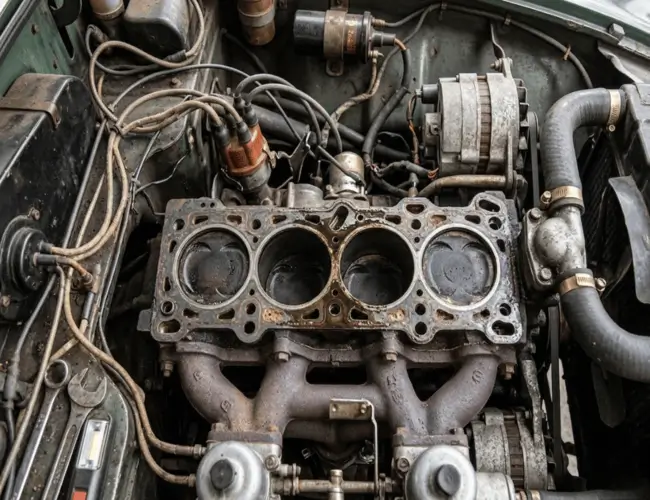
A classic car that looks great but drives poorly is frustrating—and unsafe.
Mistakes include:
- Ignoring brakes & suspension
- Rebuilding engines without addressing supporting systems
- Failing to modernize safety-critical components when appropriate
How to avoid it:
Balance cosmetic restoration with mechanical reliability & safety.
Mistake #8: Using Incorrect or Low-Quality Parts
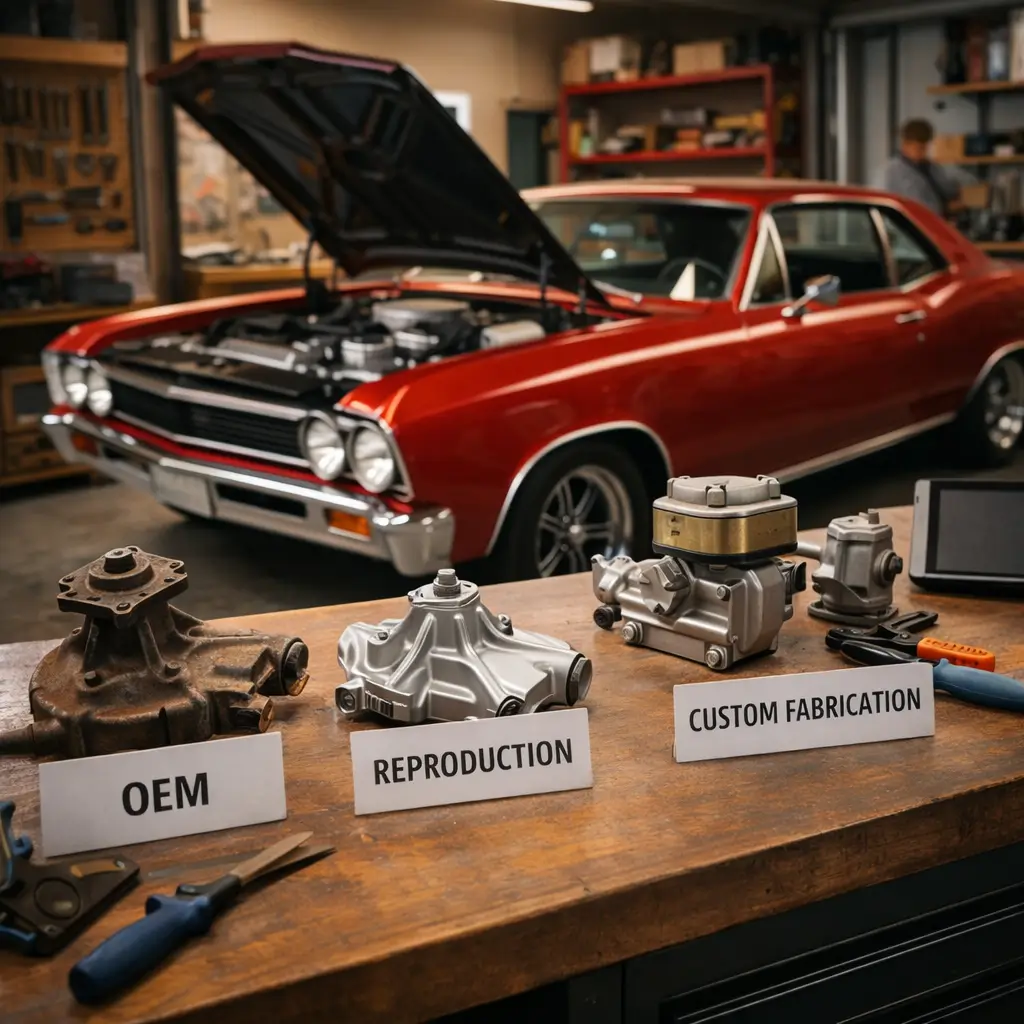
Parts selection plays a major role in restoration success.
Problems arise when:
- Cheap reproduction parts are used without fitment checks
- Authentic components are discarded unnecessarily
- Compatibility issues aren’t addressed
How to avoid it:
Work with professionals who understand OEM, reproduction & custom-fabricated parts.
Common parts sourcing pitfalls can be reduced by verifying at least six details before placing an order:
- Vehicle year
- Make and model
- Body style or trim
- Engine configuration
- Transmission configuration
- Manufacturer or supplier part number
In-stock reproduction parts may arrive within days or weeks, while rare, rebuilt, new-old-stock, or custom-fabricated components may require several months.
Confirm the supplier’s return window, warranty, expected delivery date, and restocking fees before purchasing.
Mistake #9: Poor Storage After Restoration
Even well-restored cars can deteriorate quickly if stored improperly.
Common issues:
- Moisture buildup
- Inadequate ventilation
- Lack of corrosion protection
Indoor storage alone is not always enough, especially near the coast.
How to avoid it:
Use climate-aware storage and routine inspections to protect restored surfaces.
Mistake #10: Expecting Exact Timelines & Guarantees
Restoration is not predictable like modern repairs.
Hidden damage, parts availability & custom fabrication can affect schedules.
How to avoid it:
Set realistic expectations and work with a shop that communicates changes transparently.
Frequently Asked Questions
What is the biggest mistake people make restoring classic cars?
Underestimating rust & hidden damage is the most common and costly mistake.
Can restoration mistakes be fixed later?
Some can, but correcting poor work often costs more than doing it right initially.
Are restoration mistakes more common near the coast?
Yes. Coastal environments increase corrosion risk and require extra care.
Is it better to restore a car slowly or quickly?
Quality restoration takes time. Rushing often leads to long-term problems.
How can I avoid restoration regret?
Clear goals, realistic expectations & experienced professionals make the biggest difference.
Avoiding Mistakes Starts With the Right Approach
Classic car restoration should be rewarding—not stressful.
At Coastline Classic Car Restorations in Huntington Beach, we work with classic car owners throughout Costa Mesa, Newport Beach, Fountain Valley, Irvine, and surrounding Orange County.
We help avoid costly mistakes through honest inspections, clear planning, and experienced craftsmanship.
Understanding what not to do is often just as important as knowing what to do.