

Quick Answer
A classic car electrical system works by sending power from the battery through wiring to components and returning it through the ground to complete a circuit.
If this electrical loop is broken, the system fails.
What Is a Classic Car Electrical System?
A classic car electrical system is a closed-loop circuit that delivers electrical power from the battery to components and returns it through the chassis ground.
Every function depends on this loop being complete.
The Core Concept: The Electrical “Loop”
No complete loop = no electrical function
Why Does My Classic Car Have “Electrical Ghosts”?
Most electrical problems in classic cars are caused by a broken or inefficient electrical loop—not bad parts.
Common Symptoms:
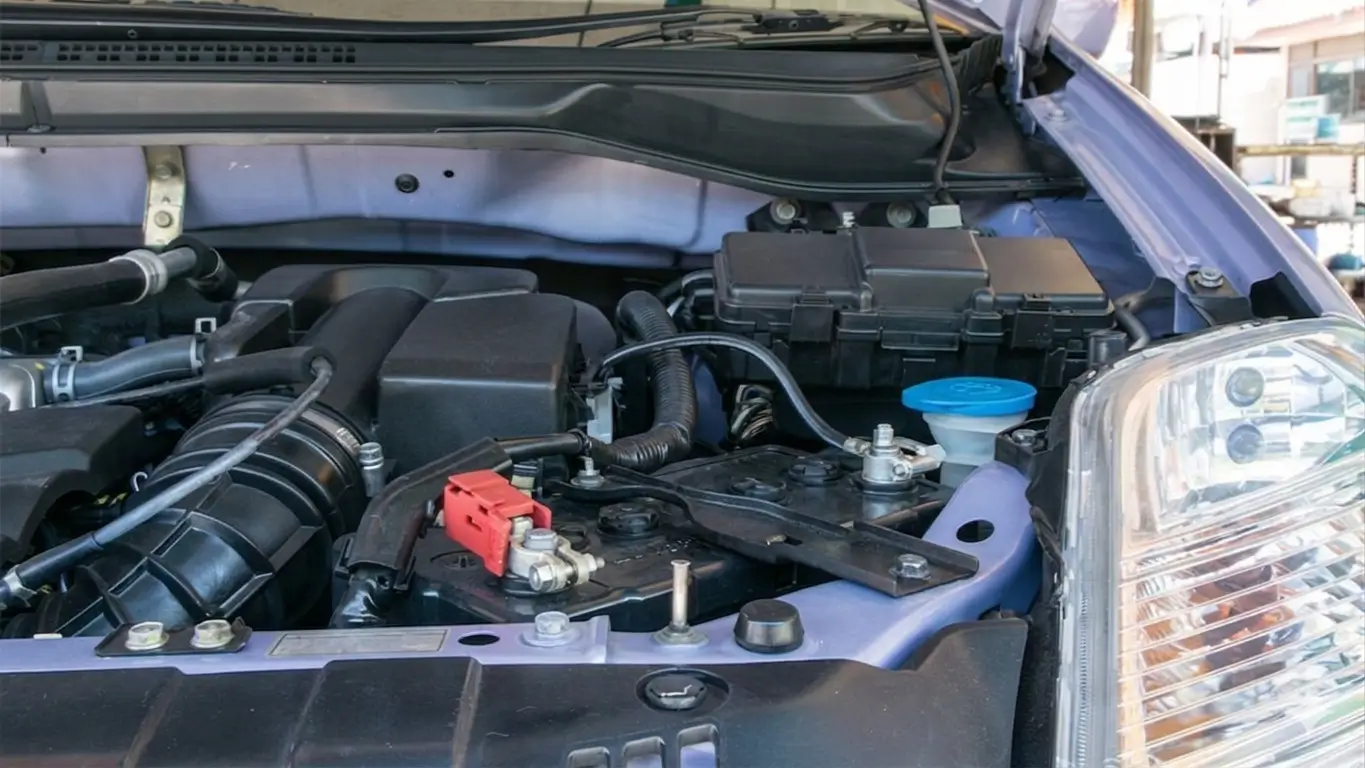
- Flickering lights
- Dead battery
- Random failures
In most cases:
- Bad ground
- Corroded wiring
- Weak connections
Why Understanding the Loop Changes Everything
Once you understand the loop, you stop replacing parts and start fixing the real problem.
The issue is usually: Power not completing the circuit properly
How Does a Classic Car Electrical System Work?
The system delivers power from the battery, distributes it through wiring, and returns it through the ground.
Core System Components:
- Battery → supplies voltage
- Alternator / Generator → maintains power
- Wiring harness → distributes electricity
- Ground → completes the circuit
If any part fails → the system becomes unstable
Main Components Explained (The Right Way)
Battery — The Starting Point
The battery provides the initial electrical power.
If it fails:
Nothing works
Alternator / Generator — Keeps It Running
Maintains voltage and recharges the battery.
If it fails:
- Voltage drops
- Engine eventually stops
Wiring Harness — The Distribution System
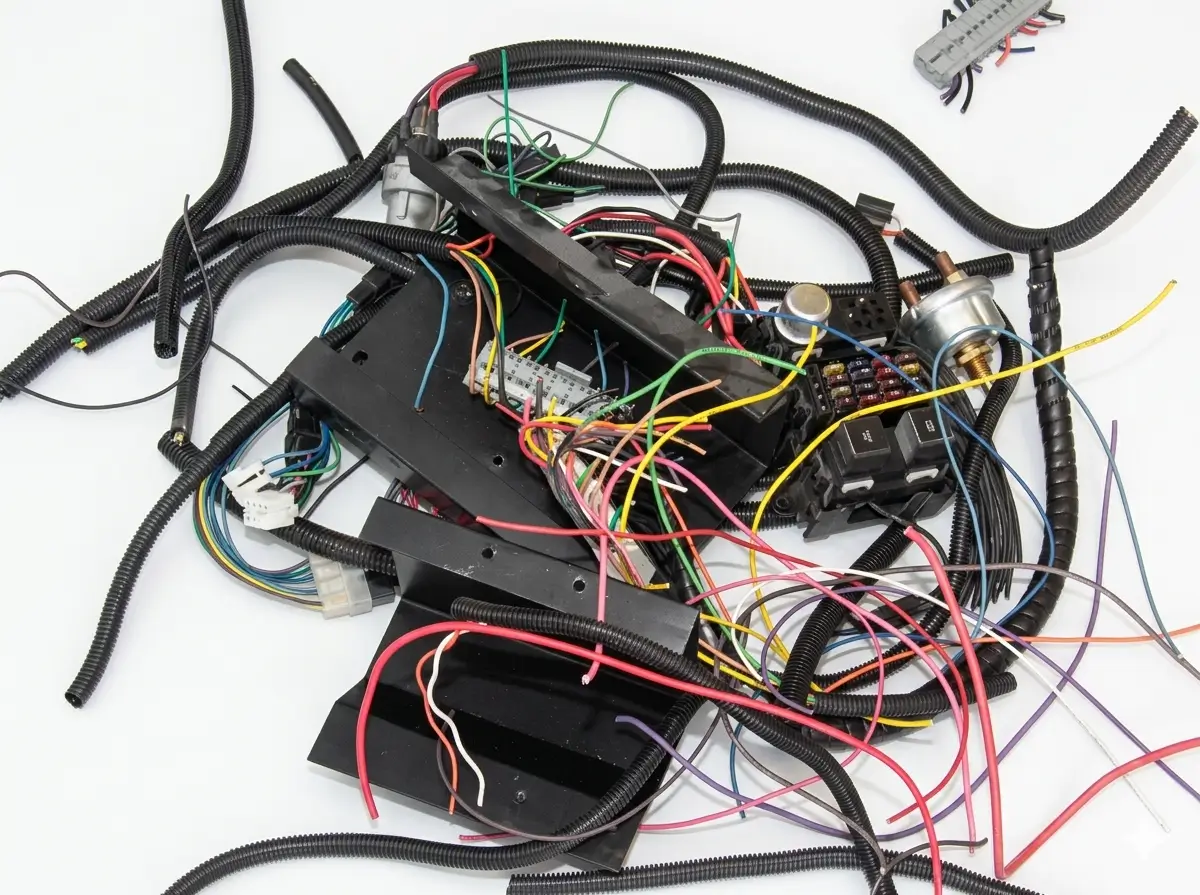
Wiring carries electrical current to all components.
In classic cars:
- Insulation cracks
- Copper corrodes
Leads to resistance and unstable current flow
Ground System — The MOST Important Part
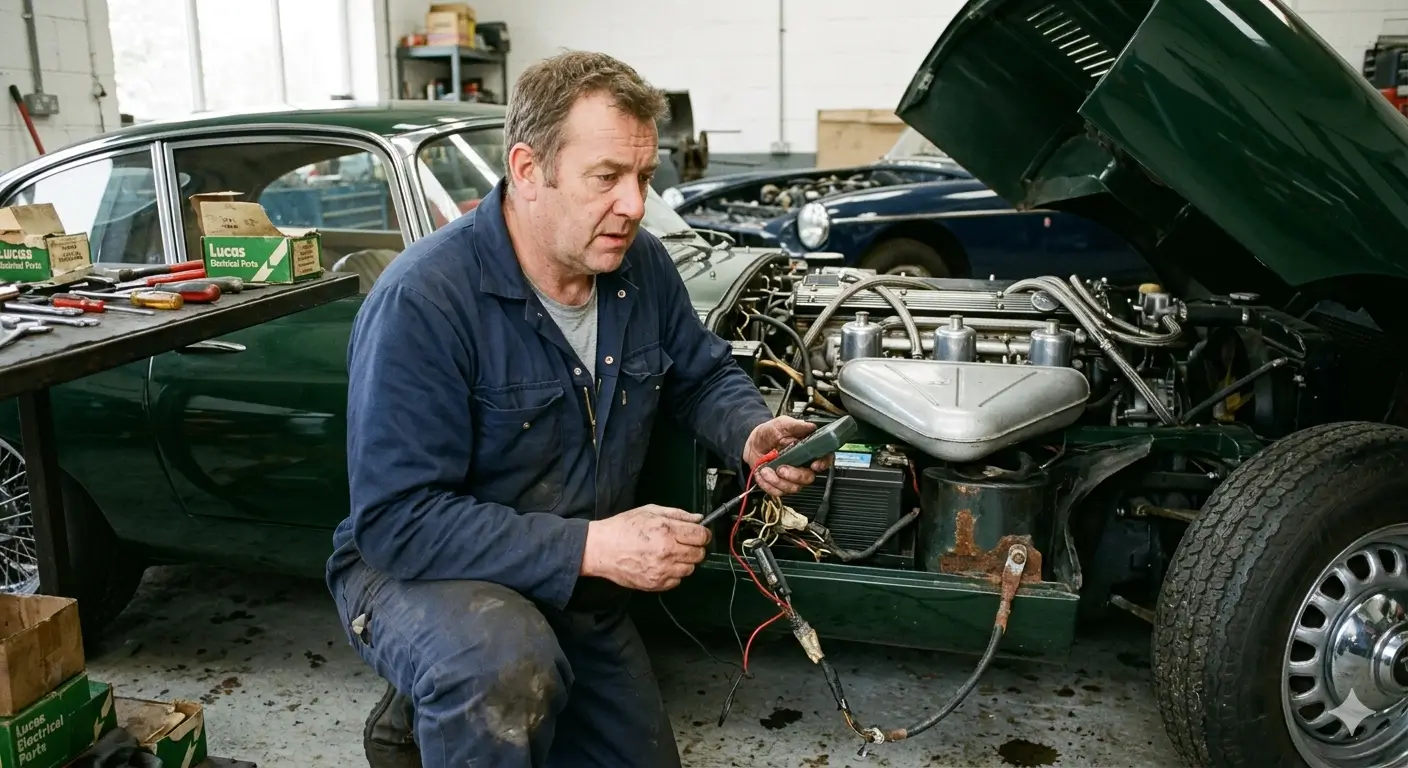
The ground completes the circuit by returning current to the battery.
If it fails:
- Voltage drops
- Lights flicker
- Systems behave unpredictably
Bad grounds cause most “mystery” issues
Switches & Relays — The Control System
Switches control circuits, while relays manage high current safely.
Relays improve reliability and prevent overheating
Common Electrical Problems (Real Symptoms)
Electrical issues usually indicate system instability.
Symptoms:
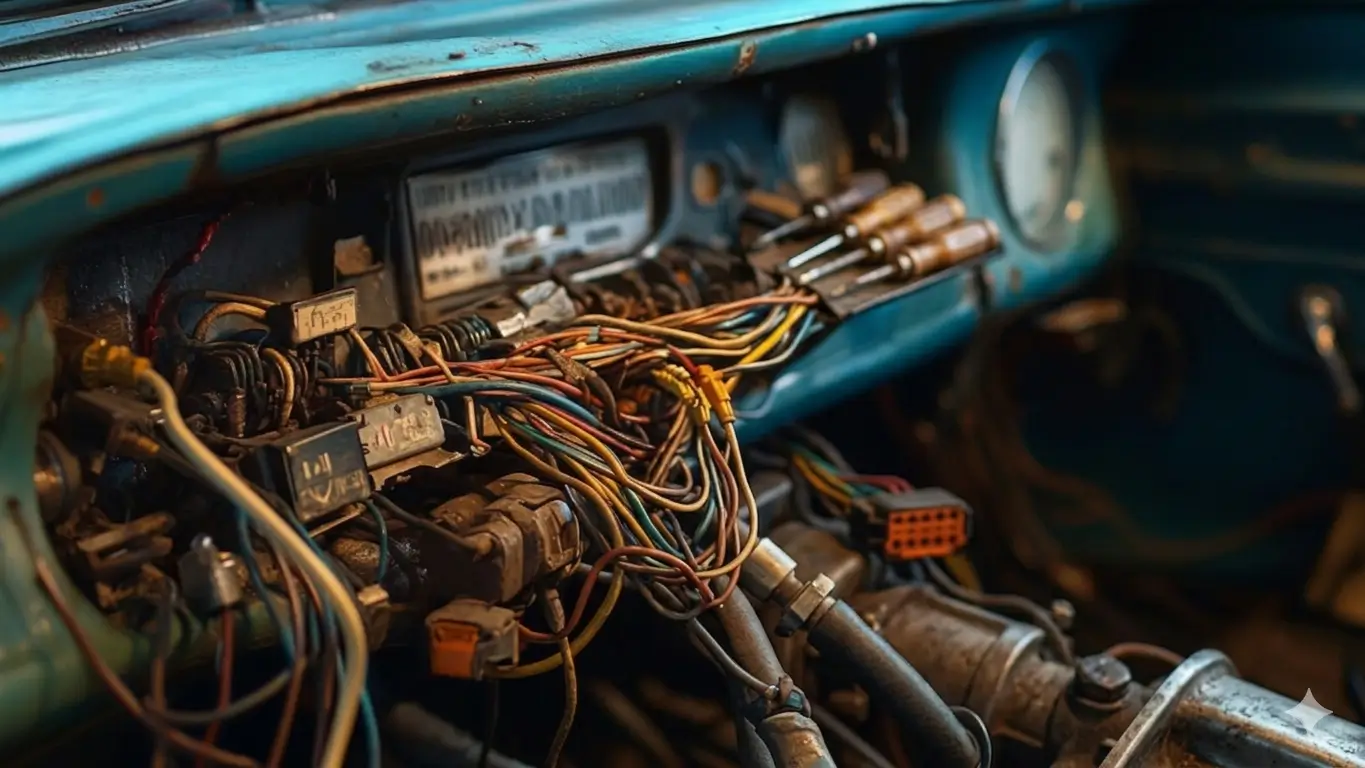
- Battery drain
- Flickering lights
- Burning smell
- Blown fuses
- Random failures
Why Do Classic Car Electrical Systems Fail More Often?
1. Aging Wiring
Old wiring develops resistance and loses efficiency.
2. Corrosion (Coastal Warning)
Salt air accelerates corrosion and increases resistance.
3. Poor Ground Connections
Rust and loose connections break the circuit loop.
4. Previous Owner Modifications
Poor wiring work creates unstable electrical systems.
How to Tell If Your Classic Car Has a Bad Ground
Grounding issues cause unstable electrical behavior.
Signs:
- Flickering lights
- Erratic gauges
- Intermittent issues
Fix:
Clean ground to bare metal and reattach
Why Are My Lights Flickering?
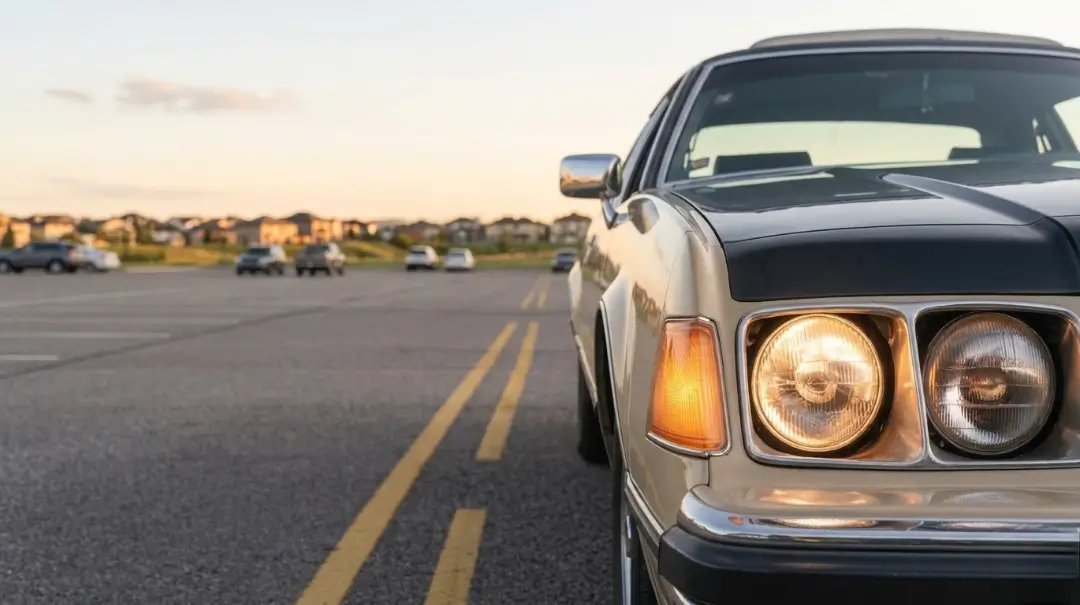
Flickering lights are caused by voltage instability, usually from poor grounding or resistance.
Generator vs Alternator — Which Is Better?
Alternators provide more stable power, especially for modern use.
- Generator → original, lower output
- Alternator → higher output, more reliable
How to Check If Your System Is Healthy
Basic voltage checks reveal system health.
- Battery → ~12.6V
- Running → 13.5–14.5V
- No hot wires
- Stable lights
If not → deeper issue
Troubleshooting Table
| Symptom | Likely Cause | Pro Tip |
|---|---|---|
| Flickering lights | Bad ground | Clean contact |
| Battery dies | Parasitic drain | Check circuits |
| Slow crank | Corroded cables | Replace cables |
| Burning smell | Insulation damage | Disconnect battery |
Mechanic’s Secret: “Green Death”
Corrosion inside wiring destroys conductivity.
If wire is green inside:
- It’s dead
- Must be replaced
Pro Tip: Voltage Drop Test (Most Skipped Test)
Voltage drop testing reveals hidden resistance in wiring.
Compare voltage at both ends of a wire
If lower at the component → resistance exists
Why Location Matters (Huntington Beach / Orange County)
Coastal air accelerates corrosion and electrical failure.
Why Electrical Problems Should Never Be Ignored
Electrical systems are interconnected — small issues spread.
Risks:
- System instability
- Component damage
- Fire hazard
When to Consider Wiring Restoration
Full restoration is needed when wiring becomes unsafe or unreliable.
Signs:
- Repeated failures
- Brittle wiring
- System instability
Frequently Asked Questions
Can I jump-start a 6V car with 12V?
No, it can damage electrical components.
Why does my car smell like rotten eggs?
Usually caused by an overcharging battery releasing sulfur gas.
What causes battery drain?
Parasitic draw or electrical/wiring faults.
Final Summary
A classic car electrical system works as a loop:
- Battery supplies power
- Wiring distributes it
- Ground returns it
If the loop is broken, electrical problems occur.
Professional Electrical Help
If you’re dealing with electrical issues:
Contact Coastline Classic Car Restorations in Huntington Beach.
We specialize in:
- Diagnostics
- Wiring restoration
- Reliable electrical solutions
For complete support, visit our classic car electrical wiring repair service page.