

Quick Answer
Electrical problems in classic cars are disruptions in electrical current flow caused by degraded wiring, faulty grounding, corrosion, or resistance buildup, resulting in system malfunctions such as dim lights, starting issues, and inconsistent performance.
According to experts at Hagerty, the majority of ‘mystery’ electrical failures in vintage vehicles aren’t caused by component failure, but rather by poor grounding and decades of corrosion at connection points.
Why Do Electrical Problems Happen in Classic Cars?
Electrical problems occur when current cannot flow efficiently through the system due to resistance, poor connections, or degraded components — especially in older designs, which you can better understand in our guide on how a classic car electrical system works.
Root Causes:
- Aging wiring insulation
- Corrosion at connectors
- Weak or missing ground connections
- Voltage drop due to resistance
- Outdated electrical system design
In most cases, parts are not broken — electrical flow is disrupted.
How Electrical Failures Are Connected
This chain explains 90% of classic car electrical issues.
Key Concept: What Is Voltage Drop?
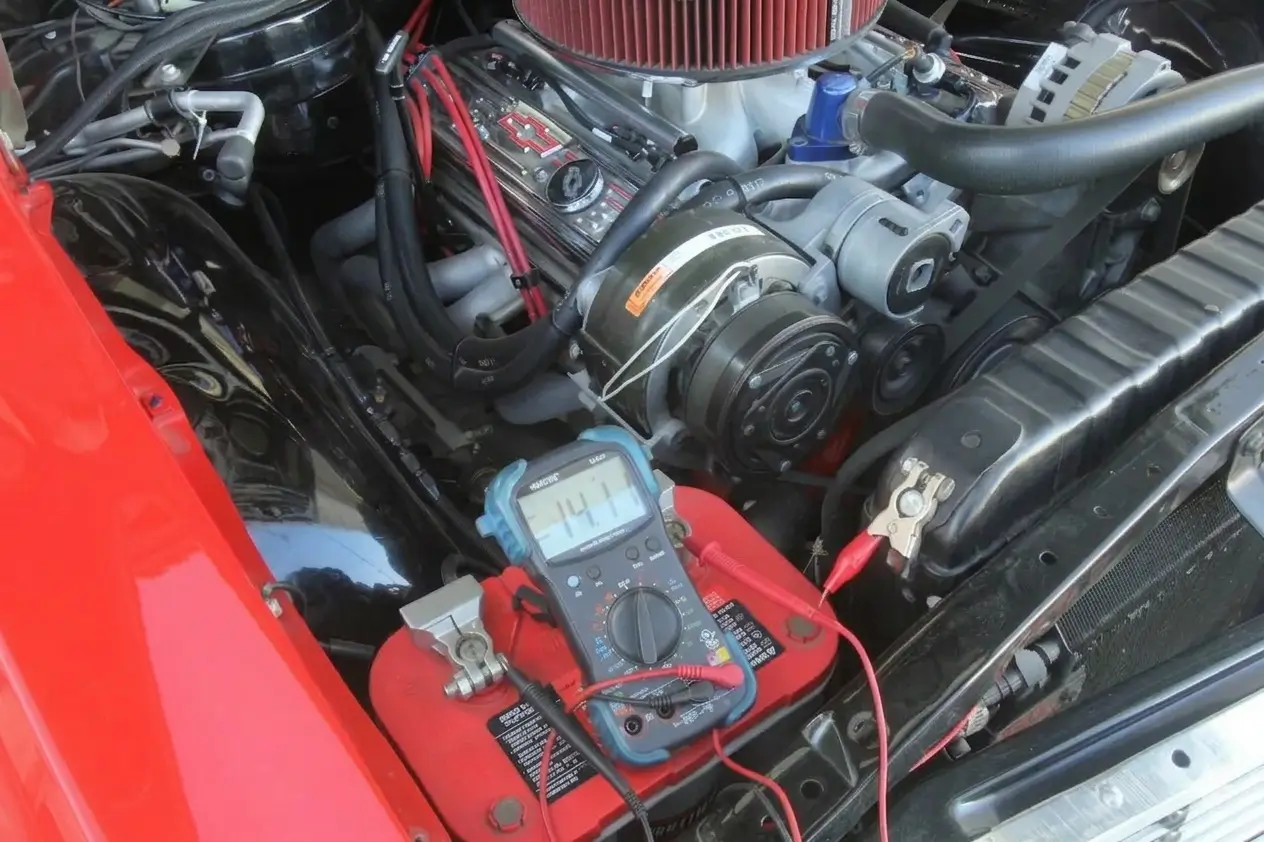
Voltage drop is the loss of electrical pressure as current moves through a circuit due to resistance — a deeper breakdown can be found in our guide on voltage drop in classic cars.
Effects:
- Dim headlights
- Weak starter motor
- Slow or inconsistent system behavior
Voltage drop is one of the most common hidden causes of electrical problems.
Why Classic Cars Are More Prone to Electrical Issues
Classic vehicles were not engineered for long-term durability under modern usage conditions.
Over time:
- Insulation cracks → exposes wires
- Moisture causes corrosion
- Heat cycles increase resistance
- Grounds weaken → disrupt circuits
Result: Unstable electrical flow affecting multiple systems at once
Most Common Electrical Problems in Classic Cars
1. Flickering or Dim Lights
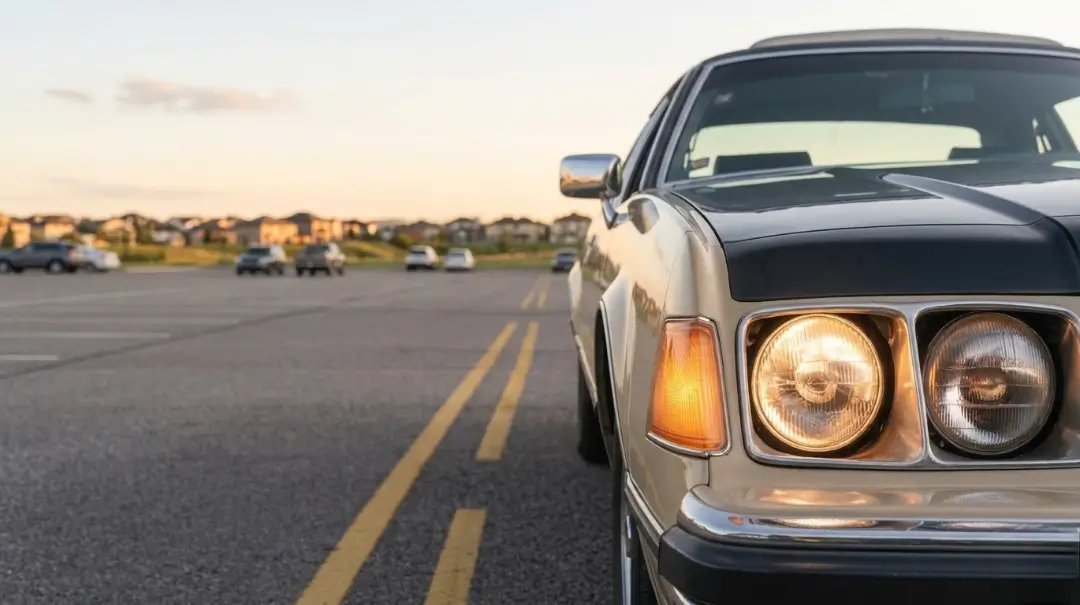
Flickering lights are caused by poor grounding or voltage drop in the electrical system — one of the most common symptoms explained in our article on why classic car lights flicker.
Causes:
- Corroded ground connections
- Worn wiring
- Weak alternator or generator
Early indicator of electrical system degradation.
2. Battery Drain or Starting Problems
Battery issues are usually caused by parasitic drain or inefficient charging systems.
Causes:
- Faulty wiring
- Corroded terminals
- Weak charging system
- Improper electrical modifications
A hidden electrical draw can drain the battery even when the vehicle is off.
3. Faulty Gauges or Instrument Cluster Issues
Gauge failures occur due to inconsistent voltage supply or grounding issues.
Symptoms:
- Incorrect readings
- Non-functioning gauges
- Intermittent operation
4. Wiring Deterioration
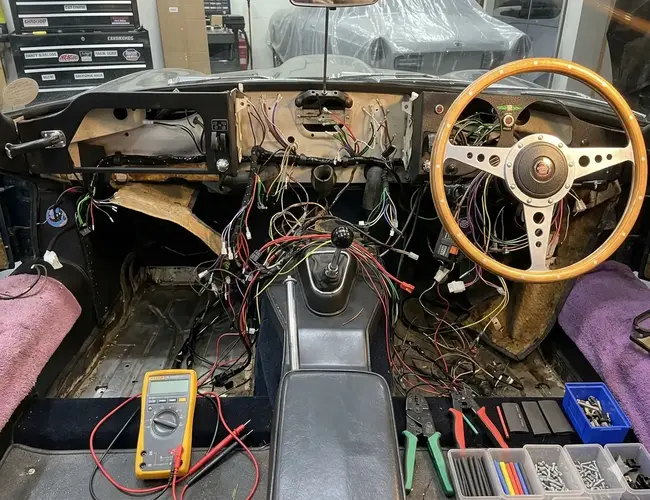
Old wiring becomes brittle and unsafe, leading to short circuits and electrical failures — which raises an important question: is it safe to patch old classic car wiring or should it be replaced?
Common Issues:
- Cracked insulation
- Exposed wires
- Intermittent connectivity
One of the most critical safety concerns in classic vehicles.
5. Blown Fuses or Circuit Failures
Frequent fuse failures indicate short circuits or overloaded electrical systems.
Not random — always a diagnosable issue.
6. Charging System Problems
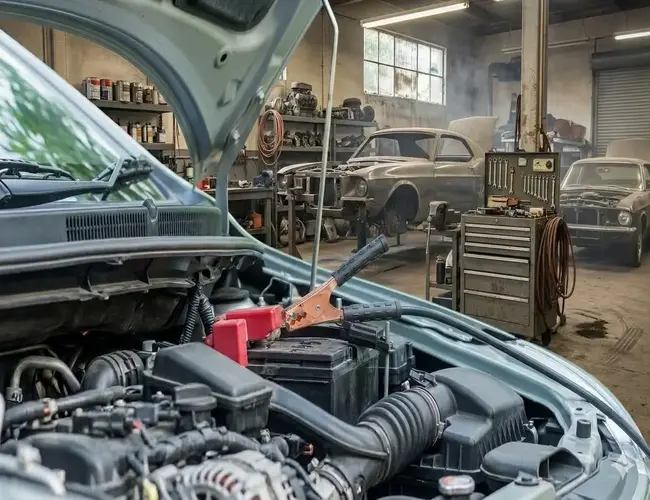
Charging issues occur when the system cannot maintain stable voltage output.
Symptoms:
- Battery not charging
- Loss of electrical power
- Inconsistent voltage
Older systems struggle with modern electrical loads.
Common Electrical Myths That Can Damage Your Classic Car
Misunderstanding electrical systems can lead to serious damage or safety risks.
- Myth: Use a higher amp fuse
→ Reality: Causes overheating and fire risk - Myth: Electrical issues are random
→ Reality: They follow predictable patterns - Myth: Always preserve original wiring
→ Reality: Unsafe wiring should be replaced
Why Does My Classic Car Act “Random”?
Classic cars behave inconsistently due to intermittent electrical faults, not randomness.
Common Causes:
Heat Soak (Warm Start Issue)
Heat increases resistance → reduces current flow
Intermittent Grounding
Weak ground causes:
- Flickering lights
- Electrical interference
Parasitic Battery Drain
Hidden electrical draw drains battery over time
How Do You Diagnose Electrical Problems?
Electrical diagnostics focus on testing voltage, resistance, and grounding integrity — and often require understanding schematics, which you can learn in our guide on how to read a classic car wiring diagram.
What Technicians Check:
- Wiring condition
- Ground connections
- Battery health
- Charging system output
- Circuit continuity
Tools Used:
- Digital multimeter
- Test light
- Continuity tester
Accurate diagnosis prevents unnecessary part replacement.
DIY vs Professional Electrical Repair
Simple electrical fixes can be done at home, but complex wiring issues require professional restoration.
| Repair Type | Cost | Difficulty | When to Choose |
|---|---|---|---|
| Cleaning battery terminals | $5–$20 | Easy | Minor starting issues |
| Replacing ground cables | $20–$100 | Moderate | Flickering lights |
| Diagnosing battery drain | $50–$150 | Moderate | Battery issues |
| Full wiring harness replacement | $1,500–$3,000+ | Advanced | System-wide failure |
Professional repair ensures safe, long-term reliability.
Further, prices will be based upon factors & inspection. See our full guide on classic car wiring restoration cost.
Restoration vs Modern Electrical Upgrades (Restomod)
Owners choose between originality and reliability — especially when deciding between modern upgrades like fuel injection systems, covered in our guide on LS swap or EFI conversion.
Factory Restoration
- Maintains authenticity
- Preserves original wiring
Restomod Upgrades
- Improves reliability — especially when upgrading older systems, such as converting a classic car from 6V to 12V for better performance.
- Adds modern wiring and alternators
Ideal for frequently driven vehicles.
Best Electrical Restoration Solutions
Electrical restoration improves performance by restoring proper current flow.
Common Solutions:
- Wiring harness replacement — choosing the right system matters, whether it’s aftermarket or OEM, as explained in our comparison of Painless vs American vs factory wiring.
- Connector repair
- Ground system improvement
- Gauge restoration
- Charging system upgrades
Restoring electrical flow solves most long-term issues.
When Should You Replace Wiring?
Replace wiring when it becomes unsafe or unreliable.
Warning Signs:
- Brittle insulation
- Frequent electrical failures
- Intermittent system behavior
Coastal Impact on Electrical Systems (Huntington Beach & Orange County)
Salt air accelerates corrosion, increasing electrical resistance.
Affected Areas:
- Battery terminals
- Ground points
- Connectors
Leads to:
- Voltage drop
- Starting issues
- Electrical instability
Frequently Asked Questions
Why won’t my classic car start when hot?
Heat increases resistance in starter circuits.
Why do my lights flicker when I use signals?
Poor grounding causes voltage drop.
How do I detect a parasitic battery drain?
Use a multimeter to measure current draw.
Should I upgrade to an alternator?
Yes, for stable voltage and modern reliability.
Real Technicians Insight
In real restoration environments:
Most “major electrical failures” are caused by minor connection issues.
Priority Checks:
- Ground connections
- Voltage levels
- Wiring integrity
This approach avoids unnecessary repairs.
Final Summary
Electrical problems in classic cars are caused by:
- Poor grounding
- Voltage drop
- Wiring deterioration
- Corrosion
Fixing the electrical pathway, not just components, is the key to reliability.
Professional Electrical Repair & Restoration
Professional electrical restoration ensures reliable performance — and if you’re experiencing ongoing issues, our classic car electrical wiring repair services can fully diagnose and restore your system at Coastline Classic Car Restorations in Huntington Beach.
Further Reading on Classic Car Electrical Systems
To better understand and diagnose electrical issues in your classic vehicle, explore these in-depth guides: