

Best Wiring Harness for Classic Cars
- Painless Performance → Best for custom builds and modern upgrades
- American Autowire → Best for factory-style restoration with reliability
- Factory Wiring → Best for originality only
For most classic cars, American Autowire is the best overall choice.
Quick Decision Guide
If your car is mostly stock → Choose American Autowire
If your car has modern upgrades → Choose Painless
If your goal is originality → Keep factory wiring
If unsure → American Autowire is the safest option
Which Wiring Harness Is Right for Your Build?
Your decision depends on three factors:
- Build type: restoration vs restomod
- Electrical demand: stock vs upgraded components
- Installation preference: plug-and-play vs custom routing
Modern upgrades like EFI, electric fans, LED lighting, digital gauges, and audio systems increase circuit demand and require a more capable harness.
Choosing the wrong system leads to fitment issues, voltage problems, and rework — and often results in electrical problems in classic cars.
Quick Comparison: Painless vs American Autowire vs Factory Wiring
| Feature | Painless | American Autowire | Factory Wiring |
|---|---|---|---|
| Best Use | Custom builds | Restoration | Originality |
| Install | Moderate | Easier | Difficult |
| Reliability | High | Very High | Low |
| Modern Support | Excellent | Good | Poor |
| Flexibility | High | Medium | None |
| Instruction Quality | Good | Excellent | None |
American Autowire offers the best balance for most drivers and restorations.
Painless vs American Autowire for a Restomod
For restomod builds, the difference is clear:
- Painless → Maximum flexibility, custom routing, ideal for non-stock layouts
- American Autowire → Structured install, factory-style routing, easier execution
Shop Insight:
American Autowire is easier for most installs due to better labeling and instructions, while Painless is preferred when builders want to fully customize or hide wiring.
Is a Painless Wiring Harness Worth It?
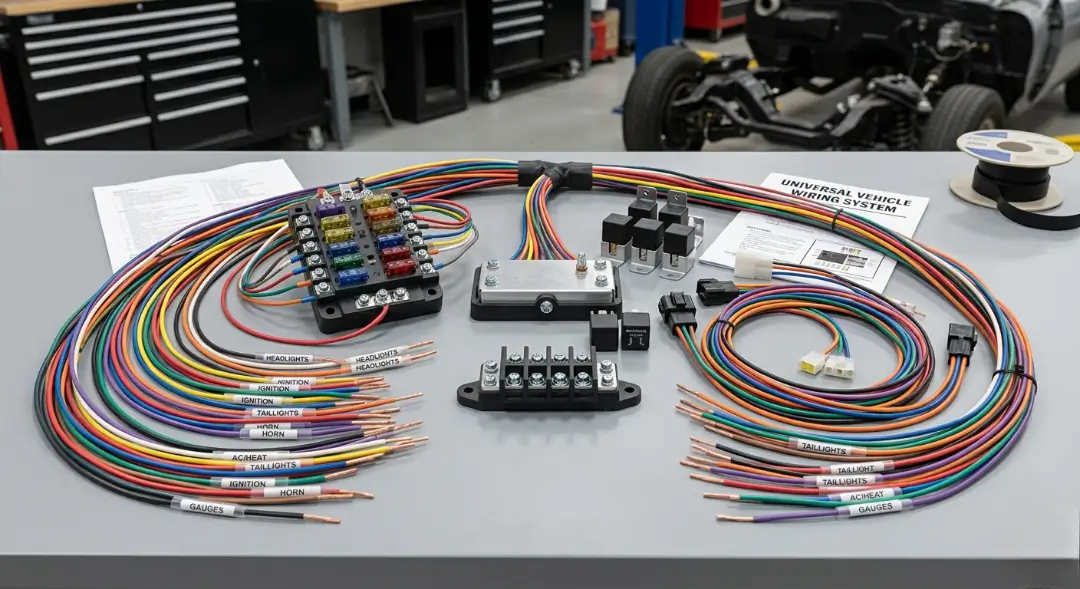
Best for:
- Modified builds
- High electrical demand
- Custom layouts
Advantages:
- Supports modern systems (EFI, fans, relays)
- Flexible routing
- Works well with aftermarket fuse blocks
Trade-offs:
- More planning required
- Longer install time
- Less factory-correct
Choose Painless when customization matters more than simplicity.
Why American Autowire Is the Go-To Choice
Best for:
- Factory-style restorations
- Reliable daily drivers
- Clean installs
Advantages:
- Vehicle-specific fit
- Organized circuits
- Strong instructions
- Easier troubleshooting
Trade-offs:
- Less flexible for custom builds
- Requires proper crimping and terminal work
Best overall balance of reliability, fit, and ease.
For many owners, investing in complete, pre-built wiring harnesses is the most effective way to ensure a clean, factory-style install without the headache of custom fabrication.
Factory Wiring: When Does It Make Sense?
Only choose factory wiring if:
- You are restoring for originality
- The car is rarely driven
Risks:
- Brittle insulation
- Corroded terminals
- Limited load capacity
- No support for modern electronics
Not recommended for regularly driven vehicles — especially if you’ve already noticed issues like classic car lights flickering or unstable electrical behavior.
The $500 Mistake: Buying Universal Kits for Model-Specific Cars
Trying to save money with a universal kit often backfires.
What goes wrong:
- Poor fitment
- Extra splicing and routing
- Missing factory connection points
- Increased install time
- Harder troubleshooting
What looks like savings often becomes higher labor costs and future electrical issues, including problems like a classic car battery dying overnight.
In practice, universal kits are one of the most common sources of unfinished or unreliable wiring jobs.
Real-World Scenario
Many owners say:
“I just want to replace my wiring.”
But the car includes:
- Electric fans
- LED lighting
- Modern stereo
- Additional accessories
At that point, a stock-style harness is no longer sufficient — and underlying issues like parasitic drain in a classic car often go unresolved.
Do You Need a 12-Circuit or 21-Circuit Harness?
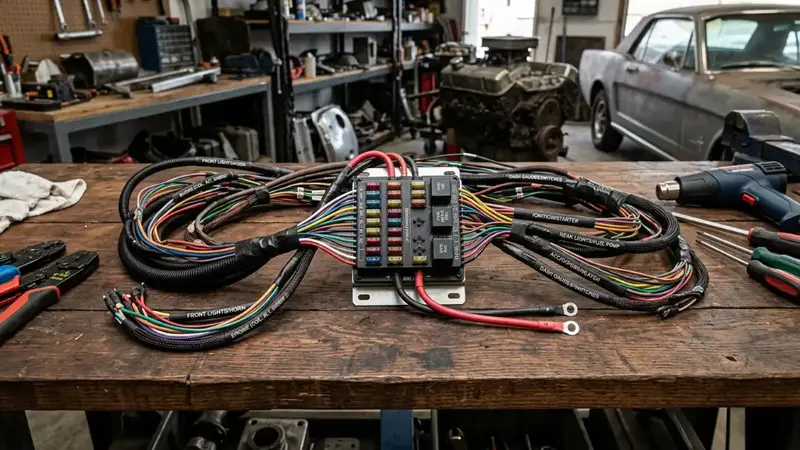
- 12-circuit: Basic systems, near-stock cars
- 21-circuit: Required for upgrades (fans, EFI, audio, accessories)
Most modernized classics benefit from 21 circuits for flexibility and future expansion — especially when upgrading systems such as a 6V to 12V conversion.
How Long Does It Take to Wire a Classic Car?
Time depends on complexity:
- Structured, vehicle-specific install → faster
- Custom or universal harness → significantly longer
Key time factors:
- Routing through firewall (grommets)
- Fuse block placement
- Grounding strategy
- Crimping and connections
- Circuit testing
Labor is often underestimated and directly impacts total cost.
Why Wiring Fails Faster in Coastal Areas (Orange County & Huntington Beach)
Salt air accelerates:
- Terminal corrosion
- Resistance buildup
- Grounding issues
Older wiring is especially vulnerable.
Many of these failures start with early warning signs like a burning smell in a classic car or inconsistent electrical performance.
Cost vs Value
| Option | Cost | Value |
|---|---|---|
| Factory Wiring | Lower | Low reliability |
| American Autowire | Medium | High |
| Painless | Higher | Maximum flexibility |
Lower upfront cost often leads to higher long-term expense.
Why Installation Quality Matters
Most wiring problems are caused by installation, not the harness itself.
Common mistakes:
- Poor grounding
- Loose connections
- Incorrect routing
- Improper crimping
- Missing heat shrink
- Wrong wire gauge
These issues often point to deeper problems — here’s how to identify them in our guide: Signs a classic car needs a wiring harness.
Why Work With a Specialist Shop
At Coastline Classic Car Restorations in Huntington Beach, CA, we:
- Match the harness to your build
- Plan routing and grounding correctly
- Ensure proper installation
- Prevent common electrical issues
Correct setup ensures long-term reliability.
If you’re experiencing any of these issues or planning a wiring upgrade, it’s best to have a professional handle it properly from the start.
Get services for classic electrical related issues.
Frequently Asked Questions
Which wiring harness is best for a classic car?
American Autowire is the best overall choice for most restorations. Painless is better for custom builds.
Is American Autowire easier to install than Painless?
Yes. It typically offers better instructions and a more structured layout, making installation easier.
Can a wiring harness improve electrical performance?
Yes. A modern harness improves voltage stability, reliability, and system efficiency.
Should I replace my factory wiring harness?
Yes, if it is aged or brittle. Old wiring is unreliable and can become unsafe.
Why is my new wiring harness still causing problems?
Most issues come from poor installation, grounding problems, or incorrect connections.
Is upgrading a wiring harness worth it?
Yes. It improves reliability and safely supports modern components.
Final Verdict
American Autowire = best overall choice
Painless = best for custom builds
Factory wiring = best for originality only
For most classic car owners, American Autowire delivers the best combination of reliability, fit, and ease of installation.