

Quick Answer
No—patching old classic car wiring is not safe. It creates resistance, traps heat, and can lead to insulation failure and electrical fires, especially in aging wiring systems.
What Does “Patching Wiring” Actually Mean?
Patching wiring means repairing a damaged section using tape, connectors, or temporary fixes instead of replacing the wire or full harness.
In classic cars, this is not a real repair—it’s a temporary cover-up of a failing electrical system.
While it may seem like a simple fix for a broken wire, these interventions often lead to more complex issues within the harness.
Why Patching Old Wiring Is Dangerous
Patching increases resistance and traps heat, which can lead to electrical failure and fire.
Core Failure Chain:
Quick Reality Check
Electrical tape or quick patches are not safe.
They:
- Trap heat inside degraded copper
- Fail under vibration
- Do not fix internal corrosion
In many cases, this is exactly how electrical fires begin.
Why People Try to Patch Wiring (And Why It Fails)
Patching feels like a quick fix—but it hides deeper system failure.
Common thought:
“I’ll just tape it for now.”
Reality:
You’re not fixing a wire—you’re covering up a system-wide electrical problem.
The “Green Death” — What’s Happening Inside the Wire
Old copper wiring oxidizes internally, increasing resistance and reducing current flow.
Over time:
- Copper turns green
- Resistance increases
- Electrical flow weakens
This damage exists inside the wire, not just on the surface.
The Real Reason Patching Causes Fires
1. The Bottleneck Effect (Resistance = Heat)
A patch creates a restriction that turns the wire into a heat source.
What happens:
- Old wire already has internal resistance
- Patch creates a narrow junction
- Heat builds at that point
The wire becomes a heating element under load
2. The Wicking Effect (Hidden Corrosion)
Corrosion spreads internally beyond what you can see.
Even if you repair 1 inch:
Damage may extend 6–12 inches deeper
3. The Insulation Domino Effect
Old insulation cracks and creates new failure points during repair.
Result:
- Micro-cracks spread
- New weak spots form
- Failures multiply
The Hidden Problem: Heat Gets Trapped
Tape traps heat inside damaged wiring, accelerating failure.
Over time:
- Tape softens
- Insulation melts
- Adjacent materials ignite
This is a common cause of classic car fires.
Real-World Scenario (What Actually Happens)
Temporary fixes lead to cascading failures.
Typical pattern:
- Patch one wire → works temporarily
- Lights begin to flicker
- Voltage drops
- Another wire fails
“It worked last week” is a classic sign of deeper failure.
Quick Real-World Check (Highly Useful)
After driving for 10 minutes:
- Touch the headlight switch
If it feels hot → wiring is under stress
This is an early warning sign of dangerous resistance buildup.
Warning Signs Your Wiring Is Becoming Dangerous
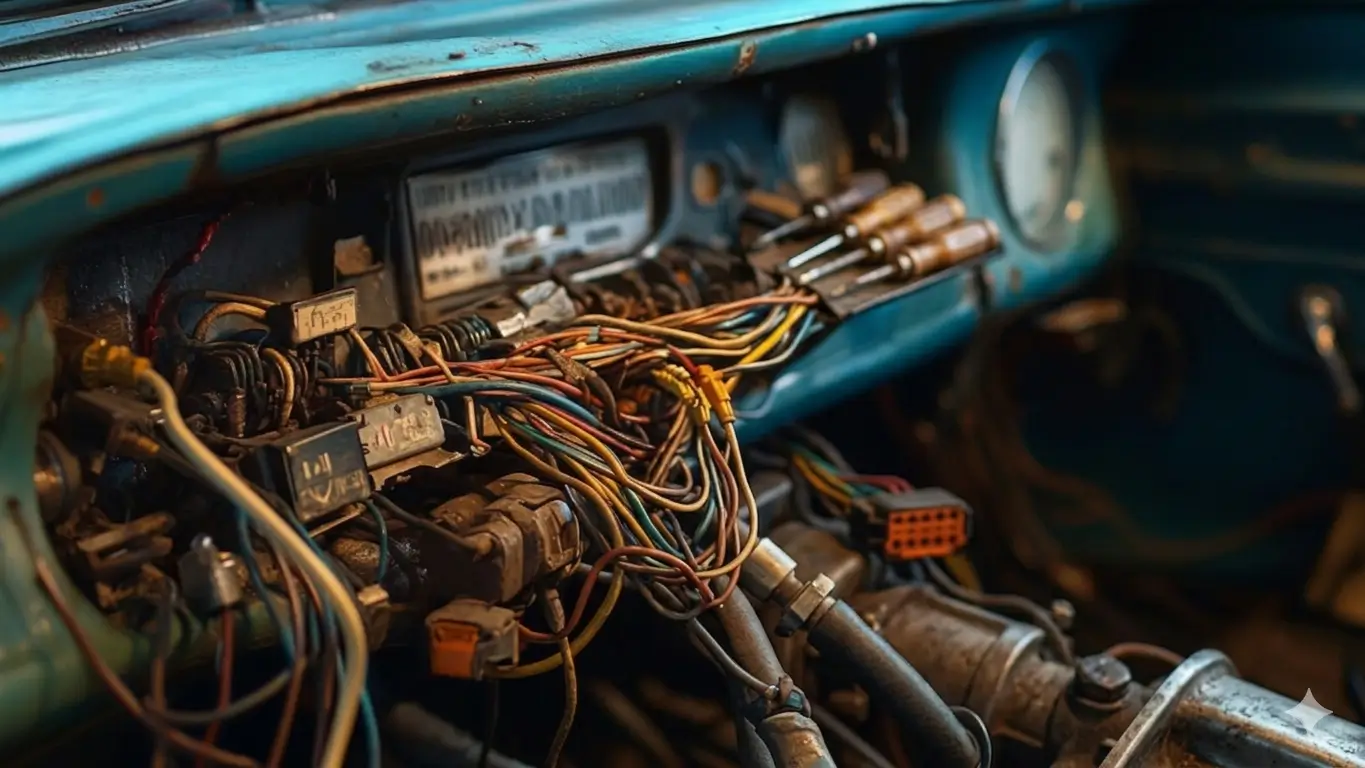
These symptoms indicate serious electrical risk.
- Burning plastic smell
- Hot switches or wires
- Flickering lights
- Frequent blown fuses
Stop driving immediately—these are early fire indicators.
Before you attempt to troubleshoot, ensure you understand basic electrical safety to prevent accidental shorts or injury while inspecting the vehicle.
Can I Just Tape It?
No—tape does not fix the underlying electrical problem.
Tape:
- Does not repair copper
- Does not reduce resistance
- Does not stop corrosion
It hides the problem—it doesn’t solve it.
How to Identify a Dangerous Patch
Turn on:
- Headlights
- Accessories
Then check:
- Is the wire warm?
- Is there voltage drop across the repair?
If yes: That patch is generating heat → failure risk
Coastal Warning (Huntington Beach & Orange County Factor)
Salt air accelerates corrosion and electrical failure.
Coastal vehicles experience:
- Faster oxidation
- Higher resistance buildup
- Increased fire risk
Temporary Fix vs Real Solution
| Approach | Result | Risk |
|---|---|---|
| Tape patch | Temporary | High |
| Isolated repair | Limited | Moderate |
| Full rewire | Permanent | Low |
Long-term reliability requires proper repair or replacement.
In many cases, upgrading the entire electrical system (like converting from 6V to 12V) is a safer long-term solution.
Common Questions
Why does a patched wire get hot?
Increased resistance in the repair area creates heat under load.
Can a bad wire cause a fire?
Yes, resistance and heat buildup can lead to electrical fires.
How long does wiring last?
Typically 40–60 years before significant degradation occurs.
What Happens If You Ignore It
Small wiring issues can escalate into major failures or fire hazards.
Problems begin with:
- Small cracks
- Temporary patches
- Hidden resistance
Then escalate quickly under load.
When Should You Replace Wiring?
Replace wiring when it becomes brittle, damaged, or unreliable.
If a wire cracks or feels stiff:
It is no longer safe—it’s chemically degraded.
If the wiring system has reached this point, the next step is choosing the right classic car wiring harness instead of continuing to patch failing wires.
Final Rule of Thumb
If a wire crunches or cracks when bent:
The harness is no longer repairable
It is a fire risk—not a fixable issue
Final Summary
Patching old classic car wiring is unsafe because:
- It increases resistance
- Traps heat
- Fails under load
- Leads to electrical fires
The only safe solution is proper wiring repair or full replacement
Professional Electrical Inspection
If you’ve patched wiring or noticed warning signs:
Professional diagnostics ensure:
- Hidden damage is identified
- Fire risks are eliminated
- Electrical systems are restored safely
Contact Coastline Classic Car Restoration today for a full inspection and safe, long-term solution—or get our professional wiring repair services.
Related Guides
Explore more electrical related guides: