

Can a Classic Car Transmission Be Damaged During Shipping?
Yes — a classic car transmission can absolutely be damaged during shipping if it is not prepared, supported, and packaged correctly.
Unlike ordinary automotive parts, vintage transmissions are extremely heavy, unevenly balanced, and often contain irreplaceable factory components that are difficult or impossible to replace today.
A single freight handling mistake may damage the housing, crack mounting points, bend shafts, or destroy original identification markings that contribute to collector authenticity.
Improper shipping preparation commonly leads to:
- cracked bellhousings
- damaged tailshaft housings
- bent input shafts
- broken mounting ears
- fluid contamination
- damaged splines
- lost factory tags
- torque converter damage
For collector-grade drivetrains, proper shipping preparation is often just as important as the rebuild itself.
Most Important Transmission Shipping Steps
Before shipping a classic transmission for restoration, experienced restorers typically recommend:
✔ Fully draining transmission fluid
✔ Securing or removing the torque converter
✔ Protecting exposed shafts and splines
✔ Supporting the transmission evenly during transport
✔ Documenting serial numbers and factory tags
✔ Using a reinforced pallet or crate
✔ Purchasing proper freight insurance
Skipping even one of these steps can increase the risk of shipping damage significantly.
Why Classic Transmissions Require Extra Shipping Protection
Classic car transmissions are especially vulnerable during freight transport because of their weight distribution and fragile cast components.
Many vintage units contain:
- original castings
- discontinued housings
- matching-number stampings
- factory identification tags
- rare internal components
Older transmissions were never designed to be repeatedly moved by forklifts, freight terminals, or palletized shipping systems.
During transport, sudden impacts or improper support can place stress on sensitive areas like:
- bellhousings
- tailshaft housings
- mounting ears
- pump assemblies
- input shafts
For matching-number restorations, damage to original stampings or factory tags may affect the long-term originality and collector value of the vehicle.
Drain Transmission Fluid Completely Before Shipping
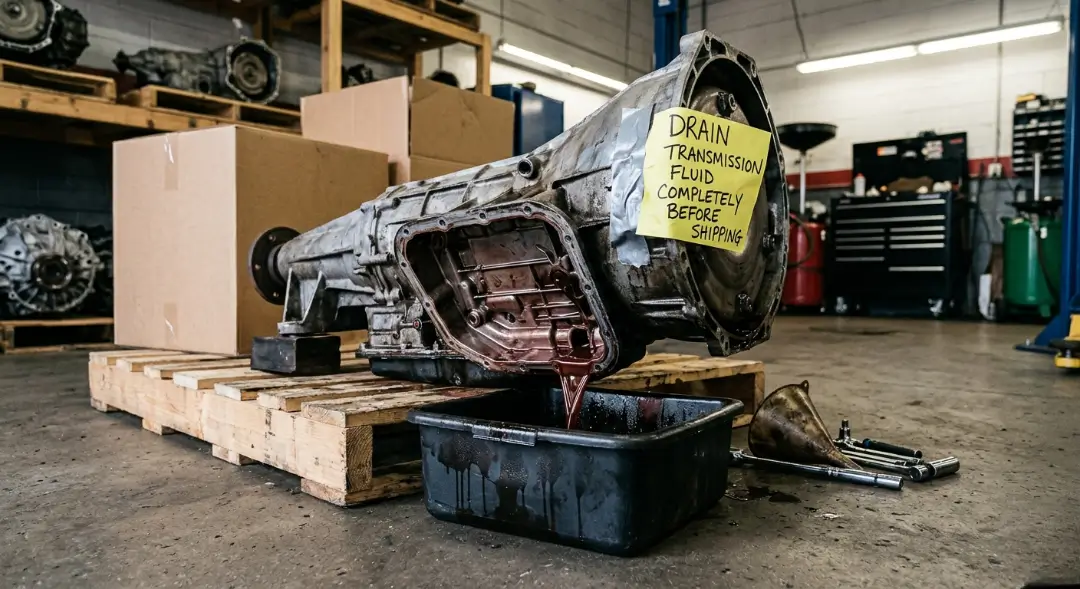
One of the most overlooked shipping mistakes is leaving transmission fluid inside the unit, especially since modern transmission fluids can affect certain classic transmissions differently than original formulations.
Even small amounts of residual ATF can leak from seals or tailshaft openings during freight movement.
Once fluid saturates cardboard, shrink wrap, or pallet materials, the packaging may weaken during transit and increase the risk of handling damage.
Most professional restorers recommend allowing the transmission to drain thoroughly for several hours before packaging.
Proper fluid draining helps prevent:
- freight contamination
- leaking during transit
- rejected shipments
- internal moisture buildup
- weakened packaging materials
After draining, many restorers install temporary plugs or protective caps over openings to reduce contamination exposure during shipping.
Why the Torque Converter Must Be Secured Properly
An unsecured torque converter is one of the most common causes of transmission shipping damage.
During transport, heavy vibration and sudden movement may allow the converter to slide forward inside the bellhousing. When this happens, the converter can:
- damage the front pump
- crack the bellhousing
- stress the input shaft
- damage internal sealing surfaces
Some restorers prefer removing the converter completely and packaging it separately in dense foam or reinforced wrapping.
If the converter remains installed, it should be firmly secured so it cannot shift during freight movement.
Many transmission cases arrive cracked simply because the converter was left loose during shipping.
Crafting vs. Pallet Shipping
Most classic transmissions are shipped either on a pallet or inside a reinforced crate.
Pallet Shipping
Pallet shipping is commonly used for:
- rebuildable transmission cores
- local freight transport
- heavier automatic transmissions
A properly prepared pallet should:
- support the transmission evenly
- prevent tipping during forklift movement
- minimize side-to-side shifting
- keep the center of gravity stable
- protect fragile housings from impact
Heavy-duty hardwood pallets are generally preferred over lightweight consumer-grade pallets because vintage transmissions place significant stress on support points during transport.
Industrial banding straps and reinforced mounting brackets are often used to secure the transmission firmly to the pallet.
Crated Shipping
Crating typically provides the highest level of protection for:
- rare transmissions
- matching-number drivetrains
- fragile aluminum housings
- collector-grade manual gearboxes
A reinforced crate helps reduce:
- forklift impact damage
- moisture exposure
- freight shifting
- accidental drops
- weather-related contamination
For rare or investment-grade transmissions, crating is often worth the additional cost because replacement housings may no longer exist.
Protect Exposed Shafts, Splines, and Tail Housings
Input shafts and output shafts are especially vulnerable during freight handling.
Even small spline damage may later cause:
- seal leaks
- driveline vibration
- installation problems
- clutch alignment issues
Professional transmission packaging often includes multiple protection layers.
Common protection methods include:
- wrapping splines in dense bubble wrap
- sliding PVC pipe sleeves over exposed shafts
- using foam padding around tail housings
- installing protective plastic caps
- reinforcing sensitive support points
Some restorers also build custom transmission cradles inside crates to prevent movement during shipping.
This extra protection helps absorb impact if the pallet shifts during loading or unloading.
Document Serial Numbers and Factory Tags Before Shipping
Before any transmission leaves for restoration, all identifying information should be documented carefully.
Important items include:
- serial numbers
- VIN stampings
- casting numbers
- assembly tags
- factory identification plates
Good documentation usually includes:
- wide-angle photos
- close-up stamping images
- timestamped shipping photos
- inventory records
This is especially important for:
- matching-number restorations
- concours vehicles
- rare drivetrains
- investment-grade classics
If a tag becomes damaged or detached during shipping, documentation may help preserve authenticity records later.
Freight Insurance Matters More Than Many Owners Realize
Many classic transmissions cannot simply be replaced through normal parts suppliers, especially when dealing with extinct classic car transmission parts that are no longer manufactured.
Original housings, rare castings, and factory-stamped components may take years to locate again — if replacements exist at all.
Freight insurance helps protect against:
- catastrophic shipping damage
- lost shipments
- mishandling at freight terminals
- forklift accidents
- transit-related breakage
Owners frequently underestimate the replacement difficulty of original driveline components until damage occurs.
For valuable collector vehicles, proper freight coverage is often considered part of responsible restoration planning.
Choosing the Right Freight Carrier
Not every shipping company is experienced with heavy drivetrain components, which is why choosing the right classic car restoration shop often plays a major role in protecting rare driveline parts during transport.
Vintage transmissions require careful handling because of their not weight distribution and fragile external castings.
When selecting a freight company, important questions include:
- Is liftgate service available?
- Is the shipment insured?
- How will the transmission be secured?
- Are tracking updates provided?
- Does the carrier regularly handle automotive freight?
- Is residential pickup available?
Freight carriers familiar with palletized driveline components are generally better equipped to transport classic transmissions safely.
Common Shipping Mistakes That Cause Transmission Damage
Many restoration delays begin with shipping damage that occurred before the rebuild even started.
Common problems include:
- Leaving fluid inside the transmission
- Failing to secure the torque converter
- Weak pallet mounting
- No spline or shaft protection
- Missing serial number documentation
- Poor crate reinforcement
- Insufficient freight insurance
- Improper forklift handling support
In some cases, transmissions arrive with cracked tail housings because the unit shifted sideways during transport.
In others, exposed splines become dented after striking pallet edges or metal freight rails.
These problems are often preventable with better preparation before shipping.
Why Matching-Number Transmissions Require Extra Care
For collector-grade vehicles, the original transmission may carry substantial historical and financial significance.
Damage to:
- original housings
- VIN stampings
- factory tags
- matching-number identifiers
may affect future collector confidence and resale value.
This is especially important for:
- rare muscle cars
- concours restorations
- investment-grade classics
- historically significant vehicles
Many Southern California restorations involve long-distance freight shipping because rare drivetrains are often sourced from other states or sent to specialized rebuilders.
In areas like Huntington Beach, preserving original factory markings and drivetrain authenticity is often considered a critical part of the restoration process itself.
What Owners Should Ask Before Shipping a Transmission
Before shipping a classic transmission for restoration, owners should confirm:
- Has all fluid been drained completely?
- Is the torque converter secured properly?
- Are shafts and splines protected?
- Have serial numbers been documented?
- Is crating recommended for this transmission?
- Is the shipment fully insured?
- Does the freight carrier handle drivetrain components regularly?
- Are factory tags protected from damage?
Careful preparation before shipping can prevent expensive problems later in the restoration process.
Frequently Asked Questions
Should transmission fluid be drained before shipping?
Yes. Most restorers recommend fully draining the transmission before freight transport to reduce leakage, contamination, and packaging failure risks.
Why does the torque converter need to be secured?
An unsecured converter may shift during shipping and damage the pump, bellhousing, or input shaft during transit.
Is crating better than pallet shipping?
Crating generally provides more protection for rare, fragile, or collector-grade transmissions, especially during long-distance freight transport.
Should I document serial numbers before shipping?
Absolutely. Photographing VIN stampings, casting numbers, and factory tags helps preserve documentation and collector authenticity.
Can shipping damage a classic transmission?
Yes. Improper packaging or freight handling may damage housings, shafts, splines, mounting points, and original factory components.
Classic Car Transmission Restoration Services in Huntington Beach
At Coastline Classic Car Restorations in Huntington Beach, CA, we understand how important proper transmission shipping preparation is for collector-grade restorations.
Our restoration-focused approach emphasizes:
- careful drivetrain handling
- collector-conscious packaging
- serial number documentation
- transmission protection procedures
- authenticity preservation
- restoration-focused freight coordination
Need guidance preparing a classic transmission for restoration shipping?
Contact Coastline Classic Car Restorations in Huntington Beach for professional drivetrain shipping consultation, transmission and driveline restoration services, and restoration-focused transmission evaluation.