

Rebuild the engine if it is original to the vehicle, its major castings are reusable, and preserving authenticity matters.
Replace it if the block cannot be repaired reliably, the existing engine is already non-original, or the vehicle is being built primarily for modern performance.
The right choice depends on:
- Engine condition and repairability
- Numbers-matching status
- Collector value
- Performance and drivability goals
- Total completed cost
Do not make the decision from smoke, noise, low power, or an initial estimate alone. Diagnose the problem and inspect the engine before authorizing either option.
Based on more than 14 years of classic-car restoration experience, our approach is to evaluate the engine as part of the complete vehicle.
Engine identity, casting condition, previous machine work, supporting systems, intended use, and the owner’s restoration goals should all be documented before recommending a rebuild or replacement.
Engine Rebuild vs. Replacement: Quick Comparison
| Factor | Engine rebuild | Engine replacement |
|---|---|---|
| Existing engine | Restores the current engine | Installs a different engine |
| Originality | Can preserve the original block | May reduce originality |
| Collector value | Often preferred for valuable classics | Better suited to modified builds |
| Performance | Factory specifications or selected upgrades | Stock, crate, or modern performance options |
| Cost certainty | Can change after teardown | Can increase through installation changes |
| Parts compatibility | Retains the existing configuration | May require supporting modifications |
| Best suited for | Original and numbers-matching cars | Restomods or unusable engines |
Neither option is automatically cheaper or more reliable. The quality of the parts, machine work, assembly, installation, cooling, and tuning determines the final result.
What Does Rebuilding an Engine Mean?
An engine rebuild restores the engine already in the vehicle.
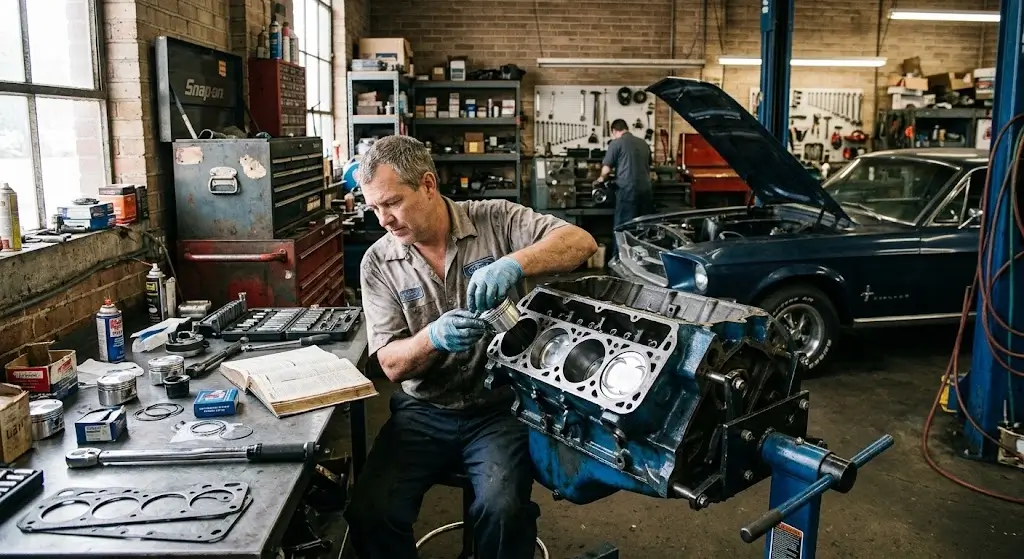
A professional rebuild typically includes:
- Complete disassembly
- Cleaning and inspection
- Replacing worn bearings, rings, seals, gaskets, and other components
- Reassembly to documented specifications
- Initial startup, tuning, testing, and validation
The goal is to restore proper compression, oil control, internal clearances, and mechanical reliability while retaining as much of the original engine as practical.
A rebuild is not simply a collection of new parts. Its quality depends on accurate measurements, correct machining, compatible components, clean assembly, proper lubrication, and final tuning.
When Is Rebuilding the Better Choice?
The engine is original or numbers-matching
For many collector cars, the original engine contributes to authenticity and market value.
Before disassembly or machining, document:
- Engine numbers and stampings
- Casting numbers and dates
- Existing components
- Vehicle identification information
- Overall engine condition
Care must be taken to protect identifying marks during cleaning and machining.
The block and major components are reusable
Normal internal wear does not make an engine unsuitable for rebuilding.
Rebuilding may remain practical when the engine has:
- Worn but machinable cylinder bores
- Repairable deck surfaces
- Serviceable crankshaft journals
- Replaceable bearings and piston rings
- Repairable threads
- Available replacement or custom parts
The block, cylinder heads, crankshaft, and connecting rods should be inspected before the final scope is approved.
The vehicle is being restored to factory specifications
Rebuilding allows the vehicle to retain its original:
- Engine type and displacement
- External appearance
- Induction system
- Accessory configuration
- Factory-style performance characteristics
This makes rebuilding especially appropriate for factory-correct, concours, and preservation-focused restorations.
You want improved reliability without changing the car’s identity
A rebuild can include carefully selected reliability improvements without converting the vehicle into a restomod.
Depending on the engine and restoration goal, these may include improved sealing materials, updated bearings, better oil-control components, hardened valve-seat solutions, or discreet ignition improvements.
Any upgrade should be evaluated for compatibility and its effect on originality.
When Is Engine Replacement the Better Choice?
The engine block is not safely repairable
Replacement may be necessary if inspection finds:
- Serious cracks in structural or sealing areas
- Extensive internal corrosion
- Severe freeze damage
- Insufficient material for additional machining
A cracked block does not always require replacement. Certain cracks can be repaired by a specialist, depending on their location, severity, casting material, and intended use.
The block should be professionally cleaned and inspected before it is rejected.
The vehicle is a performance-focused restomod
A replacement engine may better support goals such as:
- Significantly higher horsepower
- Electronic fuel injection
- Improved highway drivability
- Easier replacement-part availability
- Modern accessories
For a valuable car, consider preserving and storing the original engine rather than discarding it. This can protect future restoration options.
The existing engine is already non-original
When the factory engine is already missing, the decision may depend more heavily on:
- Reliability
- Parts availability
- Total cost
- Performance goals
- Installation complexity
- Intended vehicle use
A period-correct replacement may restore the proper appearance and engine type, but it should not be represented as numbers-matching.
What Types of Replacement Engines Are Available?
Crate engine
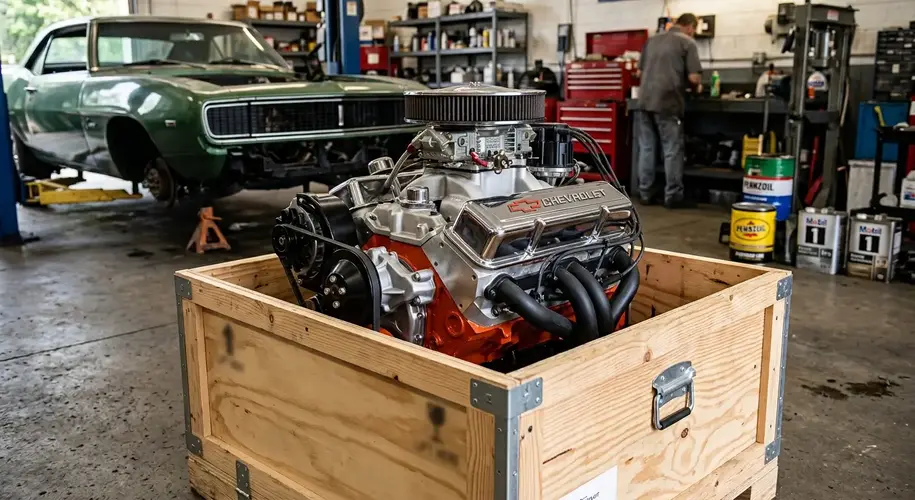
A crate engine is sold as an assembled engine package. It may provide published specifications, optional performance levels, and supplier warranty coverage.
However, installation may require changes to the cooling system, fuel delivery, ignition, exhaust, mounts, accessories, or transmission.
Used engine
A used engine may have a lower purchase price but an uncertain maintenance and operating history.
Before installation, inspect its compression, oil pressure, casting identity, storage condition, and evidence of overheating or internal wear.
Period-correct engine
A period-correct engine matches the type used in the vehicle but is not the engine originally installed at the factory.
This can be a practical choice when factory-style appearance matters but the original engine is unavailable.
Diagnose the Engine Before Deciding
Symptoms do not always prove that an engine needs rebuilding or replacement.
For example:
- Knocking may come from bearings, but it may also originate from an accessory, flexplate, or torque-converter component.
- Low power may result from ignition timing, carburetor problems, fuel restriction, or compression loss.
- Rough running may be caused by worn spark plugs, vacuum leaks, incorrect fuel mixture, or internal wear.
- Overheating may originate in the radiator, fan, thermostat, water pump, coolant flow, or engine tuning.
- White smoke may indicate coolant entering a cylinder, but additional testing is needed to confirm the cause.
Review our guide to common classic-car engine problems before assuming major engine work is required.
An engine evaluation may include:
- Compression testing
- Leak-down testing
- Oil-pressure testing
- Cooling-system pressure testing
- Combustion-gas testing
- Spark-plug and oil-filter inspection
- Cylinder borescope inspection
- Engine-number verification
These tests help identify internal problems, but final repairability may not be known until the engine is disassembled, cleaned, measured, and inspected.
Which Option Costs Less?
Neither option is always less expensive.
A rebuild estimate can increase after teardown reveals damaged cylinder walls, crankshaft wear, previous repairs, corrosion, or unavailable parts.
A replacement engine may appear less expensive until the complete installation is considered.
Replacement-related costs may include:
- Engine purchase and shipping
- Fuel and ignition components
- Exhaust modifications
- Wiring and electronic controls
- Transmission adapters
- Installation and tuning
Compare the complete installed replacement cost with the complete rebuild cost—not the replacement engine’s advertised price alone.
For detailed pricing factors, read our classic-car engine rebuild cost guide.
How Does Each Choice Affect Collector Value?
Rebuilding the original engine is generally preferable when the vehicle’s value depends on factory configuration and documented provenance.
Maintain records of:
- Engine identification numbers
- Inspection findings
- Machining performed
- Parts retained and replaced
- Assembly specifications
- Testing and tuning
Replacement may have less effect on value when the vehicle is already modified, the original engine is missing, or the intended buyer prioritizes performance and drivability.
If the original engine exists, keeping it with the vehicle may help preserve future value even when a modern engine is installed.
A Practical Decision Framework
Use these steps before choosing:
1. Confirm the engine’s identity
Determine whether it is original, numbers-matching, period-correct, or previously replaced.
2. Define the vehicle’s purpose
Decide whether the car is intended for factory-correct restoration, concours presentation, weekend driving, touring, regular street use, or restomod performance.
3. Diagnose the existing problem
Rule out fuel, ignition, cooling, accessory, and drivetrain problems before assuming internal failure.
4. Evaluate repairability
Have the block and other major components cleaned, inspected, and measured.
5. Compare complete proposals
Compare the total rebuild scope against the total installed replacement scope, including supporting modifications, tuning, and warranty coverage.
Common Mistakes to Avoid
- Replacing an original engine before inspecting it
- Rebuilding a block before checking for cracks
- Discarding documented original components
- Ignoring cooling, transmission, driveline, or fuel-system compatibility
- Machining an original engine before documenting its identifying numbers
Frequently Asked Questions
Is rebuilding better than replacing a classic-car engine?
Rebuilding is usually better when the engine is original, historically important, and repairable. Replacement may be better when the existing engine cannot provide a reliable foundation or the project prioritizes modern performance.
Does replacing the engine reduce a classic car’s value?
It can, especially when the vehicle’s value depends on a numbers-matching drivetrain. The actual effect depends on the model, rarity, documentation, modifications, and buyer expectations.
Can a cracked engine block be rebuilt?
Sometimes. Repairability depends on the crack’s location and severity, the block material, available repair methods, and the engine’s intended use. A specialty machine shop should inspect it before a decision is made.
Is a rebuilt engine as reliable as a replacement?
It can be. Reliability depends on machining, parts quality, assembly, installation, cooling, lubrication, tuning, break-in, and maintenance.
Can an original engine be upgraded during rebuilding?
Yes. Selected reliability or performance improvements may be incorporated, but their compatibility, appearance, reversibility, and effect on collector value should be considered.
Make the Decision After Inspection
Choose rebuilding when the original engine remains repairable and preserving authenticity supports the vehicle’s restoration goals.
Choose replacement when the existing engine cannot be restored reliably or when a different engine better fits a clearly defined restomod or performance build.
With more than 14 years of classic-car restoration experience, Coastline Classic Car Restorations in Huntington Beach evaluates engine identity, internal condition, previous work, intended use, and supporting mechanical systems before recommending either option.
Our goal is to preserve the original engine when it remains a sound and appropriate foundation while considering replacement when inspection shows that rebuilding would not provide the desired reliability, performance, or long-term value.
Explore our classic-car engine rebuilding and restoration services or request an engine evaluation before committing to either option.