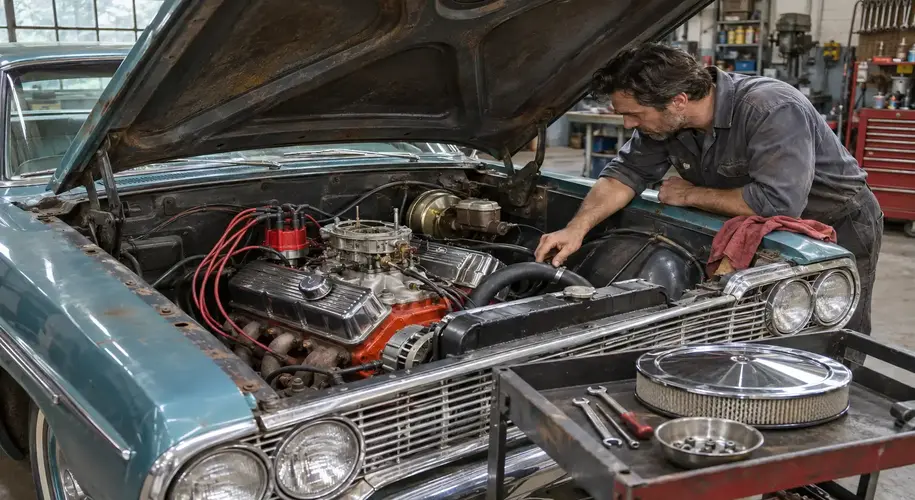
A professional classic-car engine rebuild may cost:
Straightforward rebuild: Approximately $5,000–$10,000 USD.
Rare-engine, extensive restoration, or performance build: $10,000–$20,000 or more.
Limited machine work or partial overhaul: May cost less but covers a narrower scope.
Budget guidance only: These ranges are preliminary guidance, not fixed quotes or a documented national average.
Confirm what is…
Quick Answer
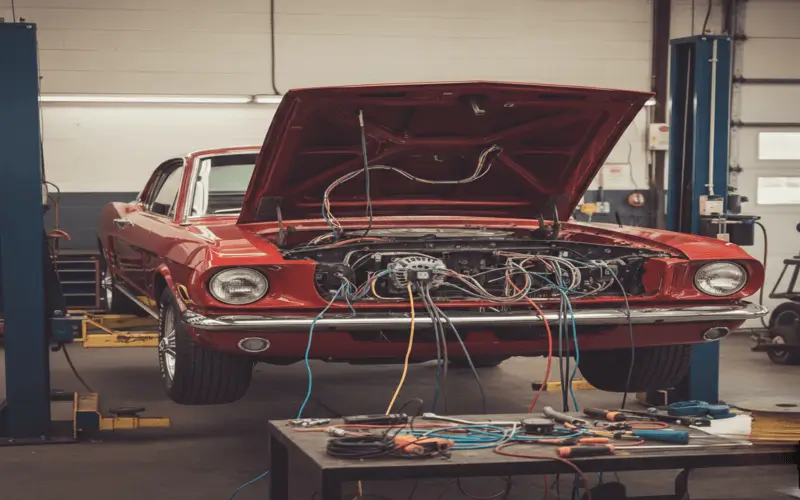
Electrical problems in classic cars occur when the electrical system becomes inefficient due to aging wiring, poor grounding, corrosion, and voltage drop.
This leads to weak current flow and unreliable performance across multiple components.
What are Electrical Problems in Classic Cars?
Electrical problems in classic cars are disruptions in electrical current flow caused…
Common classic car transmission problems include slipping, delayed engagement, hard shifting, grinding, fluid leaks, unusual noises, vibration, and overheating.
Some problems originate with fluid level, linkage, clutch operation, mounts, cooling, or external driveline components and may be corrected without rebuilding the transmission.
A rebuild becomes more likely when diagnosis confirms substantial internal wear, failed friction components, damaged…
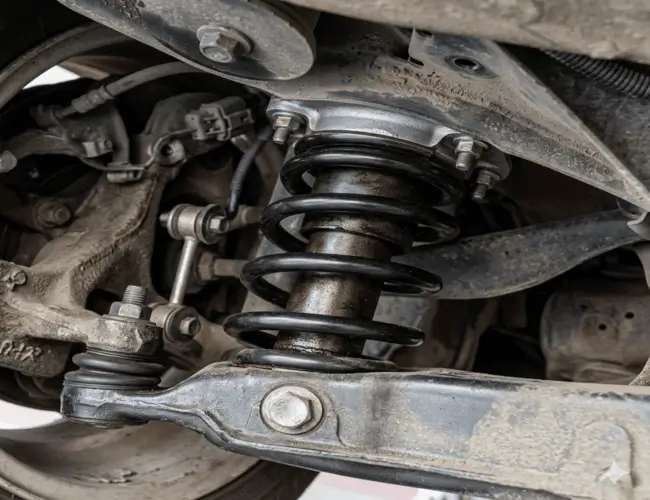
Suspension wear in classic cars is primarily caused by aging rubber bushings, worn ball joints, deteriorated shock absorbers, spring fatigue, corrosion, environmental exposure, long-term storage, and decades of mechanical stress.
Even low-mileage collector vehicles can experience suspension deterioration because many suspension materials naturally degrade with age regardless of how often the vehicle is driven.
As suspension components…
Common classic car engine problems include rough idle, hard starting, power loss, unusual noises, exhaust smoke, overheating, and oil leaks.
Possible causes: Ignition, fuel, and cooling faults, or internal wear.
Note when symptoms occur:
During startup
After warm-up
At idle
Under acceleration
Use the table below to identify initial checks and findings that require…
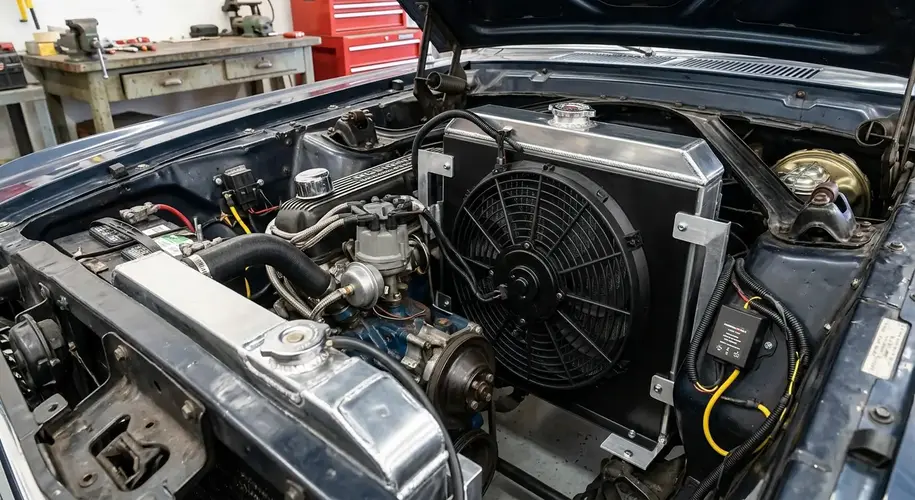
Electric fan conversions can improve cooling at idle when inadequate radiator airflow is the confirmed problem. They allow fan operation independently of engine RPM, but still depend on sufficient electrical power.
A conversion should be compared with repairing the existing mechanical fan system. The better choice depends on airflow requirements, available space, charging output, controls, and…