

Suspension wear in classic cars is primarily caused by aging rubber bushings, worn ball joints, deteriorated shock absorbers, spring fatigue, corrosion, environmental exposure, long-term storage, and decades of mechanical stress.
Even low-mileage collector vehicles can experience suspension deterioration because many suspension materials naturally degrade with age regardless of how often the vehicle is driven.
As suspension components wear, classic cars may develop steering looseness, uneven tire wear, excessive body movement, reduced ride comfort, and diminished handling performance.
Why Suspension Wear Is Different in Classic Cars
Unlike modern vehicles, classic cars often contain suspension components that are several decades old. While mileage contributes to wear, age itself can significantly affect suspension performance.
Many classic vehicles were originally equipped with rubber compounds, seals, bushings, and suspension materials that naturally deteriorate over time.
In addition, older suspension systems often require more maintenance than modern designs and may lack the corrosion-resistant coatings and advanced materials found in newer vehicles.
As a result, even well-preserved collector cars can develop suspension issues despite limited driving.
Aging Rubber Bushings
One of the most common causes of suspension wear in classic cars is the deterioration of rubber bushings.
Bushings are designed to absorb vibration, reduce noise, and allow controlled movement between suspension components. Over time, rubber hardens, dries out, cracks, and loses elasticity.
As bushings deteriorate, drivers may experience:
- Increased vibration
- Harsh ride quality
- Suspension noise
- Reduced steering precision
- Excessive suspension movement
In many classic vehicles, bushings may appear intact externally while suffering significant age-related deterioration internally.
Normal Mechanical Wear
Every mile driven places stress on suspension and steering components.
As the vehicle encounters bumps, potholes, uneven pavement, and road imperfections, suspension parts continuously absorb and distribute forces throughout the chassis.
Over time, this can contribute to wear in components such as:
- Ball joints
- Control arm bushings
- Shock absorbers
- Coil springs
- Leaf springs
- Steering linkage
- Sway bar components
- Tie rods
- Idler arms
- Pitman arms
Mechanical wear develops gradually and may not become noticeable until handling characteristics begin to change.
Corrosion and Environmental Exposure
Environmental conditions can accelerate suspension deterioration even when a classic car is not being driven regularly.
Common factors include:
- Moisture
- Humidity
- Salt air
- Temperature fluctuations
- Road debris
- UV exposure
These conditions can contribute to rust, oxidation, and deterioration of both metal and rubber components.
Corrosion commonly affects:
- Springs
- Control arms
- Suspension mounting points
- Fasteners
- Steering components
- Leaf spring assemblies
As corrosion progresses, components may weaken, lose structural integrity, and become more difficult to service properly.
Long-Term Storage
Many classic cars spend extended periods parked in garages, storage facilities, or private collections.
Although storage reduces mileage accumulation, prolonged inactivity can create its own suspension-related issues.
Common storage-related problems include:
- Hardened bushings
- Dry rot
- Surface corrosion
- Seized suspension components
- Flat-spotted tires
- Deteriorated seals
It is common for a vehicle that has been stored for years to require suspension repairs before returning to regular road use.
Worn Shock Absorbers
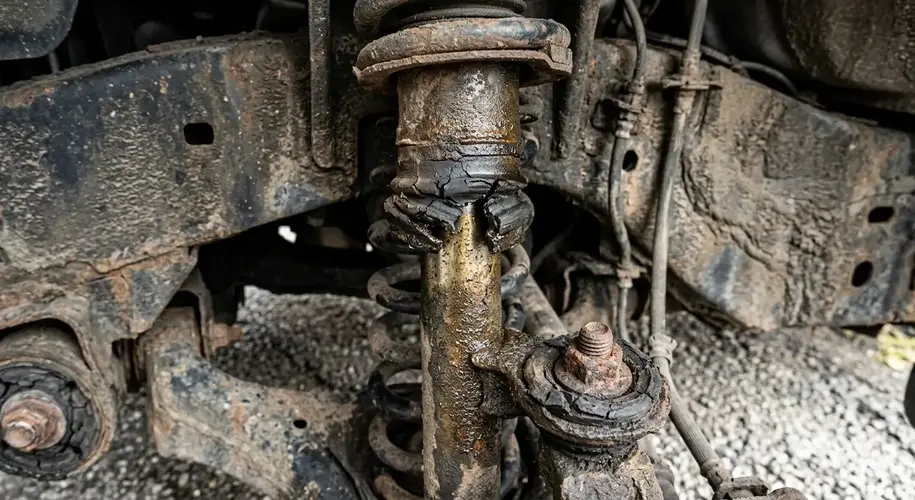
Shock absorbers play a critical role in controlling suspension movement and maintaining vehicle stability.
As shocks age, internal seals and damping components wear out, reducing their ability to control spring movement effectively.
Common symptoms of worn shock absorbers include:
- Excessive bouncing
- Increased body movement
- Reduced ride control
- Poor road stability
- Longer stopping distances
- Harsh ride characteristics
Because shock performance often declines gradually, many owners do not immediately recognize the loss of suspension control.
Spring Fatigue
Coil springs and leaf springs support vehicle weight while maintaining proper ride height and suspension geometry.
After decades of use, springs can gradually weaken and lose their original strength.
Spring fatigue may contribute to:
- Sagging ride height
- Uneven vehicle stance
- Excessive body roll
- Bottoming out over bumps
- Reduced suspension performance
Because spring fatigue develops slowly, changes often go unnoticed until handling and ride quality are significantly affected.
Wear in Classic Steering Components
Many classic vehicles utilize steering systems that contain components not commonly found in modern automobiles.
These may include:
- Pitman arms
- Idler arms
- Center links
- Steering boxes
Over time, lubrication breakdown, corrosion, and mechanical wear can create excessive play within the steering system.
This can lead to:
- Steering wander
- Loose steering feel
- Reduced directional stability
- Increased tire wear
Because steering and suspension systems work together, wear in either system can significantly affect vehicle handling.
How Do You Know If Suspension Wear Is Developing?
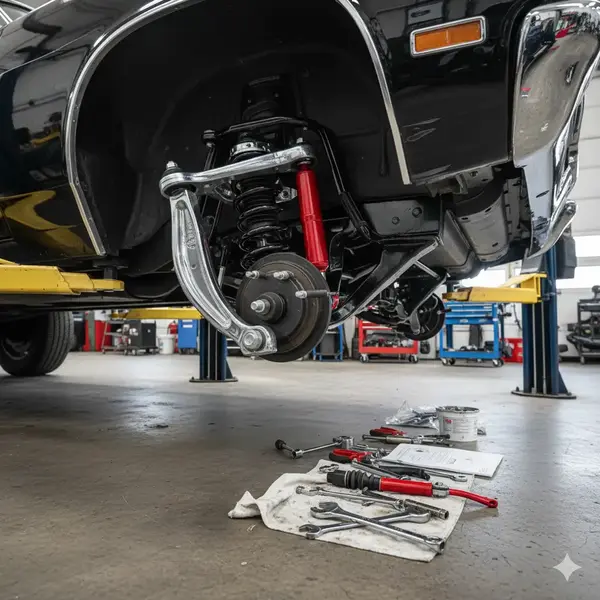
Suspension wear often develops gradually and may not produce obvious symptoms immediately.
Learning to recognize the warning signs that indicate a classic car may need suspension repair can help prevent larger issues from developing.
Common warning signs include:
- Excessive bouncing
- Uneven tire wear
- Steering wander
- Vehicle pulling to one side
- Clunking noises
- Rattling sounds
- Increased body roll
- Rough ride quality
- Sagging ride height
- Loose steering feel
When multiple symptoms appear together, a professional suspension inspection is often recommended.
What Is Checked During a Classic Car Suspension Inspection?
A comprehensive classic car suspension inspection evaluates many of the same components that may later be addressed during a complete classic car suspension restoration process.
Technicians typically inspect:
- Ball joints
- Bushings
- Shock absorbers
- Coil springs
- Leaf springs
- Tie rods
- Steering linkage
- Suspension mounting points
- Ride height measurements
- Steering free play
- Chassis attachment locations
Technicians also look for signs of corrosion, fatigue, cracking, fluid leakage, and excessive component movement.
Early detection can often prevent more extensive repairs later.
Why Early Suspension Repairs Matter
Addressing suspension wear early can help preserve vehicle performance, safety, and driving enjoyment.
Ignoring worn suspension components can affect far more than ride comfort.
As deterioration progresses, owners may begin experiencing many of the same handling and stability concerns discussed in how suspension wear can affect classic car safety, making early diagnosis and repair especially important.
Common consequences include:
- Accelerated tire wear
- Reduced steering precision
- Increased braking instability
- Additional suspension damage
- Higher repair costs
- Reduced overall drivability
Routine inspections can often identify developing problems before they become more significant repairs.
Frequently Asked Questions
Can a classic car have suspension problems even with low mileage?
Yes. Age-related deterioration can affect bushings, seals, shocks, and other suspension components even when a classic vehicle has been driven very little.
What are common signs of suspension wear in a classic car?
Common symptoms include excessive bouncing, uneven tire wear, steering wander, clunking noises, rough ride quality, and a loose steering feel.
Why do rubber suspension bushings wear out over time?
Rubber bushings naturally harden, crack, and lose flexibility as they age, reducing their ability to absorb vibration and control suspension movement.
Can long-term storage damage a classic car’s suspension system?
Yes. Extended storage can lead to dry rot, hardened bushings, corrosion, seized components, and other age-related suspension problems.
What components are checked during a suspension inspection?
Technicians typically inspect bushings, ball joints, shocks, springs, tie rods, steering linkage, mounting points, and overall suspension condition.
Why is it important to repair suspension wear early?
Early repairs can help prevent additional component damage, improve handling and safety, reduce tire wear, and lower future repair costs.
Professional Classic Car Suspension Inspection in Huntington Beach
At Coastline Classic Car Restorations in Huntington Beach, we frequently inspect classic vehicles that appear mechanically sound but contain suspension components that are 30, 40, or even 50 years old. In many cases, age-related deterioration is present even when mileage remains relatively low.
Our team inspects, diagnoses, and repairs suspension systems for vintage, muscle cars, and collector vehicles throughout Orange County.
We also provide classic car suspension repair services designed to correct worn components, improve ride quality, and restore proper handling characteristics.
We evaluate bushings, ball joints, springs, shock absorbers, steering linkage, ride height, suspension geometry, and related components to identify wear that may affect handling, stability, and overall drivability.
Whether your vehicle has been stored for years or is beginning to exhibit ride quality or steering concerns, a detailed suspension inspection can help identify problems before they become larger repairs.
A properly maintained suspension system helps preserve ride comfort, steering response, handling performance, safety, and the driving experience that makes classic car ownership enjoyable.