

A classic-car engine should not be rebuilt simply because it smokes, overheats, loses power, or makes noise.
The first step is determining what is wrong, whether the original engine remains repairable, and which solution fits the vehicle’s condition and restoration goals.
With more than 14 years of classic-car restoration experience, Coastline Classic Car Restorations provides engine evaluation, rebuilding, and restoration services for classic cars, antique vehicles, and muscle cars in Huntington Beach and throughout Orange County.
We help owners:
- Identify the problem before approving major work
- Determine whether a limited repair or complete rebuild is appropriate
- Preserve original and numbers-matching components when practical
- Understand the required scope before machining and parts are authorized
- Coordinate the engine with its cooling, fuel, ignition, exhaust, and driveline systems
- Restore dependable performance without losing the vehicle’s character
Request an engine evaluation or call (657) 540-8792.
Does Your Classic Car Need an Engine Rebuild?
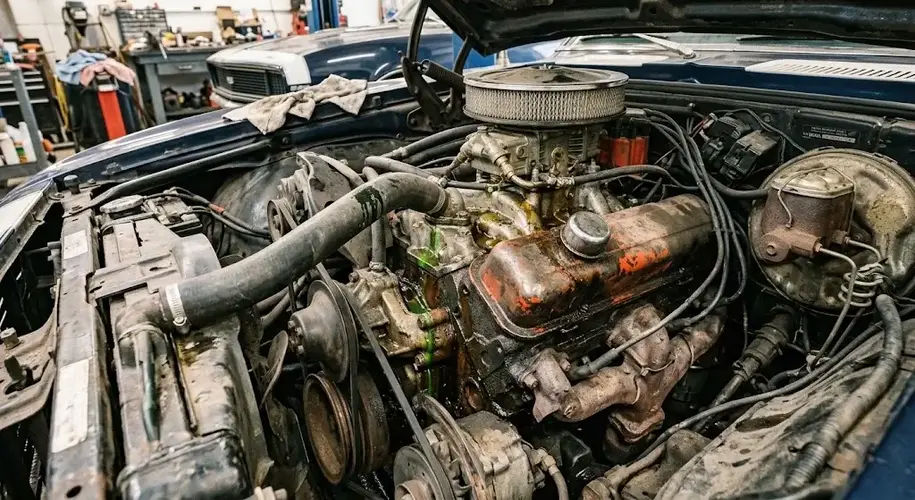
Engine noise, smoke, oil consumption, overheating, hard starting, and power loss do not automatically mean the engine requires rebuilding.
These symptoms can also result from ignition, fuel, cooling, electrical, valvetrain, gasket, or external mechanical problems.
Our evaluation is designed to distinguish smaller repairable faults from widespread internal wear.
This helps prevent unnecessary work while identifying problems that could cause additional damage if ignored.
Consider scheduling an evaluation if your classic car has:
- Persistent internal knocking
- Excessive oil consumption or blue smoke
- Verified low hot oil pressure
- Low or uneven compression
- Excessive blow-by
- Metal in the oil or filter
- Repeated overheating with internal damage
- Coolant-contaminated oil
- A seized engine or one that will not rotate safely
For additional guidance, review the common classic-car engine problems to check before rebuilding and the signs your classic-car engine may need rebuilding.
Persistent white smoke, coolant loss, cooling-system pressure, or adjacent low-compression readings may point to a specific sealing problem.
Learn more about head-gasket failure in classic cars.
Stop operating the engine if it has severe knocking, a sudden loss of oil pressure, rapid overheating, coolant-contaminated oil, heavy fluid loss, or signs that it is beginning to seize.
Our Engine Evaluation
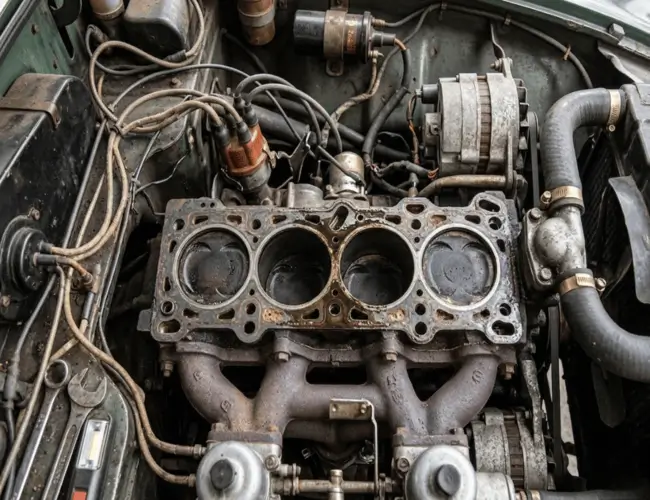
We evaluate the engine as part of the complete vehicle. Depending on its symptoms and condition, this may include:
- Reviewing its operating and maintenance history
- Verifying engine numbers, castings, and originality
- Inspecting fluids, spark plugs, leaks, and previous repairs
- Testing mechanical oil pressure
- Performing compression or leak-down testing
- Evaluating the cooling, fuel, ignition, and exhaust systems
- Inspecting the engine oil and filter
Compression testing can identify weak or inconsistent cylinders, but it does not determine the complete condition of an engine.
Our guide explains how to perform and interpret a compression test on a classic-car engine.
Testing helps determine whether the next step should be an external repair, cylinder-head service, limited internal repair, or engine removal and disassembly.
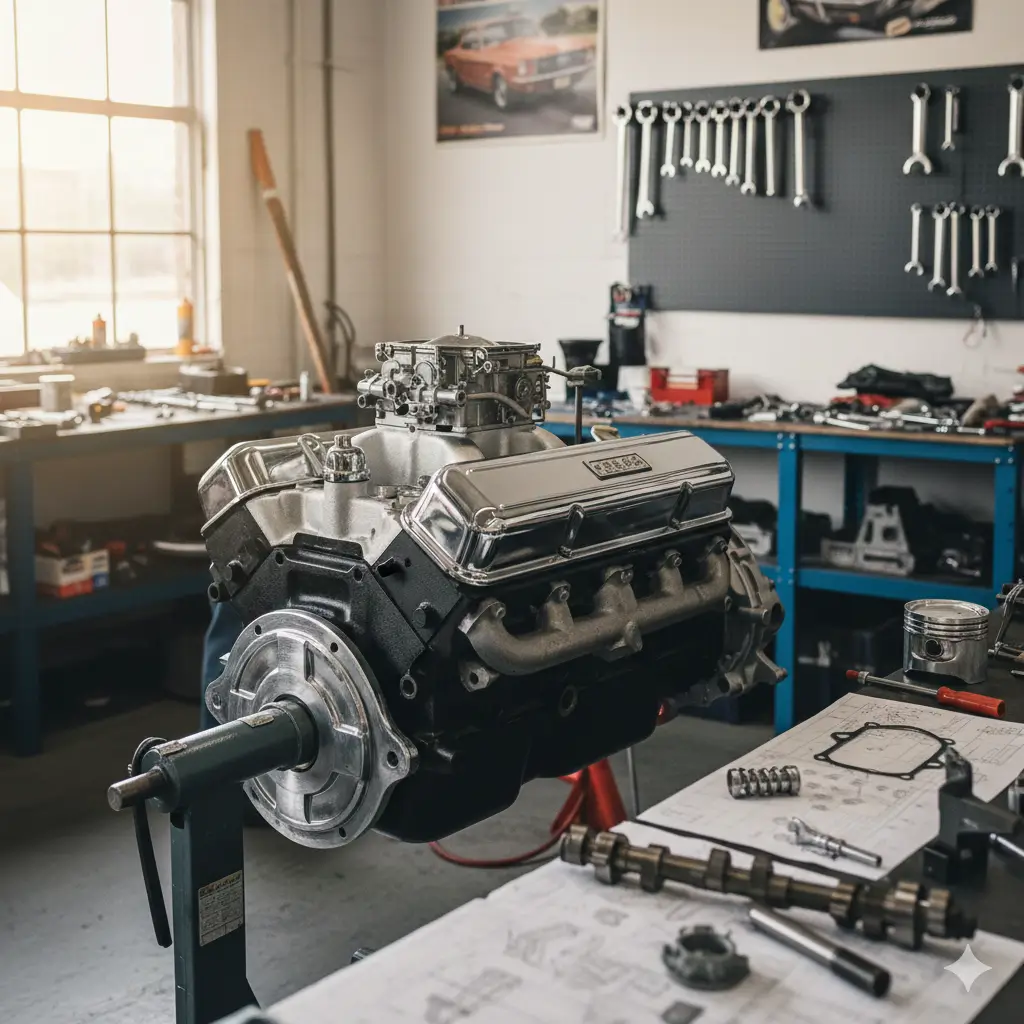
What Our Engine Rebuilding Service May Include
The exact scope depends on the engine design, inspection findings, measurements, originality goals, parts availability, and intended use.
A complete project may include:
- Engine removal and disassembly
- Documentation of numbers, castings, and existing components
- Cleaning, crack inspection, and internal measurement
- Required block, crankshaft, connecting-rod, and cylinder-head machine work
- Piston, ring, bearing, gasket, seal, timing, and oiling-system service
- Cylinder-head and valvetrain restoration
- Selection of OEM-style, NOS, reproduction, or upgraded parts
- Reassembly using documented clearances and proper fastener procedures
- Lubrication-system priming
- Installation, startup, leak inspection, and tuning
- Oil-pressure and coolant-temperature verification
- Break-in and follow-up service guidance
Not every engine requires every operation. Machine work and component replacement should be based on inspection and measurements rather than a predetermined package.
Our Engine Rebuilding Process
1. Define the Vehicle’s Goals
We determine whether the vehicle is intended for factory-correct restoration, preservation of its original engine, weekend driving, touring, period-correct performance, or restomod use.
2. Diagnose and Document
We evaluate the symptoms, engine identity, previous repairs, and supporting systems. Important numbers, stampings, and original components are documented before major cleaning or machining.
3. Disassemble and Inspect
When teardown is authorized, the engine is cleaned, measured, and inspected for cracks, cylinder damage, bearing wear, crankshaft condition, corrosion, previous machining, and failed repairs.
Findings that affect the approved scope are reviewed before additional work proceeds.
4. Machine, Restore, and Reassemble
Reusable components receive the preparation and machine work required for their condition.
The engine is assembled using compatible parts, established clearances, correct fastener procedures, proper lubrication, and careful attention to cleanliness.
5. Install, Start, and Validate
After installation, we verify oil pressure, coolant temperature, ignition timing, fuel-system operation, leaks, mechanical noise, and overall engine operation.
Dyno testing may be included when appropriate and specified in the approved scope.
6. Provide Break-In Guidance
Break-in requirements depend on the piston rings, cylinder-wall finish, camshaft, oil specification, internal clearances, and whether dyno break-in was completed.
We provide engine-specific operating, monitoring, early-service, and follow-up instructions. Review what to expect after a classic-car engine rebuild for more information.
Rebuild or Replace the Engine?
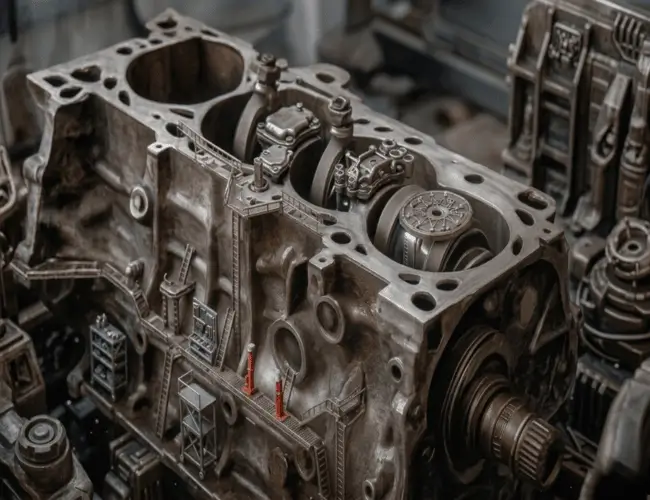
Rebuilding is often appropriate when the engine is original, its major components remain repairable, and preserving authenticity matters.
Replacement may be considered when the block cannot be repaired reliably, the original engine is already missing, or a different engine better suits a defined restomod or performance build.
Replacement can also require changes to the cooling, fuel, ignition, exhaust, electrical, mounting, or transmission systems. Review our engine rebuild versus replacement guide before choosing.
Supporting Systems
A rebuilt engine cannot perform reliably if its supporting systems remain inadequate or damaged. Related work may include:
- Cooling-system restoration
- Fuel and ignition service
- Exhaust repair
- Engine mounts and accessories
- Transmission and driveline restoration
- Wiring, charging, and grounding corrections
- Mechanical restoration services
Work outside the approved engine-rebuild scope is evaluated and authorized separately.
How Much Does an Engine Rebuild Cost?
Cost depends on the engine, existing damage, required machine work, parts availability, originality goals, removal and installation, and related repairs.
A final scope may not be possible until the engine has been disassembled, cleaned, and measured.
Review our classic-car engine rebuild cost guide for planning ranges and estimate factors.
Case Study: 1967 Ford Mustang Engine Rebuild
Initial concerns: Severe knocking, oil leakage, and low compression
Evaluation: Testing indicated that internal disassembly was required
Approved work: Teardown, required machining, replacement of worn components, reassembly, and tuning
Result: More consistent engine operation with a factory-style configuration
Every engine has a different history, so the required work and final result depend on its individual condition.
Why Choose Coastline Classic Car Restorations?
- More than 14 years of classic-car restoration experience
- Evaluation before major work is recommended
- Attention to original and numbers-matching components
- Factory-correct and carefully planned upgrade options
- Documented inspection and approval process
- Coordination of the engine with supporting vehicle systems
- Workmanship warranty subject to written terms and maintenance requirements
- Local service throughout Huntington Beach and Orange County
Frequently Asked Questions
Can you determine whether my engine needs rebuilding without removing it?
Testing can identify many problems, but complete repairability may not be known until the engine is disassembled, cleaned, and measured. We begin with the least invasive appropriate evaluation.
Can you preserve my original engine?
When the block and major components remain repairable, rebuilding may preserve the vehicle’s identity and collector significance. Identifying information is documented before major work.
How long does an engine rebuild take?
Timing depends on inspection findings, machine-shop scheduling, parts availability, outside services, and the approved scope.
Do you provide a warranty?
A workmanship warranty is available subject to the written coverage, break-in, maintenance, and operating requirements provided for the project.
Schedule an Engine Evaluation
Your engine may not require a complete rebuild, but continuing to operate it with severe knocking, low oil pressure, overheating, contaminated oil, or metallic debris can increase the damage.
Coastline Classic Car Restorations serves Huntington Beach, Newport Beach, Costa Mesa, Irvine, Santa Ana, Anaheim, Seal Beach, and communities throughout Orange County.