

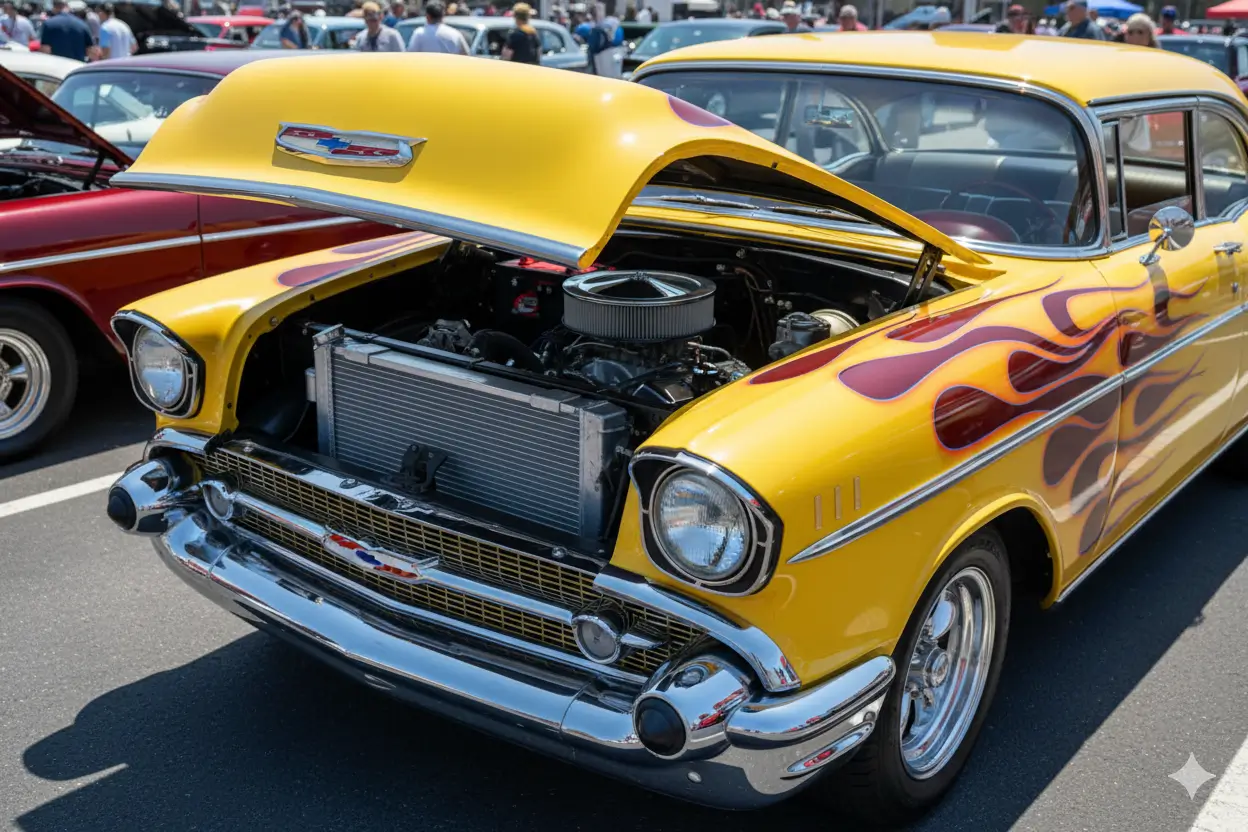
If your classic car overheats in traffic, loses coolant, develops leaks, or continues running hot after parts have been replaced, the cooling system needs a complete professional evaluation.
At Coastline Classic Car Restorations in Huntington Beach, we diagnose, repair, restore, and selectively upgrade classic-car cooling systems according to the vehicle’s condition, original configuration, engine output, and intended use.
Our goal is not simply to install a larger radiator or fan. We identify which part of the system is limiting performance and recommend a solution that balances:
- Stable operating temperature
- Long-term reliability
- Component compatibility
- Factory appearance
- Collector value
- Modern driving needs
Call at (657) 540-8792 or request a cooling-system evaluation.
Cooling Problems That Need Professional Evaluation
Classic-car owners often contact us because their vehicle:
- Overheats at stoplights or in traffic
- Runs cool on the freeway but hot at idle
- Pushes coolant out after shutdown
- Develops recurring coolant leaks
- Produces steam or a coolant odor
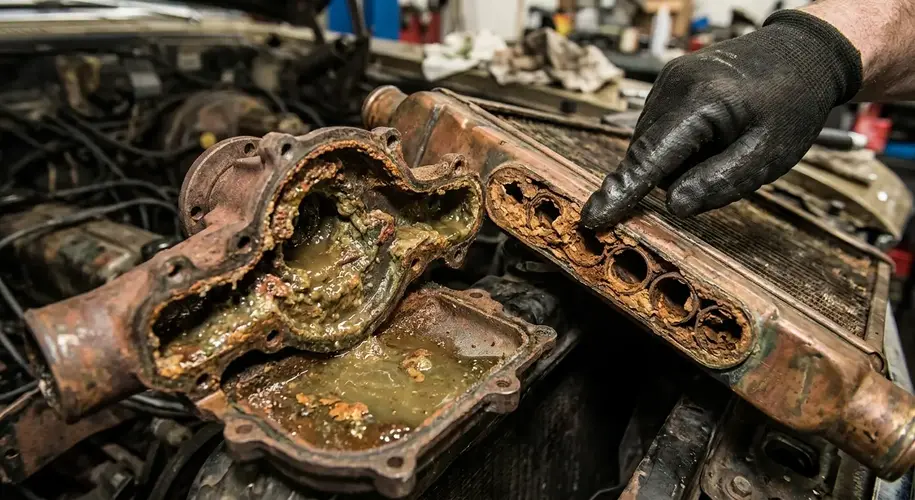
- Has rust, sediment, or contamination in the coolant
- Shows unstable or inaccurate temperature readings
- Runs hotter after adding air conditioning
- Overheats after engine modifications
- Continues running hot after the radiator, fan, thermostat, or water pump was replaced
A symptom does not always identify the failed component. Overheating may involve airflow, coolant circulation, radiator condition, pressure loss, engine operation, or several related conditions.
If your car runs hot mainly at idle, learn why classic cars overheat in traffic.
Recurring overheating should be addressed promptly because continued heat may damage head gaskets, cylinder heads, bearings, pistons, seals, and other engine components.
Our guide explains what happens when a classic car overheats and which warning signs may indicate damage.
What Does Our Cooling-System Service Include?
The scope depends on the vehicle and inspection findings. Your classic car may need one targeted repair, restoration of original components, replacement of deteriorated parts, or a coordinated system upgrade.
Our cooling-system services may include:
- Temperature verification
- Pressure and leak testing
- Airflow and coolant-circulation evaluation
- Radiator repair, re-coring, replacement, or upgrading
- Water-pump and thermostat service
- Hose, clamp, belt, and connection correction
- Fan, fan-clutch, and shroud service
- Radiator sealing and airflow improvements
- Overflow or recovery-system correction
- Coolant cleaning, flushing, or replacement when appropriate
Not every vehicle requires every service. We recommend work according to confirmed conditions rather than applying one standard parts package to every classic car.
For an overview of how the water pump, thermostat, radiator, fan, pressure cap, and coolant interact, read How Classic Car Cooling Systems Work.
How We Diagnose and Restore Classic-Car Cooling Systems
1. Understand Your Vehicle and Goals
We begin by reviewing the vehicle’s configuration, history, and intended use, including:
- Original or modified engine
- Factory-correct, survivor, or restomod configuration
- Previous cooling-system work
- Added air conditioning or transmission cooling
- Show, cruising, or regular-driving use
- Originality and reliability priorities
A numbers-matching show car may require a different solution than a modified classic driven regularly in traffic.
2. Evaluate the Complete Cooling System
We confirm whether the engine is actually overheating and assess the systems responsible for controlling temperature.
Depending on the symptoms, evaluation may include:
- Temperature and gauge verification
- Pressure, cap, and leak testing
- Fan, shroud, and airflow inspection
- Coolant-condition and circulation checks
- Water-pump, thermostat, belt, hose, and pulley inspection
- Radiator-core evaluation
- Review of related engine-operation issues
This process helps identify whether the problem involves airflow, coolant circulation, heat transfer, pressure loss, engine operation, or incompatible components.
For a detailed troubleshooting sequence, read How to Fix Classic Car Overheating in Traffic.
3. Recommend Repair, Restoration, Replacement, or Upgrade
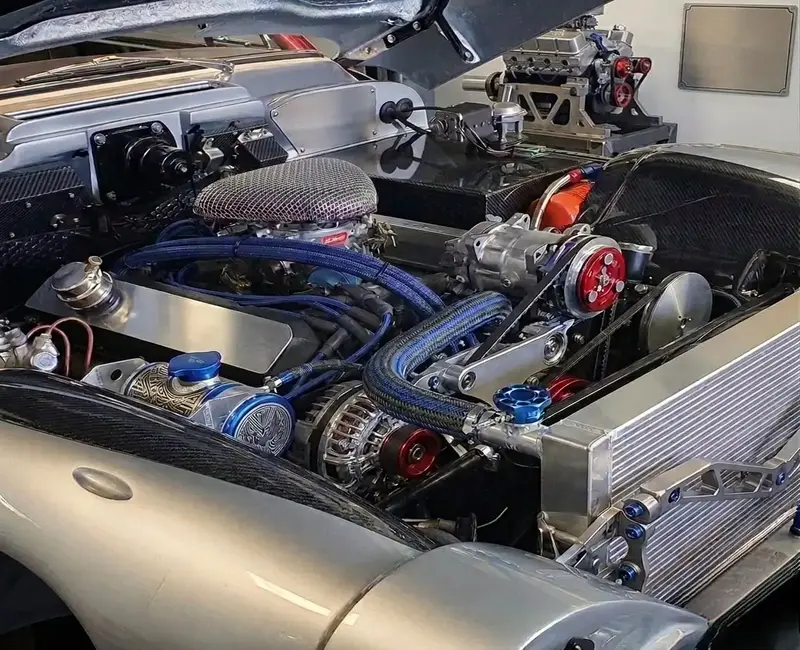
After the evaluation, we explain:
- Which components remain serviceable
- Which original parts can be restored
- Which deteriorated parts should be replaced
- Whether an upgrade is justified
- Which recommendations are necessary and which are optional
The solution may range from correcting one confirmed fault to restoring original components or increasing cooling capacity for a modified engine.
Our repair vs. replace vs. upgrade guide explains how condition, vehicle use, and originality influence that decision.
4. Complete the Approved Work and Validate Performance
After completing the approved work, we refill the system with compatible coolant, remove trapped air, inspect for leaks, and evaluate temperature behavior.
When appropriate, final validation may include:
- Warm-up and idle-temperature monitoring
- Fan-operation confirmation
- Pressure and leak reinspection
- Road testing under relevant conditions
- Coolant-level inspection after cooldown
This final testing helps confirm that the restored cooling-system components operate correctly together.
Preserving Originality While Improving Reliability
Originality matters to many classic-car owners. When original components remain serviceable, possible solutions may include:
- Re-coring original radiator tanks
- Retaining factory brackets and mounting points
- Restoring the mechanical fan and shroud
- Preserving original hose routing
- Using OEM-style materials and hardware
- Making discreet or reversible improvements
When the engine or vehicle use requires additional cooling capacity, we may evaluate selective upgrades.
A radiator recommendation may involve repairing the original, installing a higher-efficiency core, choosing a direct-fit replacement, or increasing capacity.
Our Radiator Upgrades for Classic Cars guide explains re-coring, copper/brass, aluminum, tube design, row count, and originality considerations.
When low-speed airflow is the confirmed limitation, an electric fan may be considered.
Read Electric Fan Conversions for Classic Cars for fan sizing, shrouding, placement, wiring, controls, and charging-system requirements.
Upgrades are not recommended automatically. The vehicle’s condition, cooling demand, electrical capacity, available space, appearance, and owner goals should determine the solution.
Why Choose Coastline Classic Car Restorations?
Our approach prioritizes classic-vehicle requirements rather than one-size-fits-all parts replacement.
We focus on:
- Diagnosis before buying components
- Original vehicle configuration and history
- Compatibility among cooling components
- Preservation of usable original parts
- Separation of required repairs and optional upgrades
- Solutions matched to the vehicle’s intended use
- Testing after approved work is completed
Cooling-system service may be completed independently or as part of a broader classic-car mechanical restoration project involving multiple interconnected systems.
Because cooling performance may also be affected by internal engine condition, ignition timing, fuel mixture, or electrical operation, we evaluate related mechanical factors when the symptoms indicate a wider problem.
If testing identifies internal engine wear or damage, the project may also involve Engine Rebuilding and Restoration.
Frequently Asked Questions
What is included in a cooling-system evaluation?
The scope depends on the symptoms and vehicle. It may include temperature verification, pressure testing, leak inspection, airflow assessment, coolant-circulation review, radiator evaluation, and component-compatibility checks.
Can you preserve my original radiator and cooling components?
When original components remain structurally serviceable, they may be repairable, rebuildable, or suitable for re-coring.
The recommendation depends on condition, required capacity, parts availability, and originality goals.
Can you fix a classic car that still overheats after parts were replaced?
We evaluate the complete system to determine whether airflow, circulation, radiator performance, pressure, engine operation, or incompatible components remain unresolved.
The appropriate repair depends on what testing confirms.
How much does classic-car cooling-system restoration cost?
Pricing depends on vehicle condition, parts, accessibility, originality requirements, and project scope.
Review our classic-car cooling-system restoration cost guide for planning ranges and cost factors.
How long does cooling-system restoration take?
Timing depends on diagnosis, parts availability, radiator-shop work, fabrication, previous modifications, and the number of components involved. A more accurate timeframe can be provided after the vehicle and required scope are evaluated.
Serving Huntington Beach and Orange County
Coastline Classic Car Restorations is based in Huntington Beach and serves classic-car owners throughout Orange County, including:
- Costa Mesa
- Newport Beach
- Fountain Valley
- Surrounding communities
Schedule Your Classic-Car Cooling-System Evaluation
Do not continue replacing parts without knowing which part of the system is limiting performance.
Whether your classic needs one targeted repair, restoration of original components, or a carefully selected upgrade, Coastline Classic Car Restorations will evaluate the cooling system and explain the recommended scope before work proceeds.