

A classic car needs a radiator upgrade when the existing radiator is the confirmed cooling limitation or cannot manage the engine’s current heat output.
If overheating is caused by insufficient fan airflow, restricted coolant circulation, pressure loss, incorrect engine tuning, or an inaccurate temperature reading, installing a larger radiator may not solve the problem.
The correct decision depends on:
- Radiator condition
- Required cooling capacity
- Engine output
- Vehicle use
- Available airflow
- Originality goals
- Component compatibility
Some vehicles need only a repaired or re-cored original radiator. Others may benefit from a properly sized copper/brass replacement or aluminum upgrade.
When Is the Radiator the Cooling Limitation?
The radiator transfers heat from the coolant to the surrounding air. Its performance depends on internal coolant distribution and airflow through the core.
A radiator may become the system’s limiting component because of:
- Internally restricted tubes
- Corroded or deteriorated fins
- Repeated tank, seam, or tube leaks
- Poor coolant distribution
- Insufficient core capacity
- Excessive core thickness or airflow resistance
- Increased engine heat output
- Added air conditioning or accessory load
An original radiator may cool a factory engine adequately but become insufficient after changes to horsepower, compression, transmission cooling, or vehicle use.
Signs the Radiator May Need Attention
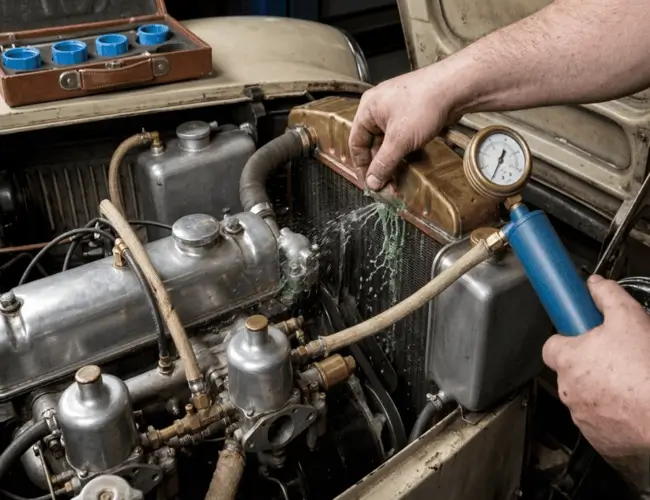
Possible radiator-related signs include:
- Uneven temperature patterns across the core
- Isolated cool areas that may indicate restricted tubes
- Visible corrosion or damaged fins
- Repeated leaks
- Heavy sediment or coolant contamination
- Inadequate cooling at multiple vehicle speeds
- Insufficient capacity after engine modifications
- High temperatures that continue after airflow and circulation are verified
An infrared thermometer or thermal-imaging camera may reveal uneven core temperatures, but the results are not conclusive by themselves.
Surface condition, thermostat position, coolant flow, and airflow can affect the readings.
Professional radiator inspection or flow testing may be needed to confirm internal restriction or insufficient capacity.
If the cause remains uncertain, follow How to Fix Classic Car Overheating in Traffic before buying a radiator.
When a Radiator Upgrade Will Not Fix Overheating
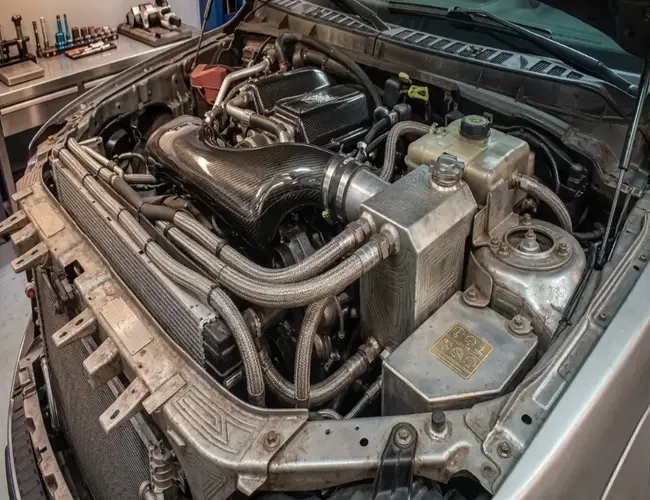
A larger radiator will not correct problems involving:
- Weak fan or fan-clutch performance
- Missing or ineffective fan shroud
- Air bypassing the radiator
- Worn water pump or restricted hoses
- Thermostat problems or trapped air
- Cooling-system pressure loss
- Incorrect ignition timing or fuel mixture
- Inaccurate temperature readings
- Internal engine damage
Traffic-only overheating frequently involves low-speed airflow rather than radiator capacity. Learn more in Why Classic Cars Overheat in Traffic.
Should You Repair, Re-Core, Replace, or Upgrade?
The radiator’s physical condition, cooling capacity, and originality should determine the correct approach.
Repair the Original Radiator
Repair may be appropriate when:
- Tanks and mounting points remain sound
- Leaks are limited and repairable
- Internal restriction is minor
- Existing cooling capacity is adequate
Repair may include cleaning, seam work, neck repair, mounting correction, and fixing localized leaks.
Re-Core the Original Radiator
Re-coring retains the original tanks and mounting configuration while replacing the heat-transfer core.
Consider re-coring when:
- Factory appearance matters
- Original tanks and brackets remain usable
- The existing core is restricted or deteriorated
- A more efficient replacement core is available
- Original fit must be preserved
A high-efficiency copper/brass re-core can improve cooling while maintaining a period-correct appearance.
Install a Replacement Radiator
A like-for-like replacement may be appropriate when:
- The original cannot be restored reliably
- Re-coring is unavailable or impractical
- A quality direct-fit replacement is available
- Original cooling capacity remains sufficient
Replacement restores a failed component. It does not necessarily provide more cooling capacity.
Upgrade the Radiator
Consider an upgrade when:
- Engine output has increased
- Air conditioning has been added
- Vehicle use creates greater heat load
- The original design cannot meet current requirements
- Testing confirms insufficient heat rejection
- Additional capacity matters more than factory correctness
An upgrade should correct a demonstrated capacity limitation rather than substitute for diagnosis.
Copper/Brass vs. Aluminum Radiators
Neither radiator material is universally better. Cooling performance depends on complete core construction, coolant distribution, airflow, fan compatibility, and manufacturing quality.
| Attribute | Copper/brass | Aluminum |
|---|---|---|
| Originality | Usually best for factory-correct restorations | Common in restomods and modified vehicles |
| Material conductivity | Copper has higher thermal conductivity | Performance often comes from wider tubes and core design |
| Weight | Generally heavier | Generally lighter |
| Repairability | Often repairable or re-coreable | Depends on construction and welding expertise |
| Appearance | Period-correct | Usually more modern |
| Typical priority | Originality, fit and serviceability | Capacity, weight and packaging |
Traditional copper/brass radiators may use narrower tubes and soldered construction. Aluminum’s strength often permits wider tubes and different core geometry.
A well-designed aluminum radiator can outperform an older copper/brass design, but material alone does not determine cooling performance.
Do More Radiator Rows Mean Better Cooling?
Not necessarily.
Radiator performance depends on:
- Tube width and spacing
- Tube-to-fin contact
- Core thickness
- Fin density
- Coolant distribution
- Airflow resistance
- Fan capacity
- Manufacturing quality
Additional rows increase core thickness, but a thick or dense core may be harder for the fan to pull air through at low speeds.
Wider tubes can increase contact area, but two rows do not automatically outperform every three- or four-row radiator.
Choose according to verified capacity, available airflow, and system compatibility—not row count alone.
Matching the Radiator to the Vehicle
| Vehicle type or use | Primary goal | Likely direction |
|---|---|---|
| Original survivor | Preserve factory components | Inspect and repair the original radiator |
| Numbers-matching show car | Originality and presentation | High-efficiency copper/brass re-core |
| Regularly driven original car | Reliability with factory appearance | Improved core using original tanks |
| Modified or restomod vehicle | Additional capacity and lower weight | Properly sized aluminum or custom radiator |
| Vehicle with added air conditioning | Manage additional heat load | Evaluate core capacity and airflow together |
| Unknown overheating cause | Identify the actual limitation | Diagnose before replacing the radiator |
The radiator should match the engine output, available space, fan arrangement, driving conditions, and owner’s originality goals.
Fan and Shroud Compatibility
A high-capacity radiator still requires adequate airflow.
When changing radiator dimensions or core thickness, verify:
- Fan-to-radiator clearance
- Fan coverage of the core
- Shroud fit
- Radiator seals and side baffles
- Air-conditioning condenser clearance
- Space for hot air to exit
A thicker radiator may reduce available clearance or increase airflow resistance. Select the radiator and fan as a matched system.
If you are considering fan changes, read Electric Fan Conversions for Classic Cars.
Coolant, Pressure, and Corrosion Protection
Classic cooling systems may contain aluminum, cast iron, copper, brass, solder, steel, and rubber.
Mixed-metal construction does not automatically cause failure, but corrosion risk can increase because of:
- Incompatible or depleted coolant
- Poor-quality water
- Mixed coolant chemistries
- Stray electrical current
- Weak electrical grounds
- Incorrect pressure-cap rating
- Neglected maintenance
Use coolant compatible with the engine and radiator materials. Follow the applicable service interval instead of assuming one universal replacement schedule.
The radiator cap must also match the system. Excessive pressure can stress older tanks, heater cores, hoses, and soldered joints.
Radiator Care in Coastal Areas
Moisture, salt, road debris, and airborne contaminants can accelerate exterior deterioration in coastal areas such as Huntington Beach.
Keep the fins and airflow path clean, inspect mounting points, correct leaks promptly, use compatible coolant, and watch for corrosion or brittle fins.
Coastal exposure alone does not justify an upgrade. Radiator condition and cooling capacity should determine the decision.
Frequently Asked Questions
Does every classic car need a radiator upgrade?
No. Many classic cars cool properly with a restored original radiator and correctly functioning fan, shroud, water pump, and pressure system.
How do I know if the radiator is the limitation?
Confirmed internal restriction, deteriorated fins, repeated leaks, uneven core temperatures, or inadequate heat rejection after airflow and circulation are verified may indicate a radiator problem.
Should I re-core or replace the original radiator?
Re-core it when the tanks and mounting structure remain sound and originality matters. Replace it when dependable restoration is impractical.
Is aluminum better than copper/brass?
Not universally. Aluminum supports efficient wide-tube designs and lower weight, while copper/brass typically provides better originality and repairability.
Do more radiator rows improve cooling?
Not automatically. Tube width, fin design, core thickness, airflow resistance, coolant distribution, and overall construction are more meaningful than row count alone.
Final Answer: When Does a Classic Car Need a Radiator Upgrade?
A classic car needs a radiator upgrade when the existing radiator cannot be restored reliably or lacks the capacity to manage the engine’s current heat output.
The decision should account for:
- Radiator condition
- Required cooling capacity
- Engine modifications
- Vehicle use
- Fan and shroud compatibility
- Material compatibility
- Originality goals
At Coastline Classic Car Restorations in Huntington Beach, we evaluate radiator condition, coolant flow, airflow, system pressure, engine output, fitment, and originality before recommending repair, re-coring, replacement, or a complete classic car cooling system restoration.