

To fix a classic car that overheats in traffic, determine whether the system is limited by airflow, coolant circulation, radiator heat transfer, pressure loss, or engine operation.
Start by confirming the engine’s actual temperature. Then inspect low-speed airflow, pressure-test the system, verify coolant circulation, evaluate the radiator, and rule out ignition or fuel-mixture problems.
Do not replace the radiator, fan, or water pump until the limiting factor has been identified.
For an explanation of why the problem occurs, read Why Classic Cars Overheat in Traffic.
Step 1: Confirm the Engine Is Actually Overheating
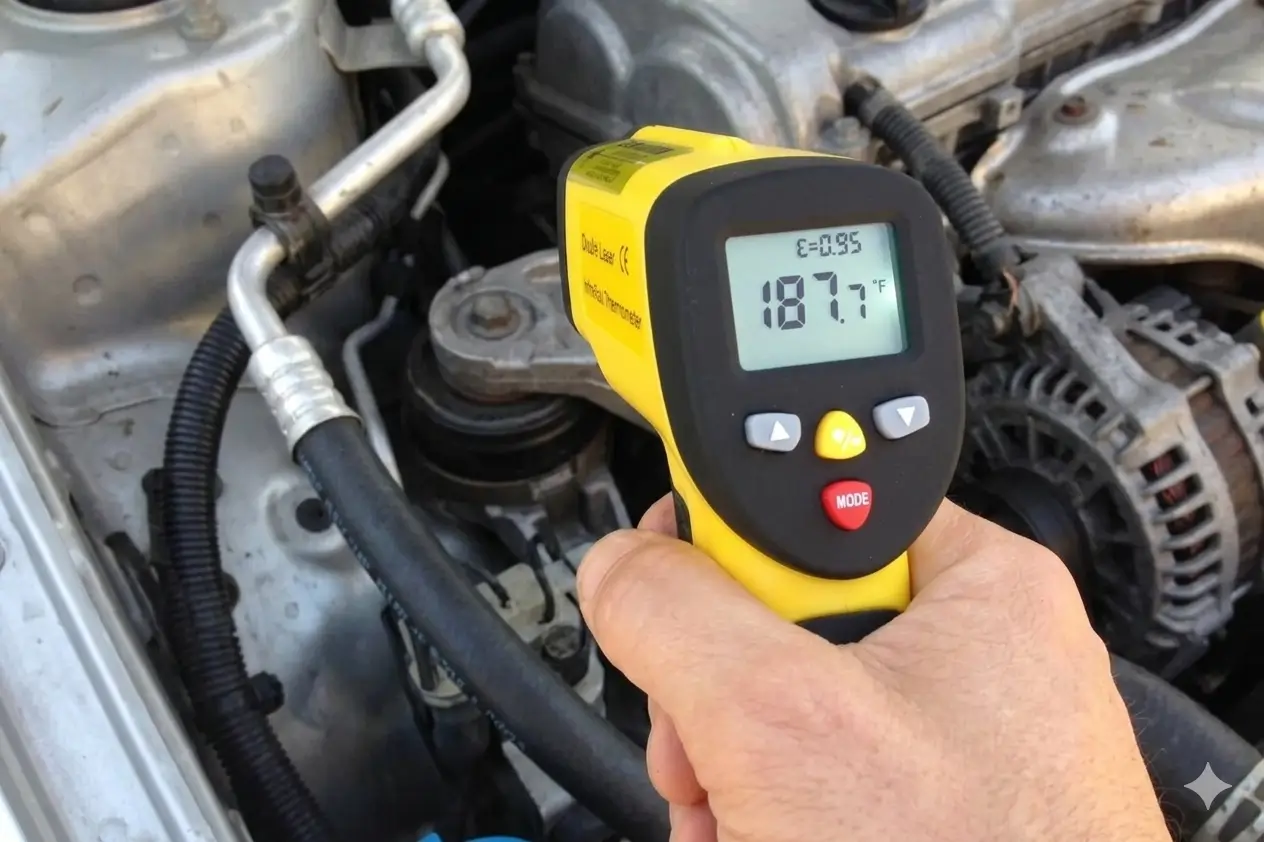
An inaccurate gauge or sending unit can make a normally operating engine appear too hot.
Compare the dashboard reading with an infrared thermometer or verified mechanical temperature gauge. Useful measurement points include the thermostat housing, cylinder-head coolant outlet, and radiator inlet.
An inaccurate reading may be caused by:
- Aging wiring
- Poor electrical grounds
- Incorrect sending unit
- Gauge and sender incompatibility
- Instrument-cluster problems
The correct operating temperature depends on the engine, thermostat, and vehicle specifications. There is no universal safe temperature range for every classic car.
Step 2: Identify the Overheating Pattern
When the temperature rises can help determine what to check first.
| Overheating pattern | Start by checking |
|---|---|
| Overheats at idle but cools while moving | Fan, fan clutch, shroud and airflow |
| Improves when engine RPM increases | Fan performance, water pump, belt and pulley ratio |
| Overheats at all speeds | Radiator restriction, thermostat, coolant flow or engine tuning |
| Overheats mainly on the highway | Radiator capacity, lower hose, coolant flow or engine load |
| Temperature fluctuates | Thermostat, trapped air, coolant level or gauge |
| Pushes coolant out after shutdown | Radiator cap, pressure loss, boiling or internal leakage |
These patterns narrow the possibilities but do not confirm a specific failed component.
Step 3: Check Coolant Level, Condition and Pressure
Inspect the cooling system only when the engine is completely cool. Never remove a radiator cap from a hot or pressurized system.
Confirm that:
- The radiator contains the correct amount of coolant
- The recovery tank is at the proper level
- Coolant is not contaminated with oil, rust or sediment
- Coolant concentration suits the vehicle and climate
- Incompatible coolant chemistries have not been mixed
If the system was recently serviced, trapped air may be restricting circulation. Use the correct filling and bleeding procedure for the vehicle.
Next, pressure-test the system to the rating specified for the radiator, cap, and vehicle. Do not apply a universal pressure value to every classic car.
A pressure loss may reveal:
- Radiator leaks
- Cracked hoses
- Loose connections
- Water-pump seepage
- Heater-core leaks
- Thermostat-housing leaks
- Weak seals or gaskets
Test the radiator cap separately. A cap that releases pressure too early can lower the coolant’s boiling point, while an excessively high-pressure cap can damage an older radiator, heater core, or hose.
Step 4: Restore Low-Speed Airflow
If the car overheats in traffic but cools once moving, inspect the fan and airflow path.
With the engine off and cool, check:
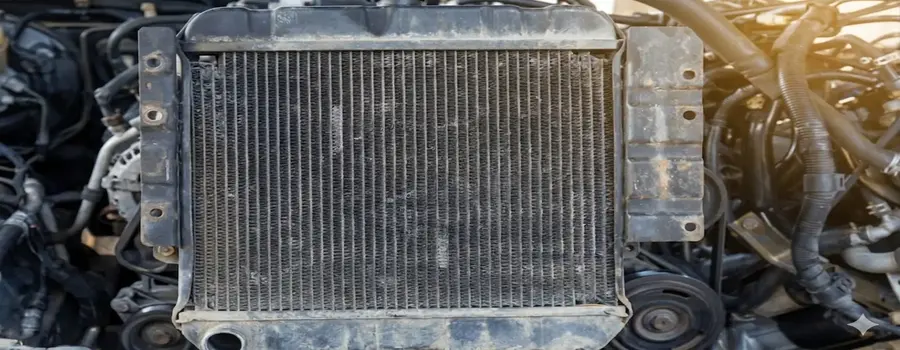
- Fan blade condition and orientation
- Fan size and alignment
- Fan shroud condition
- Gaps around the radiator
- Radiator fins
- Grille obstructions
- Upper seals, side baffles and lower air dam
Air must pass through the radiator core rather than around it. Missing seals or airflow panels can allow incoming air to bypass the radiator.
Mechanical Fan and Fan Clutch
A mechanical fan must match the radiator, pulley system, and shroud. If the vehicle uses a thermal fan clutch, the clutch must engage more strongly as temperatures rise.
Possible signs of a weak fan clutch include:
- Temperature rising at stoplights
- Weak airflow when the engine is hot
- Reduced fan engagement
- Temperature dropping after the vehicle begins moving
A cold-engine spin test is not conclusive by itself. Fan-clutch performance should be evaluated under the correct operating conditions.
An electric fan may help when insufficient idle airflow is confirmed, but it requires proper sizing, shrouding, wiring, controls, and alternator capacity.
See Electric Fan Conversions for Classic Cars before selecting a conversion.
Step 5: Verify the Thermostat, Water Pump and Hoses
A thermostat that opens late or only partially can restrict coolant flow.
Verify that the thermostat:
- Has the correct temperature rating
- Is installed in the correct direction
- Opens fully and consistently
- Matches the cooling-system design
Do not remove the thermostat as a general solution. The system requires controlled coolant flow and temperature regulation.
The water pump must also circulate sufficient coolant at idle and road speed. Inspect for:
- Loose or slipping belt
- Incorrect pulley ratio
- Water-pump bearing movement
- Coolant seepage
- Damaged or incorrect impeller
- Kinked or deteriorated hoses
Pay particular attention to the lower radiator hose. Some classic vehicles require internal reinforcement to prevent the hose from collapsing under suction at higher engine speeds.
A replacement pump may physically fit but still have the wrong impeller design, rotation direction, or clearance for the engine.
Step 6: Check the Radiator for Restriction
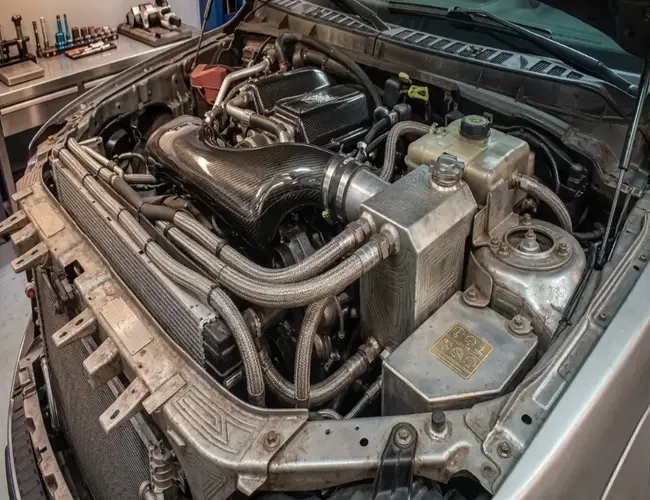
A radiator can be restricted internally even when it appears clean externally.
Use an infrared thermometer or thermal-imaging camera to compare temperatures across the radiator core after the thermostat opens.
Uneven temperature patterns or isolated cold areas may indicate restricted tubes or uneven coolant flow.
Infrared readings must be interpreted with other evidence. Surface finish, airflow, coolant flow, and thermostat position can affect the results.
Also inspect the radiator for:
- Bent or damaged fins
- Dirt and debris
- Corrosion
- Excessive paint
- Poor airflow between the condenser and radiator
Minor restrictions may be serviceable. Severe internal deterioration may require professional cleaning, re-coring, or replacement.
For radiator-specific choices, read Radiator Upgrades for Classic Cars.
Step 7: Rule Out Engine-Tuning Problems
Cooling-system upgrades will not correct excessive heat produced by an improperly operating engine.
Check for:
- Retarded ignition timing
- Lean air-fuel mixture
- Vacuum leaks
- Incorrect carburetor calibration
- Distributor-advance problems
- Incorrect idle speed
- Excessive engine load
Modified engines may also generate more heat than the original cooling system was designed to remove.
Increased compression, horsepower, air conditioning, automatic-transmission heat, and forced induction should be considered when determining required cooling capacity.
Which Problem Should Be Fixed First?
Use this repair order to avoid unnecessary parts replacement:
- Confirm the actual temperature
- Correct coolant level or trapped air
- Repair leaks and restore pressure
- Correct fan, shroud and airflow problems
- Address radiator restriction
- Correct engine-tuning problems
- Upgrade the fan or radiator only if capacity remains insufficient
This sequence addresses confirmed faults before adding performance components.
What Should You Do If the Car Overheats?
If the temperature continues rising:
- Turn off the air conditioner
- Pull over safely
- Shut down the engine if the temperature reaches an unsafe level or steam appears
- Allow the system to cool naturally
- Never open the radiator cap while hot
- Do not continue driving after severe overheating
Turning the heater on may temporarily remove some engine heat, but it is not a repair.
Learn about possible engine damage in What Happens If a Classic Car Overheats.
Frequently Asked Questions
What should I check first when a classic car overheats in traffic?
Confirm the actual temperature, then check coolant level, fan airflow, the fan shroud, and gaps around the radiator.
Will an electric fan fix traffic overheating?
Only if insufficient low-speed airflow is the problem. It will not fix radiator restriction, pressure loss, poor coolant circulation, or engine-tuning issues.
How can I tell if the radiator is restricted?
Uneven temperatures across the radiator core may indicate blocked tubes. Professional flow testing may be needed for confirmation.
Can a water pump cause traffic overheating?
Yes. A worn impeller, incorrect pump, slipping belt, or improper pulley ratio can reduce coolant circulation.
Why does the car still overheat after replacing the radiator?
The underlying problem may involve fan airflow, shrouding, pressure loss, coolant circulation, ignition timing, fuel mixture, or mismatched components.
Final Answer
Fixing classic car overheating in traffic requires a systematic diagnosis rather than automatic parts replacement.
Confirm the temperature, inspect coolant and system pressure, restore low-speed airflow, verify the thermostat and water pump, evaluate the radiator, and rule out engine-tuning problems. Upgrade components only after the actual limitation has been confirmed.
At Coastline Classic Car Restorations in Huntington Beach, we evaluate airflow, coolant circulation, radiator efficiency, pressure integrity, component compatibility, and engine operation as a complete system.
If your classic car continues overheating in Huntington Beach or Orange County traffic, schedule a classic car cooling-system restoration evaluation or get cooling to identify the root cause and restore stable operating temperatures.