

Yes, overheating can cause permanent damage to a classic car engine.
Excessive heat can weaken lubrication, increase cooling-system pressure, distort metal components, and damage the head gasket, cylinder head, pistons, bearings, hoses, and seals.
The severity depends on:
- How high the temperature reached
- How long the engine remained overheated
- Whether coolant or oil circulation was lost
- Engine load and speed during the event
- Cylinder-head and engine-block materials
- Whether the vehicle was driven after warning signs appeared
A brief temperature increase may not cause immediate failure.
Severe or repeated overheating can lead to compression loss, oil contamination, a cracked cylinder head, a seized engine, or the need for an engine rebuild.
Why Overheating Damages an Engine
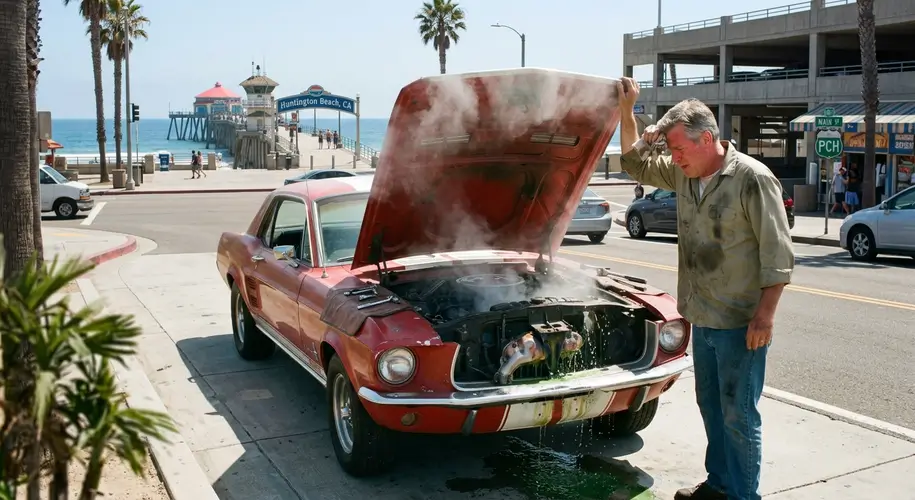
A classic car engine depends on coolant, oil, and controlled operating temperature to protect its internal components.
During overheating, three damaging processes may occur simultaneously:
Coolant Can Boil or Escape
As coolant temperature rises:
- Cooling-system pressure increases
- Coolant may boil
- Steam pockets can reduce heat transfer
- Coolant may escape through a weak cap, hose, seal, or overflow
- Localized hot spots can develop inside the engine
Once coolant is lost, the system’s ability to absorb and remove heat decreases rapidly.
Engine Oil Loses Protective Performance
Engine oil separates moving metal surfaces and controls friction. Excessive heat can reduce its viscosity and weaken the protective oil film.
This may lead to:
- Increased friction
- Bearing wear
- Piston scuffing
- Cylinder-wall scoring
- Accelerated ring wear
- Reduced oil pressure
If lubrication fails severely, internal components may seize.
Metal Components Expand
Engine parts are designed to expand within a controlled temperature range. Excessive or uneven heating can push components beyond their intended tolerances.
Potential results include:
- Warped sealing surfaces
- Loss of compression
- Head-gasket failure
- Distorted cylinder heads
- Cracked castings
- Piston-to-cylinder clearance problems
Aluminum cylinder heads generally expand more than cast iron and may be more susceptible to distortion during severe overheating.
Cast iron components can also warp or crack under extreme heat or rapid temperature change.
What Engine Parts Can Be Damaged by Overheating?
Head Gasket

The head gasket seals combustion pressure, coolant passages, and oil passages between the engine block and cylinder head.
Overheating can weaken this seal and allow:
- Coolant to enter a cylinder
- Combustion gases to enter the cooling system
- Coolant and engine oil to mix
- Compression to escape between cylinders
- Coolant to leak externally
Possible signs include white exhaust vapor, unexplained coolant loss, bubbling in the cooling system, contaminated oil, and rough engine operation.
Learn more in our guide to head-gasket failure in classic cars.
Cylinder Head
Excessive temperature can distort the cylinder head or damage its sealing surface.
A warped or cracked head may cause:
- Persistent coolant loss
- Compression loss
- Repeated head-gasket failure
- Oil and coolant contamination
- Engine misfires
Damage cannot be confirmed by appearance alone. Cylinder-head flatness, cracks, and pressure integrity may need to be checked after removal.
Pistons, Rings and Cylinder Walls
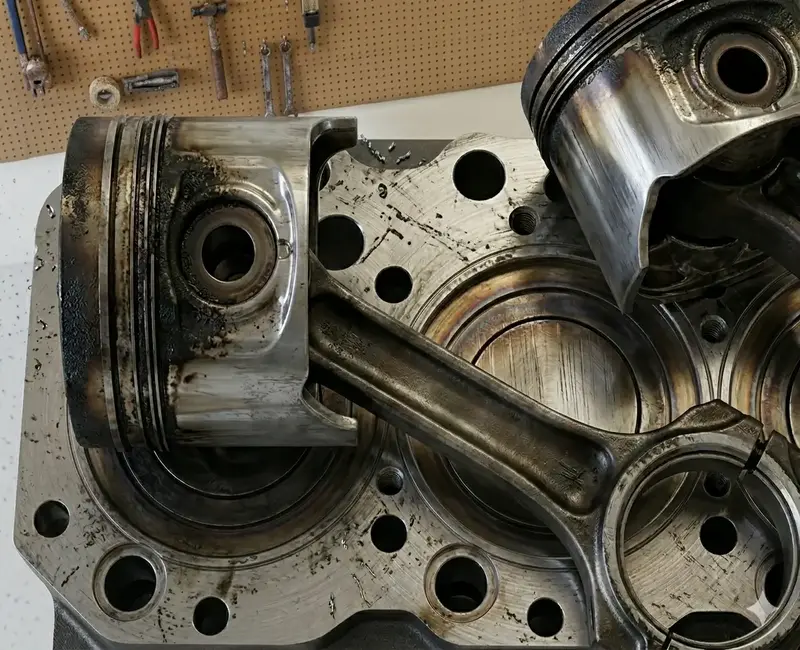
Loss of lubrication and excessive thermal expansion can reduce the clearance between pistons and cylinder walls.
This can produce:
- Piston scuffing
- Damaged rings
- Cylinder-wall scoring
- Increased oil consumption
- Reduced compression
- Engine seizure in severe cases
The engine may continue running after the event while developing increased oil use or lower performance later.
Bearings and Crankshaft Surfaces
Main bearings, connecting-rod bearings, and camshaft bearings depend on a stable oil film.
When oil becomes too hot or contaminated with coolant, bearing protection decreases. The engine may later develop:
- Low oil pressure
- Knocking or tapping noises
- Metal particles in the oil
- Accelerated crankshaft wear
- Bearing failure
Hoses, Seals and Gaskets
Excessive heat and pressure can weaken rubber and sealing components throughout the system.
Damage may include:
- Swollen or cracked hoses
- Water-pump seal failure
- New coolant leaks
- Hardened gaskets
- Weak radiator-cap seals
- Heater-core leakage
A repaired engine can overheat again if heat-damaged cooling-system components are not also inspected.
Signs the Engine May Have Been Damaged
An engine may appear to recover after cooling but still have internal damage.
Watch for:
- Persistent coolant loss
- White exhaust vapor after warm-up
- Milky or contaminated engine oil
- Oil floating in the coolant
- Bubbles in the radiator or recovery tank
- Rough idle or misfires
- Loss of power
- Reduced compression
- Low oil pressure
- Knocking or tapping noises
- Repeated overheating
- Coolant odor from the exhaust
- One unusually clean spark plug
One symptom alone does not confirm a specific failure.
For example, a clean spark plug may suggest coolant entering that cylinder, but compression, leak-down, cooling-system pressure, or combustion-gas testing may be needed to confirm the cause.
How Serious Was the Overheating Event?
| Severity | What occurred | Potential result |
|---|---|---|
| Brief temperature rise | Gauge rose above normal but stabilized quickly | Possible coolant loss or accelerated wear |
| Significant overheating | Warning zone, reduced power or coolant discharge | Increased risk of gasket, head and lubrication damage |
| Severe overheating | Steam, stalling, knocking or engine lockup | High risk of major internal damage or engine failure |
| Repeated overheating | Multiple temperature events over time | Cumulative wear, sealing failure and reduced engine life |
The temperature gauge alone cannot determine whether internal damage occurred.
The duration of the event, coolant level, oil condition, engine load, and resulting symptoms must also be considered.
Can Repeated Overheating Cause Long-Term Damage?
Yes. Repeated overheating can cause cumulative damage even when the engine continues running after each event.
Repeated thermal stress may lead to:
- Gradual cylinder-head distortion
- Weakened gaskets and seals
- Bearing and piston-ring wear
- Reduced compression
- Increased oil consumption
- Internal corrosion
- Shortened engine life
Each additional event increases the likelihood that a minor cooling problem will become a major engine repair.
Can Damage Continue After the Engine Is Shut Off?
After shutdown, the water pump stops circulating coolant and a mechanical fan stops moving air.
Heat stored in the cylinder head, exhaust system, and engine block can remain concentrated in localized areas.
This heat soak may:
- Increase cooling-system pressure
- Continue boiling coolant
- Stress already overheated seals and gaskets
- Vaporize fuel in carburetor bowls or fuel lines
- Cause hard restarting or temporary vapor lock
Heat soak does not mean the engine should be left running during severe overheating.
If the temperature reaches an unsafe level or steam appears, stop driving and shut the engine down when it is safe to do so.
What Should You Do Immediately If the Car Overheats?
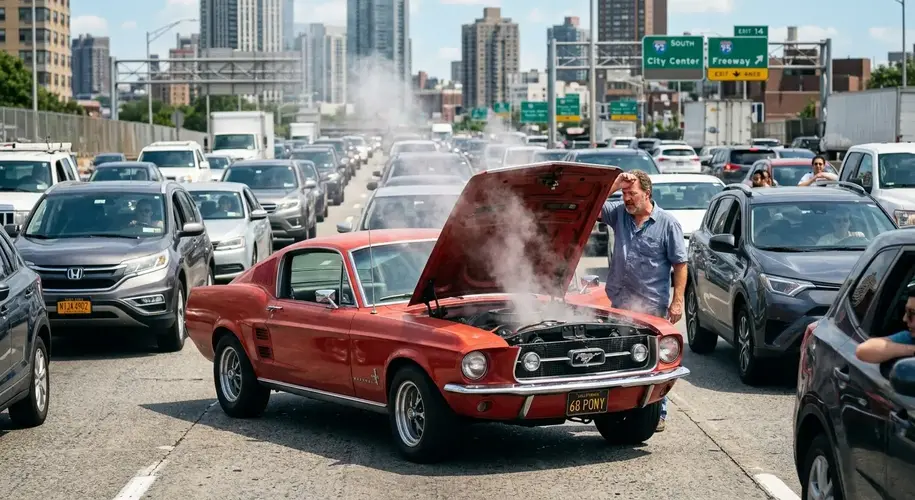
If your classic car begins overheating:
- Turn off the air conditioner
- Pull over safely
- Shut down the engine if the temperature continues climbing or steam appears
- Allow the engine to cool naturally
- Never remove the radiator cap while the system is hot or pressurized
- Do not pour cold water into or onto a severely overheated engine
- Do not continue driving after a serious overheating event
Rapidly cooling an overheated engine can create additional thermal stress. Wait until the system system has cooled before inspecting the coolant level.
For a systematic cooling-system diagnosis, read How to Fix Classic Car Overheating in Traffic.
You can also explore our guide on How Classic Car Cooling Systems Work?
How Is Overheating Damage Confirmed?
Depending on the symptoms, a professional evaluation may include:
- Cooling-system pressure testing
- Radiator-cap testing
- Combustion-gas testing
- Compression testing
- Cylinder leak-down testing
- Engine-oil inspection
- Spark-plug inspection
- Cooling-system temperature mapping
- Cylinder-head flatness or crack inspection
These tests help distinguish an external cooling-system problem from internal engine damage.
If compression is low, coolant enters the cylinders, bearings are damaged, or major components have distorted, engine rebuilding and restoration may be necessary.
Frequently Asked Questions
Can overheating destroy a classic car engine?
Yes. Severe overheating can damage bearings, pistons, cylinder walls, head gaskets, cylinder heads, and the engine block. In extreme cases, the engine can seize.
Can one overheating event cause permanent damage?
Yes, but not every event does. The outcome depends on temperature, duration, engine materials, coolant loss, lubrication, and whether the vehicle continued operating.
How do I know if the head gasket was damaged?
Possible signs include white exhaust vapor, coolant loss, contaminated oil, bubbling in the cooling system, compression loss, and rough operation. Testing is required for confirmation.
Can an engine seem normal after overheating but still be damaged?
Yes. Bearing wear, gasket damage, cylinder-head distortion, and piston or ring damage may produce symptoms later.
Is it safe to drive after the engine cools down?
Not automatically. If the vehicle experienced severe overheating, coolant loss, steam, abnormal noise, contaminated oil, or repeated temperature problems, it should be inspected before further driving.
Final Answer: What Happens If a Classic Car Overheats?
When a classic car overheats, coolant performance can decline, oil-film protection can weaken, cooling-system pressure can rise, and metal components can expand beyond their intended tolerances.
This may damage the:
- Head gasket
- Cylinder head
- Pistons and rings
- Cylinder walls
- Bearings
- Engine block
- Hoses, seals, and gaskets
A brief temperature increase does not always cause permanent damage, but severe or repeated overheating should never be ignored.
At Coastline Classic Car Restorations in Huntington Beach, we evaluate both the cause of overheating and the condition of the engine after the event.
Our classic car cooling system restoration service may include pressure testing, temperature mapping, coolant and oil inspection, compression testing, and component evaluation to identify the appropriate repairs.