

Repair original cooling components when they remain structurally sound and originality matters.
Replace parts that are damaged beyond dependable restoration.
Upgrade the system when a correctly functioning original configuration cannot meet the vehicle’s current heat load or driving conditions.
The right choice depends on:
- Component condition
- Vehicle use
- Engine output
- Originality goals
- Parts quality and availability
- Cooling-system compatibility
Before deciding, identify whether the problem involves airflow, coolant circulation, radiator heat transfer, system pressure, or engine operation.
Upgrading the wrong component may add cost without solving the overheating problem.
Repair vs. Replace vs. Upgrade: Quick Comparison
| Approach | Primary goal | Best when | Main tradeoff |
|---|---|---|---|
| Repair or restore | Recover original performance | Components are rebuildable and originality matters | Specialized labor may cost more |
| Replace | Substitute an unusable component | The original part is unsafe or beyond reliable repair | Replacement quality and fit can vary |
| Upgrade | Increase cooling capacity or control | Vehicle use or engine output exceeds original capability | May affect originality and compatibility |
These approaches are not mutually exclusive. Many classic cars benefit from a balanced combination of restoration, selective replacement, and carefully chosen upgrades.
Diagnose the System Before Choosing
An overheating classic car does not automatically need a new radiator or electric fan.
The underlying limitation may involve:
- Weak low-speed airflow
- Missing fan shroud or radiator seals
- Restricted coolant circulation
- Radiator blockage
- Cooling-system pressure loss
- Incorrect ignition timing
- Lean air-fuel mixture
- Trapped air
- Inaccurate temperature gauge
For example, installing an aluminum radiator will not correct a weak fan clutch or missing shroud. Adding an electric fan will not solve a restricted coolant passage or failing water pump.
If the cause has not been confirmed, follow the process in How to Fix Classic Car Overheating in Traffic before selecting components.
When Should You Repair or Restore the Original System?
Repair or restoration is usually appropriate when the original components remain structurally sound and can be returned to dependable operation.
Typical restoration work includes:
- Re-coring an original copper-and-brass radiator
- Repairing original radiator tanks
- Rebuilding a correct water pump
- Restoring the factory fan and shroud
- Replacing hoses while preserving original routing
- Repairing factory mounting points
- Restoring original airflow panels and seals
This approach is particularly valuable for:
- Numbers-matching vehicles
- Collector cars
- Survivors
- Concours or show cars
- Owners prioritizing factory appearance
- Vehicles whose original cooling capacity remains adequate
A properly restored original component may provide better fit, appearance, and system compatibility than a low-quality universal replacement.
Restoration is not appropriate when structural deterioration, severe corrosion, or repeated failure prevents the component from operating safely and reliably.
When Should Cooling Components Be Replaced?
Replacement is appropriate when a component cannot be restored dependably or safely.
Replacement may be necessary when:
- Radiator tanks or mounting points are severely damaged
- The core is extensively corroded or blocked
- A water-pump housing or impeller is unusable
- Hoses are cracked, swollen, soft, or internally deteriorated
- A pressure cap or recovery component cannot hold its specified pressure
- Repair would cost more than a suitable replacement
The purpose of replacement is to restore a failed function. It does not necessarily increase cooling capacity.
A replacement part must match the vehicle’s:
- Engine configuration
- Coolant-flow direction
- Pulley and belt system
- Pressure requirements
- Mounting dimensions
- Fan and shroud arrangement
- Coolant and component materials
A part that physically fits may still be mechanically or thermally incompatible.
When Should You Upgrade a Classic Car Cooling System?
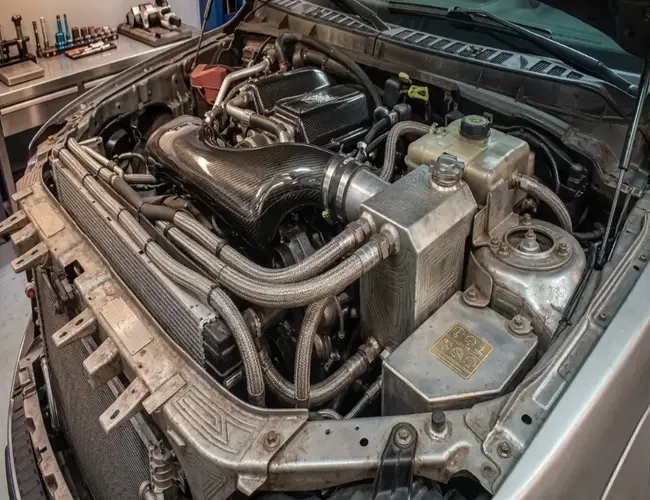
Upgrade the system when the original components are functioning properly but cannot meet the vehicle’s current cooling demand.
An upgrade may be appropriate when:
- Engine horsepower or compression has increased
- Air conditioning has been added
- The vehicle regularly operates in stop-and-go traffic
- The car is used as a daily driver
- The engine produces more heat than the original configuration
- Improved low-speed temperature control is required
- Reliability is more important than strict factory correctness
Common cooling-system upgrades include:
- High-efficiency radiator cores
- Aluminum radiators
- Electric-fan conversions
- Improved radiator sealing and airflow control
- Coolant-recovery systems
- Higher-capacity components for modified engines
An upgrade should address a confirmed limitation. It should not be used as a substitute for diagnosing leaks, restrictions, engine-tuning problems, or damaged components.
For component-specific decisions, see:
Originality vs. Modern Cooling Reliability
Neither an original system nor an upgraded system is automatically better. The correct choice depends on how the vehicle is built and used.
Preserve the original configuration when:
- Collector value is a priority
- The vehicle is numbers-matching
- Factory appearance matters
- The engine remains close to original specifications
- The restored factory system can meet the required heat load
- The car receives limited or moderate use
Consider selective upgrades when:
- The engine has been modified
- The vehicle regularly idles in traffic
- Air conditioning or other loads have been added
- The car operates in hot weather
- Dependable daily use is the primary goal
- Factory cooling capacity is no longer sufficient
Owners who upgrade a collector vehicle may choose to preserve the original radiator, fan, shroud, and mounting hardware for possible future reinstatement.
Component and Material Compatibility
Cooling-system components must work together as one thermal-management system.
Important compatibility factors include:
- Radiator dimensions and core design
- Fan size, position, and shroud fit
- Water-pump rotation and impeller design
- Pulley ratio
- Thermostat and bypass configuration
- Radiator-cap pressure
- Hose routing and reinforcement
- Alternator capacity for electric fans
- Coolant chemistry
- Engine and radiator materials
Mixing aluminum, cast iron, copper, brass, and other metals does not automatically cause failure.
However, improper coolant chemistry, poor grounding, stray electrical current, and neglected maintenance can increase corrosion risk in a mixed-metal system.
An upgraded component should be selected according to the entire system—not only its advertised size or performance rating.
Which Approach Is Right for Your Vehicle?
| Vehicle condition or use | Recommended direction |
|---|---|
| Original collector car with rebuildable components | Repair or restore |
| Failed component that cannot be repaired reliably | Replace |
| Modified engine with increased heat output | Selective upgrade |
| Daily driver used in frequent traffic | Restore first, then upgrade confirmed limitations |
| Show car with limited use | Preserve factory configuration where practical |
| Unknown overheating cause | Diagnose before choosing |
| Mixed aftermarket components with recurring problems | Evaluate compatibility and rebalance the system |
The vehicle may require more than one approach. For example, an owner might re-core the original radiator, replace deteriorated hoses, and add a discreet airflow improvement.
Why Replacing Everything Can Fail
Replacing every cooling component does not guarantee that the system will operate correctly.
A vehicle may receive a new radiator, fan, thermostat, and water pump but continue overheating because of:
- Incorrect component combinations
- Missing airflow seals
- Improper pulley ratio
- Collapsing lower radiator hose
- Trapped air
- Engine-tuning problems
- Inaccurate temperature readings
The value of a system-level evaluation is not simply finding old parts. It is determining which components are defective, which remain serviceable, and whether all parts function correctly together.
The Balanced Approach
For many classic cars, the most effective strategy is to:
- Diagnose the actual cooling limitation
- Retain original components that remain serviceable
- Restore components that can be rebuilt reliably
- Replace parts that are unsafe or beyond repair
- Upgrade only where present use requires additional capacity
Validate temperature performance after the work is completed
This approach supports cooling reliability while preserving originality wherever practical.
Frequently Asked Questions
Can an original classic-car cooling system be restored?
Yes. When the original radiator, water pump, fan, shroud, and related components remain structurally serviceable, they may be repaired or rebuilt while preserving factory fit and appearance. Components that cannot be restored dependably should be replaced.
When should a classic-car cooling system be upgraded?
Upgrade when a properly functioning original system cannot manage the vehicle’s present engine output, accessory load, climate, or driving conditions.
Do cooling upgrades always improve performance?
No. An upgrade may provide little benefit if the real problem is airflow, coolant restriction, pressure loss, engine tuning, or component incompatibility.
Can cooling-system upgrades affect collector value?
Visible modifications or the loss of original components may affect originality. Reversible or concealed upgrades and preservation of factory parts can reduce that concern.
Should I diagnose the system before replacing parts?
Yes. Diagnosis distinguishes a failed component from a system-capacity limitation and helps prevent unnecessary or incompatible replacements.
Final Answer
Repair original cooling components when they can be restored safely and originality matters. Replace components that are damaged beyond reliable repair.
Upgrade the system when the properly functioning original configuration cannot meet the vehicle’s present cooling demand.
For many classic cars, the best result comes from a balanced strategy: preserve what works, restore what is rebuildable, replace what has failed, and upgrade only where necessary.
At Coastline Classic Car Restorations in Huntington Beach, we evaluate component condition, airflow, coolant circulation, radiator efficiency, pressure integrity, material compatibility, engine output, and originality goals before recommending changes.
If you are unsure which approach your vehicle needs, learn more about our classic car cooling-system restoration service or schedule a cooling-system evaluation for a condition-based recommendation.