

Several warning signs can indicate that your classic car needs suspension repair, including excessive bouncing, uneven tire wear, steering wander, clunking noises, vehicle pulling, excessive body roll, and a rough or unstable ride.
These symptoms often develop gradually as suspension components age, wear, or lose their ability to properly support and control the vehicle.
Addressing suspension problems early can help preserve vehicle safety, improve handling, and prevent additional wear to tires, steering components, and related suspension parts.
Quick Guide to Classic Car Suspension Warning Signs
| Warning sign | Possible concern | Recommended response |
|---|---|---|
| Excessive bouncing | Worn shocks or weak springs | Schedule an inspection soon |
| Uneven tire wear | Alignment or component movement | Inspect before replacing the tires |
| Steering wander | Suspension or steering-linkage wear | Avoid high-speed driving until checked |
| Clunking or knocking | Loose joint, bushing, or mounting point | Arrange a prompt inspection |
| Pulling to one side | Tire, brake, alignment, steering, or suspension issue | Diagnose the cause before driving extensively |
| Excessive body roll | Weak shocks, springs, or sway-bar components | Inspect before aggressive or highway driving |
| Sudden ride-height change | Broken spring or structural concern | Stop driving and inspect immediately |
A single symptom does not always identify the failed component. The vehicle should be evaluated as a complete suspension and steering system.
Why Suspension Problems Should Never Be Ignored
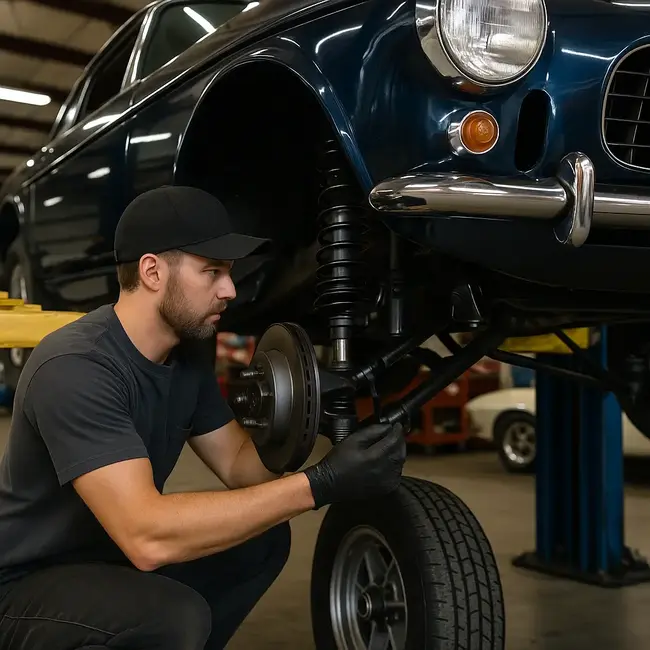
Your suspension system does more than improve ride comfort. It helps maintain tire contact with the road, supports vehicle weight, and controls body movement during braking, acceleration, and cornering.
As suspension components wear, early symptoms such as bouncing, tire wear, noise, pulling, or steering wander may gradually become more noticeable.
Recognizing these warning signs early helps owners identify developing problems before they cause broader handling, tire, steering, or safety concerns.
For a detailed explanation of how severe suspension wear affects vehicle control and safety, see our guide to how worn suspension components can make a classic car unsafe to drive.
For classic cars, age often plays just as significant a role as mileage. Rubber bushings, springs, and other components can deteriorate over time even when a vehicle spends much of its life in storage.
Sign #1: Excessive Bouncing After Hitting Bumps
One of the most common indicators of suspension wear is excessive bouncing after driving over bumps, dips, or uneven pavement.
Shock absorbers are designed to control spring movement and keep the tires firmly planted on the road surface. When shocks begin to wear out, they lose their ability to dampen suspension movement effectively.
Common symptoms include:
- Multiple bounces after hitting a bump
- Increased vehicle movement over rough roads
- Reduced ride control
- A floating or unstable driving sensation
Excessive bouncing often points to worn shock absorbers, but weak springs, incorrect shock selection, loose mounting hardware, or altered suspension geometry may produce similar symptoms.
The cause should be confirmed before parts are replaced.
Sign #2: Uneven Tire Wear
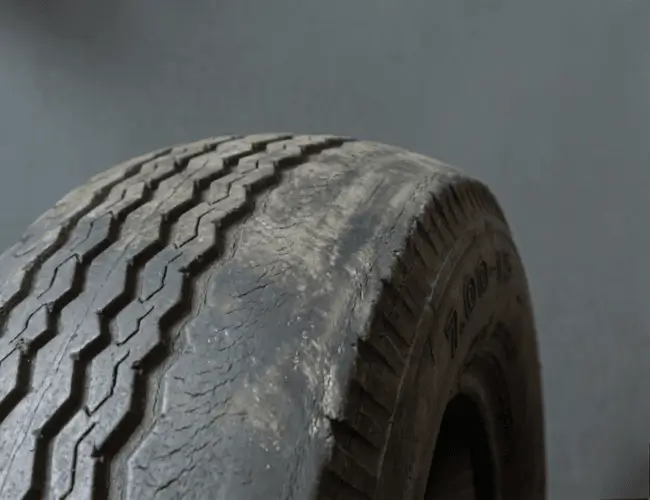
Suspension problems frequently appear in the form of abnormal tire wear patterns.
As suspension components wear, wheel alignment angles can gradually shift, causing tires to make uneven contact with the road.
Worn bushings, ball joints, tie rods, or wheel bearings may also allow the alignment angles to change while the vehicle is moving.
This can create tire wear even when a static alignment measurement appears close to specification.
Common wear patterns include:
- Inside edge wear
- Outside edge wear
- Feathering
- Cupping
- Accelerated tread wear
In many cases, uneven tire wear is one of the earliest warning signs that a suspension or alignment issue is developing.
An alignment should not be used as a substitute for repairing loose or deteriorated components. Mechanical wear should be corrected before the final alignment is performed.
Sign #3: Steering Wander or Loose Steering Feel
A properly functioning suspension helps maintain straight-line stability and predictable steering response.
As bushings, ball joints, tie rods, and related components wear, the vehicle may become more difficult to keep centered within the lane.
Drivers commonly notice:
- Constant steering corrections
- Loose steering feel
- Delayed steering response
- Reduced highway stability
- Vehicle wandering at higher speeds
These symptoms may originate from suspension wear, steering component wear, or a combination of both.
Sign #4: Clunking, Knocking, or Rattling Noises
Unusual suspension noises often indicate that components have become loose, worn, or damaged.
As bushings deteriorate or joints develop excessive play, suspension parts can move beyond their intended range of motion.
You may hear:
- Clunking over bumps
- Knocking during turns
- Rattling from the front or rear suspension
- Noise during braking or acceleration
Suspension noises rarely improve on their own and often become more noticeable as wear progresses.
However, the location and timing of the noise matter: a clunk over bumps may indicate a different problem than a knock during steering, braking, or acceleration.
Sign #5: Vehicle Pulling to One Side
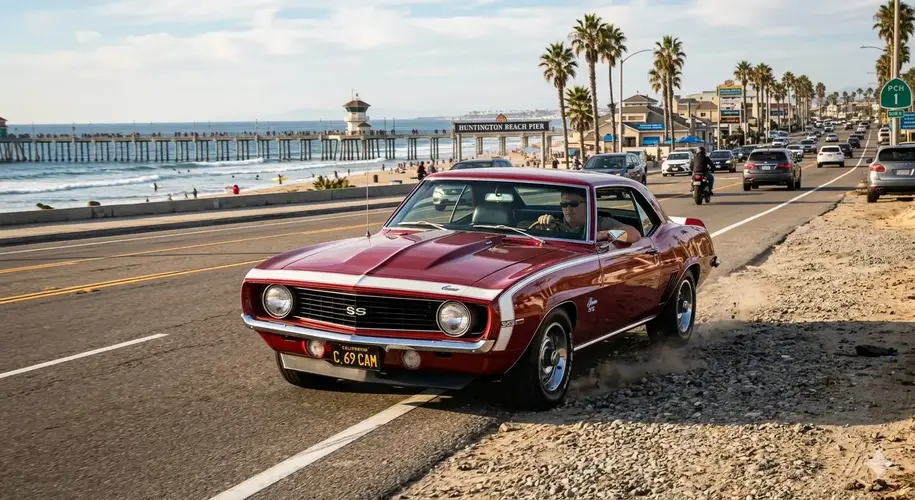 A classic car that consistently pulls left or right may be experiencing suspension-related problems.
Worn components can alter wheel alignment and change how weight is distributed across the vehicle.
Potential causes include:
- Worn suspension bushings
- Sagging springs
- Suspension geometry changes
- Alignment instability
While tire and brake issues can also contribute to pulling, suspension wear is frequently part of the problem.
If the issue develops gradually, it may help to learn why a classic car may begin pulling to one side while driving, since multiple suspension and steering-related conditions can contribute to this symptom.
Sign #6: Excessive Body Roll During Turns
Body roll refers to the amount a vehicle leans while cornering.
When sway bar components, springs, or shock absorbers become worn, the suspension may struggle to control body movement effectively.
Drivers may notice:
- Increased leaning during turns
- Reduced cornering confidence
- Less stable handling
- Greater weight transfer during maneuvers
Excessive body roll can reduce vehicle stability and make emergency steering corrections more difficult.
Sign #7: Rough, Harsh, or Unstable Ride Quality
Changes in ride quality often indicate suspension deterioration.
Because wear develops gradually, many classic car owners adapt to declining ride performance without realizing how much suspension control has been lost.
Warning signs may include:
- Increased vibration
- Harsh impacts over bumps
- Excessive suspension movement
- Unstable ride characteristics
- Reduced driving comfort
A noticeable change in ride quality is often a strong indication that suspension components should be inspected.
Owners experiencing increased vibration or harsh impacts may also benefit from understanding what causes a classic car to develop a rough ride over time, as suspension wear is one of the most common contributing factors.
Can You Drive a Classic Car With Suspension Problems?
Minor suspension wear may not immediately prevent a vehicle from being driven, but ignoring developing problems can increase safety risks and repair costs.
As suspension components continue to deteriorate, drivers may experience reduced steering precision, uneven tire wear, longer stopping distances, and decreased vehicle stability.
If your classic car exhibits multiple suspension symptoms, a professional inspection is recommended before the condition worsens.
Which Suspension Warning Signs Require Immediate Attention?
Some symptoms indicate a more urgent concern than ordinary ride-quality deterioration.
The vehicle should not be driven normally if it has:
- A wheel that visibly tilts or changes position
- Sudden loss of ride height
- Severe steering wander
- Sharp or unpredictable pulling
- Loud clunking combined with loose steering
- A broken or displaced spring
- Tire contact with the body, frame, or suspension
- Significant looseness in a ball joint or tie-rod end
- A cracked or weakened suspension mounting point
- Instability during braking
These symptoms may affect wheel position, steering control, structural support, or the vehicle’s ability to respond predictably. The safest approach is to have the vehicle transported for inspection.
Why Suspension Problems Are Common in Classic Cars
Unlike modern vehicles, classic cars often contain suspension components that have been exposed to decades of use, environmental conditions, and aging materials.
Common contributors to suspension deterioration include:
- Aging rubber bushings
- Metal fatigue
- Corrosion
- Long-term storage
- Moisture exposure
- Original components reaching the end of their service life
During classic car suspension inspections, we often find components that appear acceptable during a basic visual check but show deterioration once the suspension is loaded and the joints, bushings, and mounting points are examined more closely.
Springs may also lose ride height gradually enough that the change appears normal, particularly when an owner has driven the vehicle in that condition for several years.
When Should You Schedule a Suspension Inspection?
A suspension inspection should be considered whenever one or more of these warning signs appear.
Early diagnosis can help prevent:
- Accelerated tire wear
- Steering instability
- Additional suspension damage
- Reduced braking performance
- Increased repair costs
Routine inspections are especially important for classic vehicles that have spent extended periods in storage or have recently returned to regular road use.
How Suspension Repair Restores Vehicle Performance
Suspension repair focuses on replacing or restoring worn components and returning the vehicle to proper operating condition.
Depending on the vehicle’s needs, repairs may include:
- Shock absorber replacement
- Spring replacement or restoration
- Bushing replacement
- Ball joint replacement
- Steering linkage repairs
- Ride height correction
- Suspension alignment adjustments
Restoring suspension integrity helps improve vehicle stability, steering response, braking performance, tire wear, and overall driving confidence.
Professional Classic Car Suspension Repair in Huntington Beach
At Coastline Classic Car Restorations in Huntington Beach, we inspect, diagnose, and repair suspension systems for vintage, antique, muscle cars, and collector vehicles throughout Orange County.
Our team evaluates ride height, suspension geometry, steering linkage, bushings, springs, shock absorbers, and related components to identify age-related wear and handling concerns.
Our inspection process may also include checking ball-joint and tie-rod movement, bushing separation, shock resistance, spring condition, wheel-bearing play, tire-wear patterns, mounting-point integrity, corrosion, and whether the suspension geometry changes under load.
After the inspection, we explain which symptoms are connected, which components require immediate attention, and which items may be monitored or addressed during a later stage of the restoration.
Whether your vehicle is experiencing steering wander, uneven tire wear, excessive body movement, or unusual suspension noises, our classic car suspension repair specialists perform detailed inspections designed specifically for vintage and collector automobiles.
A properly functioning suspension helps your classic car maintain the stability, comfort, control, and driving experience it was originally engineered to deliver.