

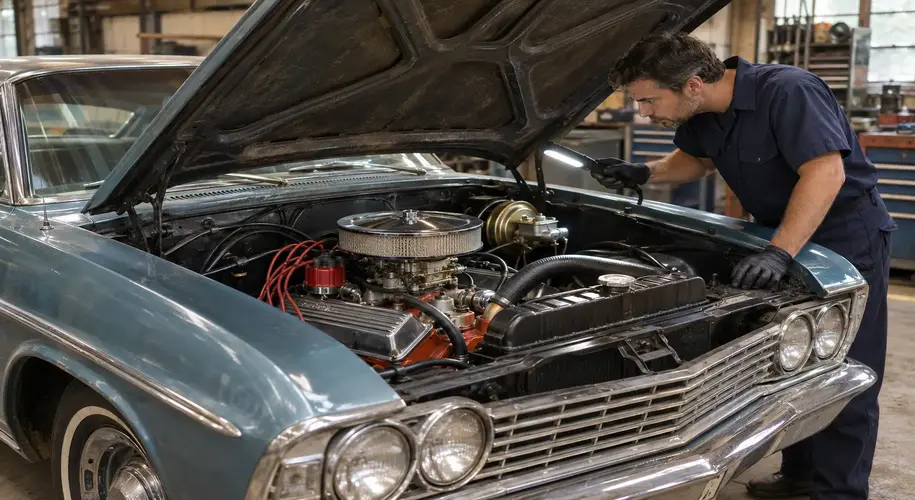
Coastline Classic Car Restorations provides classic car engine evaluation, rebuilding, and restoration in Huntington Beach, serving owners throughout Orange County.
We assess engine condition, repairability, originality, and your driving goals to determine whether a targeted repair, cylinder-head service, complete rebuild, or replacement is appropriate.
Owner Chuck brings more than 14 years of classic car restoration experience to planning projects around the vehicle’s mechanical needs and the owner’s goals.
When Should You Have Your Engine Evaluated?
Arrange an engine evaluation for:
- Persistent knocking
- Excessive oil consumption or blue exhaust smoke
- Low or uneven compression
- Excessive blow-by
- Confirmed low oil pressure
- Recurring overheating
- Metal particles in the oil or filter
Diagnosis comes first: These symptoms do not automatically mean the engine needs a complete rebuild.
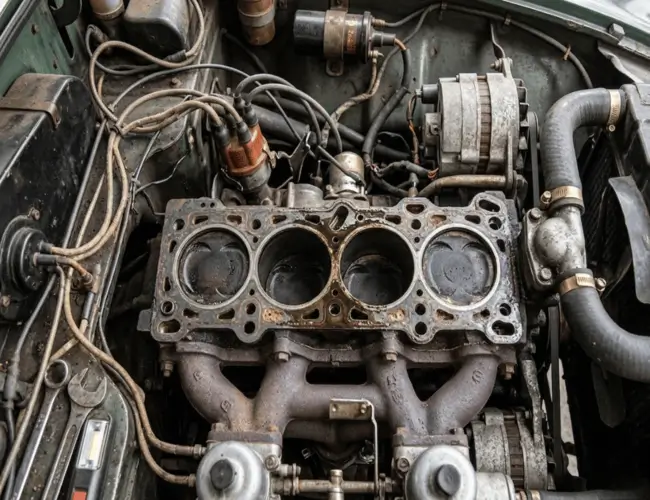
Our common classic-car engine problems guide explains initial diagnostic checks.
Stop operating the engine if it develops severe knocking, sudden oil-pressure loss, rapid overheating, coolant-contaminated oil, or heavy fluid loss.
What We Assess Before Recommending a Rebuild
The evaluation considers the engine as part of the complete vehicle. Testing depends on its symptoms and whether it can be operated safely.
| Area | What the evaluation considers |
|---|---|
| History and identity | Operating symptoms, storage, maintenance, modifications, previous repairs, engine stampings, and casting information |
| Cylinder sealing | Compression and leak-down findings, spark-plug condition, oil consumption, and blow-by |
| Lubrication | Mechanical oil-pressure readings, oil condition, leaks, and filter findings |
| Cooling and combustion sealing | Coolant loss, temperature behavior, contamination, and appropriate pressure or combustion-gas testing |
| Supporting systems | Fuel delivery, ignition, cooling, exhaust, electrical connections, and related mechanical faults |
Compression readings alone do not establish overall engine health. Our classic-car compression-testing guide explains what the test measures and its limitations.
ersistent white exhaust after warm-up, unexplained coolant loss, or low compression in adjacent cylinders may warrant investigation of head-gasket or other sealing faults. See our guide to head-gasket failure in classic cars.
Testing helps determine the next step. Complete repairability may remain uncertain until disassembly, cleaning, and measurement.
What Work Can an Engine Rebuild Include?
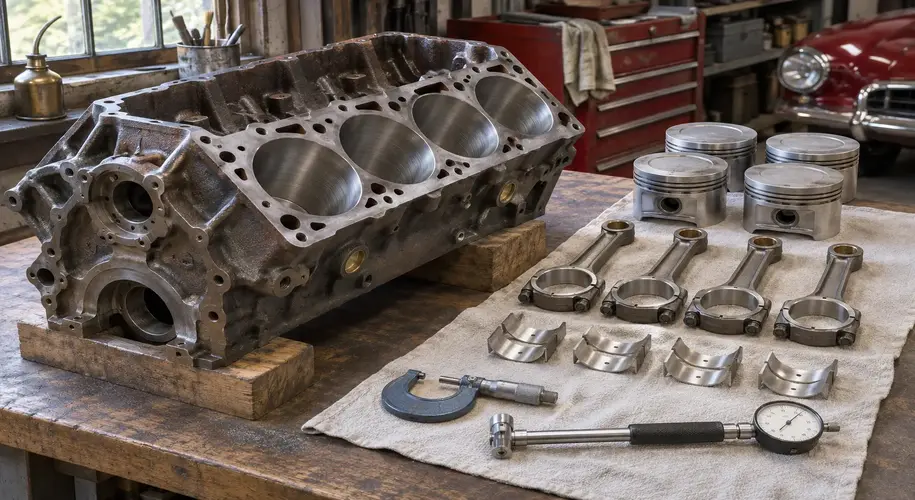
The approved scope depends on engine design, measured wear, damage, parts availability, and restoration goals.
| Work area | Possible scope |
|---|---|
| Removal and inspection | Engine removal, disassembly, cleaning, crack inspection, and component measurement |
| Block and rotating assembly | Cylinder, deck, crankshaft, and connecting-rod machining as required by measurements |
| Cylinder heads | Inspection and restoration of valves, guides, seats, and related valvetrain components |
| Parts and assembly | Selection of compatible replacement parts, clearance checks, and engine assembly |
| Installation and testing | Priming where required, reinstallation, startup, leak checks, tuning, and operating checks |
Not every rebuild requires every operation or replacement of every component. Inspection and measurements determine what can be retained, repaired, or replaced.
Our shop handles engine removal, assembly, installation, and operating checks. We coordinate required machining with outside specialists. Your estimate identifies the included work and any separately approved services.
Preserving Original and Numbers-Matching Engines
Before rebuilding, document engine identity and define your preservation goals.
- Verify identity: Record stampings, casting numbers, and date codes before machining. Keeping the engine alone does not prove numbers-matching status.
- Plan preservation: Identify original finishes, hardware, and accessories to retain, and compare suitable replacement parts.
- Assess repairability: Inspect damaged or previously machined castings. Compare repair and replacement by originality, compatibility, intended use, and installed cost.
Our engine rebuild versus replacement guide explains these tradeoffs.
How an Engine Rebuilding Project Proceeds
1. Define the result
Discuss whether the goal is factory-correct restoration, preservation, weekend driving, touring, period-style performance, or restomod use. Establish which characteristics matter before selecting parts.
2. Authorize evaluation and teardown
Clarify the initial authorization, diagnostic work, and what requires separate approval. Document engine identity and condition before disassembly.
3. Review inspection findings
Cleaning and measurement can reveal cylinder damage, bearing wear, crankshaft problems, corrosion, cracks, previous machining, or failed repairs. Review findings that change the proposed scope before additional work proceeds.
4. Complete machining and assembly
Prepare reusable components and assemble the engine with compatible parts and specified clearances. Identify any outside specialist work in the approved scope.
5. Install, check, and hand over
Check oil pressure, coolant temperature, leaks, timing, fuel-system operation, mechanical noise, and overall operation. Establish the applicable break-in, monitoring, early-service, and follow-up requirements.
Our guide to what to expect after a classic-car engine rebuild explains the owner’s responsibilities during this stage.
Supporting Systems and Related Repairs
A rebuilt engine needs suitable cooling, fuel delivery, ignition, exhaust, and electrical support.
Related work may involve the radiator, hoses, carburetor, ignition components, engine mounts, accessories, wiring, charging system, grounds, transmission, or driveline.
These systems should be evaluated for condition and compatibility. Repairs or modifications outside the engine proposal require a separately defined scope.
What Affects Engine Rebuild Cost and Timing?
Cost depends on engine design, measured wear, damage, machining requirements, parts availability, and the agreed removal and installation work. Originality requirements and component choices can also affect the estimate.
Timing depends on inspection findings, parts availability, machining schedules, and the approved scope. Discuss these factors when requesting an evaluation.
Our classic-car engine rebuild cost guide explains budget factors and estimate comparisons.
What to Prepare Before Contacting Us
Have these details available:
- Vehicle year, make, model, and known engine identification
- Symptoms and when they occur
- Recent overheating, oil-pressure loss, or fluid contamination
- Existing test results and repair records
- Originality, driving, and performance goals
Before authorizing work, confirm the evaluation fee and scope, how you will receive inspection findings, and which additional work requires your approval. Request the applicable warranty, break-in, maintenance, and follow-up terms in writing.
Request a Classic Car Engine Evaluation
Contact our Huntington Beach shop to discuss your engine’s symptoms, history, and restoration goals. Have your vehicle details and any existing test results available so we can discuss the appropriate next step.