

Classic car transmission restoration can affect resale value by preserving drivetrain originality, improving mechanical condition, strengthening documentation, and increasing buyer confidence.
Its effect may be most significant on rare, documented matching-numbers, survivor, or concours-level vehicles.
However, there is no universal percentage increase, and the restoration cost is not guaranteed to be recovered.
The value impact depends on:
- Vehicle make, model, and trim
- Production rarity
- Restoration quality
- Extent and reversibility of modifications
- Current collector demand
- Buyer preferences
For a driver-quality classic or restomod, a properly integrated modern transmission may appeal to buyers who prioritize highway drivability.
The best decision depends on the vehicle, how it will be marketed, and what its likely buyers value.
Value Preservation vs. Value Increase
Transmission restoration often protects value by preserving an important original component.
That is different from creating a guaranteed increase in sale price.
Rebuilding a documented original transmission may:
- Avoid replacing it with an incorrect unit
- Preserve manufacturer identification
- Maintain the factory drivetrain configuration
- Support the vehicle’s restoration history
- Address drivability or internal-condition concerns
- Preserve future restoration options
The work may help prevent a value deduction, but the final selling price still depends on the complete vehicle and current market conditions.
A restored transmission cannot compensate for unrelated concerns involving the body, paint, engine, interior, structure, documentation, or overall workmanship.
If you plan to restore the transmission before selling, consider how long classic car transmission restoration takes when setting your listing date.
When Does Transmission Originality Matter Most?
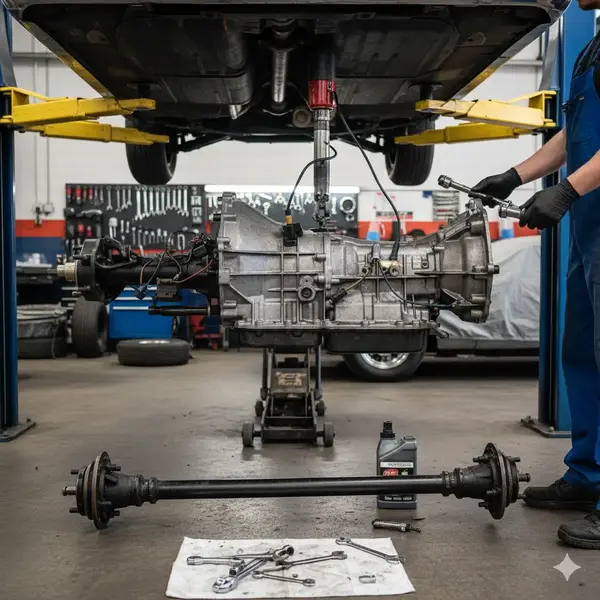
Original transmission preservation may receive greater attention in:
- Rare factory-performance vehicles
- Documented matching-numbers cars
- Survivor vehicles
- Concours restorations
- Limited-production models
- Classics marketed primarily on originality
It may receive less attention in:
- Driver-quality classics
- Restomods
- Pro-touring builds
- Cars already missing their original drivetrain
- Vehicles marketed primarily on performance or usability
The likely effect also varies by buyer. One buyer may prioritize factory authenticity, while another may prefer overdrive, lower highway RPM, and easier long-distance driving.
| Vehicle type | Likely resale consideration |
|---|---|
| Rare, documented original vehicle | Preserving the original transmission may be especially important |
| Concours restoration | Factory-correct components, finishes, and documentation may receive close attention |
| Survivor vehicle | Avoiding unnecessary alteration may matter more than cosmetic improvement |
| Driver-quality classic | Reliability and usability may rival strict originality |
| Restomod or pro-touring build | A well-integrated modern transmission may meet buyer expectations |
| Car missing its original transmission | A period-correct unit may improve correctness but does not become matching numbers |
| Poorly documented vehicle | Codes may help identify the unit without proving factory originality |
This is why the same transmission decision can affect two classic cars differently.
What Does “Matching Numbers” Mean?
“Matching numbers” is not defined identically across every manufacturer, vehicle, or collector community.
A matching-numbers transmission generally refers to a unit believed to have been installed in that specific vehicle at the factory, based on manufacturer-specific identification and supporting documentation.
Evidence may include:
- Transmission serial number
- Original identification tag
- Casting number
- Vehicle build documentation
- Ownership and restoration records
A casting number may identify the transmission type or case family. A date code may show that the component was produced during the correct period.
Neither necessarily proves by itself that the transmission is original to that particular vehicle.
A replacement transmission can be period-correct without being matching numbers.
How Is Transmission Originality Verified?
Verification should consider multiple pieces of evidence together.
| Evidence | What it may establish |
|---|---|
| VIN or partial-VIN stamping | Possible connection to the specific vehicle |
| Serial or assembly number | Unit identity and production information |
| Casting number | Transmission type or case family |
| Date code | Approximate production period |
| Original tag | Model, application, or calibration information |
| Build sheet or factory record | Original drivetrain specification |
| Historical invoices | Ownership and repair history |
| Before-restoration photographs | Condition and identification before work |
| Retained original components | Continuity of the restoration record |
The meaning of each identifier varies by manufacturer. A marque specialist may be needed to interpret unusual codes, identify altered markings, or resolve conflicting evidence.
Original stampings, tags, and identifying marks should be photographed before cleaning or disassembly.
They should not be altered, recreated, or represented as original when their history cannot be verified.
Why Restoration Quality Matters
Retaining the original case does not automatically make a restoration valuable or desirable.
Poorly executed work may reduce buyer confidence.
Potential concerns include:
- Active fluid leaks
- Improper operation
- Excessive noise
- Incorrect finishes presented as factory-authentic
- Irreversible modifications
- Incomplete invoices or records
A preservation-focused restoration should prioritize proper operation, appropriate components, careful treatment of original identification, and transparent documentation.
Original Transmission vs. Modern Overdrive
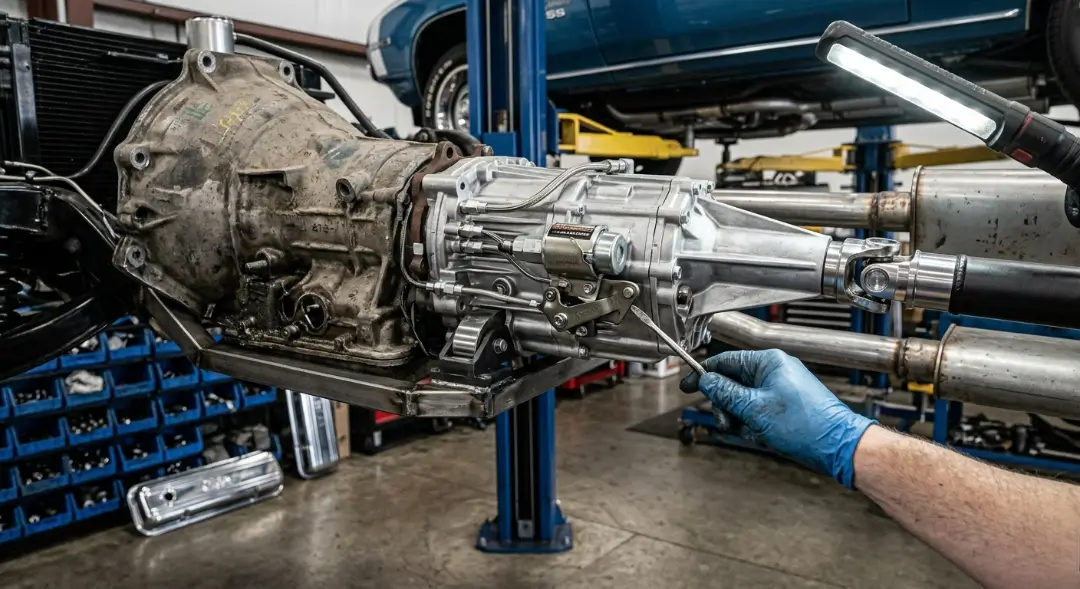
An overdrive conversion may appeal to buyers who prioritize lower highway RPM, freeway comfort, and long-distance drivability.
An originality-focused buyer may prefer the factory transmission.
The resale effect depends on:
- Vehicle rarity and originality
- Installation quality
- Required permanent modifications
- Retention of the original transmission
- Intended buyer audience
A conversion does not guarantee higher value.
Irreversible modifications or loss of a documented original unit may reduce appeal to some collectors, while a properly planned conversion may better suit a driver-quality classic or restomod.
For a complete decision guide, see rebuilding the original transmission versus installing overdrive.
Documentation That May Support Buyer Confidence
Keep a detailed record of the restoration, including:
- Identification tags and stampings
- Casting and date codes
- Photographs before cleaning and disassembly
- Rebuild specifications
- Fluid specification
- Testing and adjustment records
- Invoices, dates, and rebuilder information
If the transmission is shipped, photograph its condition and identifiers before packaging and retain the freight records.
Documentation does not guarantee a particular value. It gives a buyer, inspector, appraiser, or future technician better information about what was preserved and what work was completed.
After restoration, keep records of ongoing service and follow guidance on maintaining a restored classic car transmission to help preserve its mechanical condition.
Mistakes That May Reduce Collector Appeal
Avoid:
- Altering or removing authentic identification
- Installing donor parts without recording them
- Presenting reproduction markings as original
- Failing to retain photographs and invoices
Frequently Asked Questions
Does a matching-numbers transmission increase classic car value?
It may help preserve collector appeal when drivetrain originality is important. The effect depends on the vehicle, rarity, documentation, condition, workmanship, and market; no particular increase is guaranteed.
Is a correct casting number enough to prove originality?
No. A casting number may identify the transmission type or case family. Vehicle-specific originality may require VIN or serial stampings, date codes, factory records, and other supporting evidence.
Will a transmission swap hurt resale value?
It depends on the vehicle and likely buyer. Permanent modifications may reduce collector appeal on a rare original car, while a well-integrated overdrive conversion may appeal to buyers of driver-quality classics and restomods.
Should I retain the original transmission after a swap?
Retaining and documenting it may preserve future restoration options, particularly when the transmission is believed to be factory-installed.
Classic Car Transmission Restoration in Huntington Beach
Coastline Classic Car Restorations having 14+ years of restoration experience provides preservation-focused classic car transmission and driveline restoration services in Huntington Beach, California.
We help owners evaluate available transmission identification, document applicable components and repairs, and compare restoration with replacement or overdrive options based on the vehicle’s condition and intended use.