

Yes. Worn suspension components can make a classic car unsafe by reducing steering control, braking stability, tire traction, and overall vehicle handling.
As suspension parts deteriorate, the vehicle may become more difficult to control during emergency maneuvers, highway driving, cornering, and sudden braking situations.
While suspension wear often develops gradually, severely worn components can increase stopping distances, accelerate tire wear, and negatively affect the vehicle’s ability to respond predictably to driver inputs.
Minor suspension wear may initially cause symptoms such as squeaking, a rough ride, or uneven tire wear. However, severe wear involving ball joints, tie rods, control arms, springs, or suspension mounting points can create an immediate safety concern.
If the vehicle wanders severely, pulls during braking, changes direction unexpectedly over bumps, sits unusually low on one side, or produces loud clunking combined with loose steering, it should be inspected before continued driving.
Key takeaway: Minor suspension wear may initially affect ride quality, but severe wear in ball joints, tie rods, control arms, springs, or suspension mounting points can compromise steering, braking stability, tire contact, and wheel position.
Severe wandering, sharp pulling, visible wheel tilt, sudden ride-height loss, or loose steering should be inspected before continued driving.
What Does the Suspension System Do?
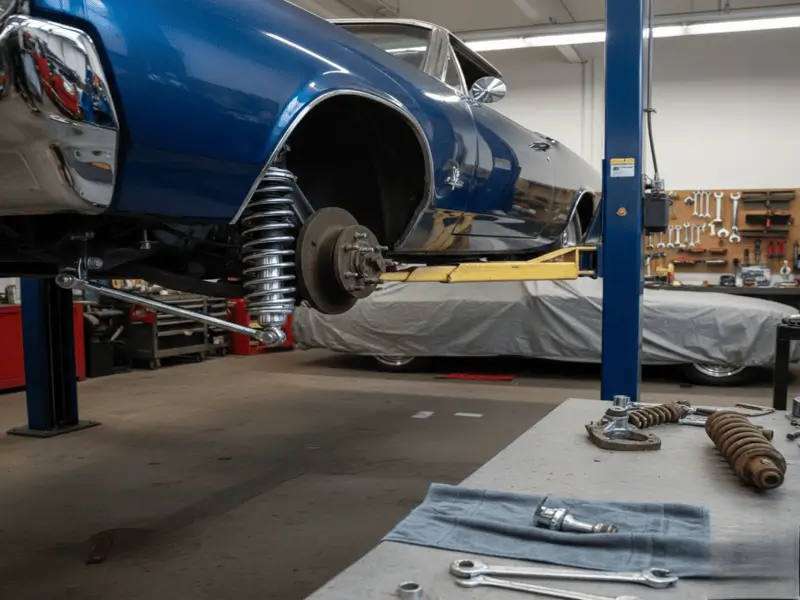
The suspension system helps maintain consistent tire contact with the road while supporting vehicle weight and controlling body movement.
A properly functioning suspension allows the vehicle to absorb road imperfections, remain stable during cornering, and provide predictable steering and braking performance.
A healthy suspension contributes to:
- Steering stability
- Ride comfort
- Braking performance
- Tire traction
- Vehicle control
- Predictable handling
When suspension components deteriorate, the vehicle may no longer perform as originally engineered.
Why Are Classic Cars More Vulnerable to Suspension Wear?
Many classic vehicles are several decades old and may still contain original or aging suspension components. Even vehicles that are driven infrequently can experience suspension deterioration due to age alone.
Understanding how suspension wear in classic cars develops over time can help owners make informed restoration and maintenance decisions.
Over time, exposure to heat, moisture, road debris, corrosion, and long-term storage can weaken suspension parts. Rubber bushings may harden and crack, springs can sag, and metal components may develop wear that affects suspension geometry and vehicle stability.
During classic car inspections, it is common to find suspension components that appear acceptable externally but have experienced significant internal deterioration due to age-related wear.
Which Suspension Components Commonly Wear Out?
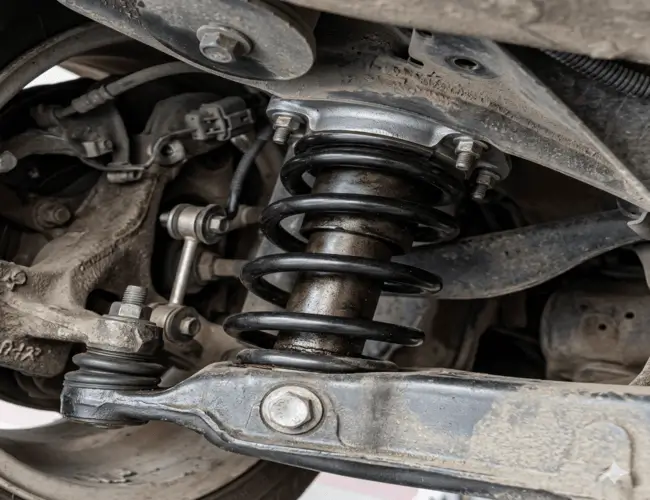
The suspension and steering systems work together, so both should be evaluated during an inspection.
Some symptoms that appear to be suspension-related may actually result from worn steering linkage, while other vehicles may have deterioration in both systems.
Several suspension components naturally wear over time and may require inspection or replacement during a restoration project.
Common wear items include:
- Control arm bushings
- Ball joints
- Coil springs
- Leaf springs
- Shock absorbers
- Sway bar bushings
- Suspension mounts
- Tie rod ends
- Idler arms
- Pitman arms
As these components wear, alignment angles, steering response, ride quality, and overall vehicle stability may be affected.
How Worn Suspension Affects Vehicle Control
One of the most noticeable effects of suspension wear is a loss of vehicle control and handling precision.
As bushings, ball joints, shocks, and other components deteriorate, the vehicle may no longer respond accurately to steering inputs.
Drivers often notice increased wandering, reduced steering precision, excessive body roll, and a greater need for steering corrections.
These symptoms typically become more apparent at highway speeds where suspension stability plays a larger role in maintaining directional control.
Can Worn Suspension Affect Braking Performance?
Yes. Suspension condition directly influences braking stability and vehicle control.
When brakes are applied, the suspension manages weight transfer between the front and rear of the vehicle.
Worn shocks, springs, or suspension joints can reduce the suspension’s ability to control this movement, causing the tires to lose consistent contact with the road surface.
As a result, drivers may experience:
- Reduced braking stability
- Reduced braking consistency and potentially increased stopping distance
- Front-end dive
- Uneven tire loading
- Vehicle pull during braking
Maintaining suspension integrity helps support more predictable braking performance and improved vehicle control.
Can Worn Suspension Cause Uneven Tire Wear?
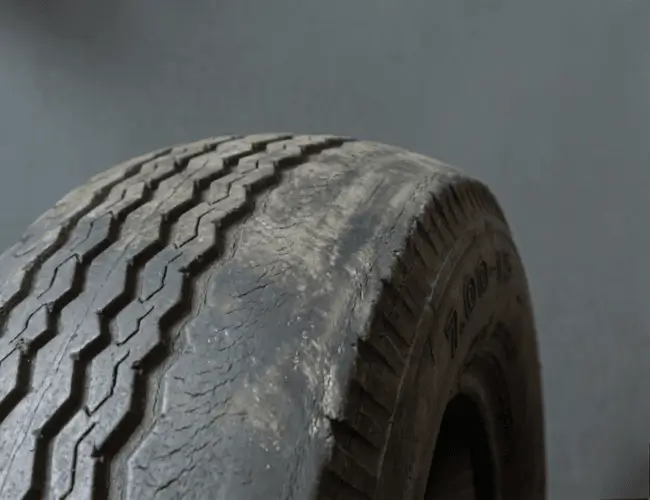
Yes. Worn suspension and steering components are common contributors to abnormal tire wear because they can allow wheel alignment and tire loading to change while the vehicle is moving.
As suspension components loosen or deteriorate, wheel alignment can gradually shift out of specification. This changes how the tire contacts the road surface and may cause accelerated tread wear.
Worn components can also cause dynamic alignment changes. This means the wheel angles may appear acceptable while the vehicle is parked but shift during braking, cornering, acceleration, or travel over uneven pavement.
A deteriorated control-arm bushing, loose ball joint, or worn steering component may allow the wheel to move under load, causing unstable handling and abnormal tire wear even after a basic alignment.
Common tire wear patterns associated with suspension problems include:
- Inside edge wear
- Outside edge wear
- Feathering
- Cupping
- Accelerated tread wear
Addressing suspension concerns early can help extend tire life and improve overall driving performance.
Can an Alignment Fix Worn Suspension Problems?
An alignment can correct wheel angles, but it cannot repair loose, damaged, or deteriorated suspension and steering components.
If ball joints, tie rods, control-arm bushings, springs, wheel bearings, or mounting points are worn, the wheel position may continue changing while the vehicle is driven.
In that situation, the alignment may not remain within specification.
Worn components should generally be repaired before the final alignment is performed so the suspension geometry can be set after the wheels and suspension parts are held securely in their correct positions.
Can Worn Suspension Cause Steering Problems?
Yes. The suspension and steering systems work together to keep the vehicle traveling in the intended direction.
When suspension components wear, steering response often becomes less precise. Drivers may notice a loose steering feel, delayed response to steering inputs, increased correction while driving, or vibration through the steering wheel.
These issues are particularly common in older vehicles with worn tie rods, ball joints, steering linkage components, or deteriorated suspension bushings.
How Do Worn Shocks and Springs Affect Safety?
Shocks and springs play a critical role in controlling vehicle movement and maintaining tire contact with the road.
When shocks lose effectiveness, the vehicle may continue bouncing after encountering bumps or uneven pavement.
Similarly, sagging springs can alter ride height and suspension geometry, affecting both handling and stability.
Common symptoms include:
- Excessive bouncing
- Increased body movement
- Reduced cornering stability
- Uneven ride height
- Poor ride control
These symptoms are often associated with the underlying causes of why a classic car rides rough, particularly when shocks, springs, or suspension bushings have deteriorated over time.
Because these components directly influence traction and handling, their condition plays an important role in overall vehicle safety.
Can Suspension Failure Cause an Accident?
In severe cases, yes.
Suspension components help maintain tire contact, steering control, and vehicle stability. If a critical component experiences significant wear or mechanical failure, the driver’s ability to control the vehicle may be reduced.
Potential consequences can include:
- Reduced steering precision
- Increased stopping distances
- Loss of vehicle stability
- Difficulty avoiding hazards
- Unpredictable handling characteristics
Most suspension issues develop gradually and provide warning signs before becoming severe. However, delaying repairs can increase safety risks and lead to more extensive damage.
Understanding the early warning signs of suspension problems can help classic car owners identify issues before they affect safety or drivability.
What Suspension Problems Can Make a Classic Car Immediately Unsafe?
Certain suspension conditions require more urgent attention than ordinary ride-quality concerns.
A classic car may be unsafe to continue driving if it has:
- Significant looseness in a ball joint or tie-rod end
- A cracked, bent, or separated control arm
- A broken or displaced coil spring or leaf spring
- A wheel that visibly tilts or changes position
- Severe steering wander or unexpected directional movement
- Tire contact with the body, frame, or suspension
- A suspension mounting point weakened by corrosion
- Sudden loss of ride height
- Sharp pulling or instability during braking
- Loud clunking combined with loose or unpredictable steering
These conditions may affect the vehicle’s ability to maintain wheel position, support vehicle weight, or respond safely to steering and braking inputs. The vehicle should not be driven normally until it has been inspected.
What Are the Warning Signs of Unsafe Suspension Wear?
Drivers should pay attention to symptoms that may indicate significant suspension deterioration.
Common warning signs include:
- Excessive bouncing
- Clunking or knocking noises
- Vehicle leaning to one side
- Uneven tire wear
- Steering wander
- Pulling while driving
- Poor ride quality
- Increased body roll during turns
A professional inspection can identify the underlying cause before the problem worsens.
What We Look for During a Classic Car Suspension Inspection
During a classic car suspension inspection, visible appearance does not always reveal the full condition of a component.
A rubber bushing may appear intact but separate from its metal sleeve when the suspension is loaded.
A shock absorber may show little external leakage while providing limited resistance, and springs may sag gradually enough that the incorrect ride height appears normal.
Important inspection points may include:
- Movement in ball joints and steering linkage
- Cracking, hardening, or separation in rubber bushings
- Shock absorber leakage and resistance
- Spring condition and ride height
- Tire-wear patterns
- Wheel-bearing movement
- Suspension and steering mounting points
- Corrosion around load-bearing areas
- Alignment stability
- Excessive component movement under load
The suspension and steering systems should be evaluated together because replacing shocks alone will not correct wandering caused by worn tie rods, deteriorated control-arm bushings, ball-joint wear, or movement at a mounting point.
Is It Safe to Continue Driving With Worn Suspension?
The answer depends on the severity of the wear.
Minor suspension wear may initially affect ride quality more than safety. However, as components continue to deteriorate, vehicle handling, braking performance, and steering response can become increasingly compromised.
Driving with severely worn suspension components may increase the risk of:
- Reduced vehicle control
- Unpredictable handling
- Accelerated tire wear
- Increased stopping distances
- Additional suspension damage
For safety reasons, significant suspension concerns should be inspected and repaired as soon as possible.
When Should Suspension Components Be Replaced?
Suspension components should be evaluated during routine maintenance inspections and whenever symptoms of wear become apparent.
Replacement may be recommended when technicians identify:
- Excessive play in joints
- Cracked or deteriorated bushings
- Leaking shock absorbers
- Sagging springs
- Corrosion-related damage
- Alignment instability
Timely repairs help preserve both vehicle safety and driving performance.
How Suspension Restoration Improves Safety
Suspension restoration focuses on correcting worn components and restoring proper suspension operation.
Depending on the vehicle’s condition, restoration may include:
- Bushing replacement
- Ball joint replacement
- Shock absorber replacement
- Spring restoration or replacement
- Ride height correction
- Steering component repair
- Alignment correction
Restoring suspension integrity helps improve steering response, braking stability, tire wear, ride quality, and overall driver confidence.
Classic vehicles operating near the coastal environments of Huntington Beach and Orange County may experience accelerated suspension deterioration due to moisture exposure and corrosion over time.
Professional Classic Car Suspension Inspection in Huntington Beach
At Coastline Classic Car Restorations in Huntington Beach, we inspect and restore suspension systems for vintage, antique, muscle cars, classic trucks, and collector vehicles throughout Orange County.
Our restoration process focuses on identifying worn suspension components, evaluating steering linkage, correcting ride height concerns, restoring proper suspension geometry, and improving overall vehicle safety.
Whether your classic vehicle is experiencing steering instability, excessive body movement, uneven tire wear, or suspension-related handling concerns, our team performs detailed inspections tailored specifically for vintage automobiles.
Our specialized classic car suspension repair services are designed to identify worn components and restore proper handling, ride quality, and vehicle stability.
A properly restored suspension helps your classic car deliver the stability, control, braking performance, and driving confidence it was originally engineered to provide.