

Quick Answer
Do you need to upgrade wiring for an LS swap or EFI conversion?
Yes. Factory wiring cannot support modern engines because it lacks stable voltage, proper grounding, circuit protection, and signal integrity required for ECU-controlled systems.
The Costly Mistake Most Builders Make
You can spend $15,000 on a fresh LS engine…
…and still end up stalled at a stoplight because of a $5 wiring failure from 1968.
This happens more often than people think—and it’s almost never the engine’s fault.
Even experienced builders can find that fuel injection for dummies is a necessary resource when a project starts to feel like a ‘sneaky tall mountain.
What Is an LS Swap?
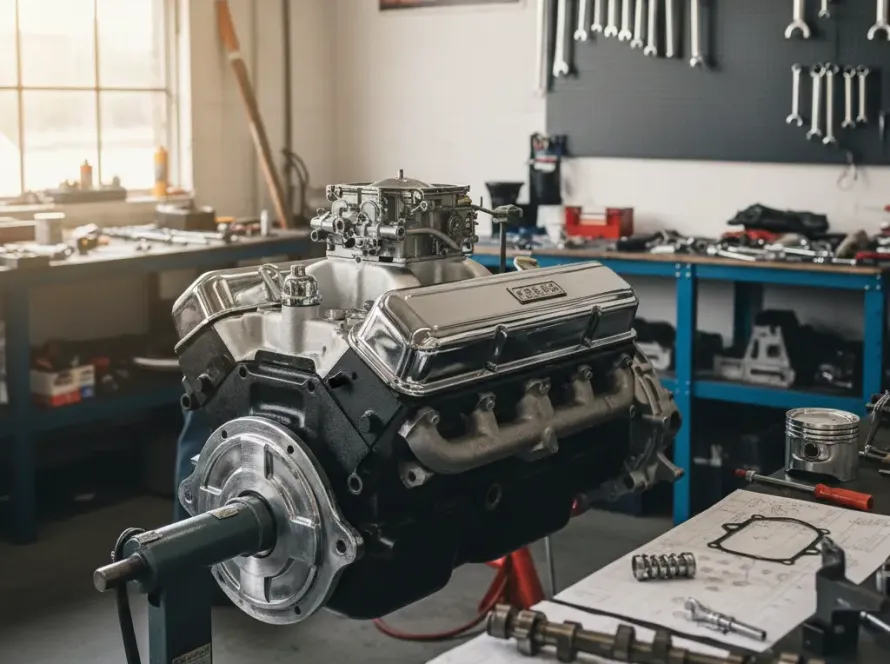
An LS swap is installing a modern GM LS-series engine into a classic vehicle.
It requires:
- ECU (Engine Control Unit)
- Electronic Fuel Injection (EFI)
- Advanced sensors
- High-current electrical systems
This completely changes the electrical demands of your car.
Do You Need to Upgrade Wiring for an LS Swap or EFI?
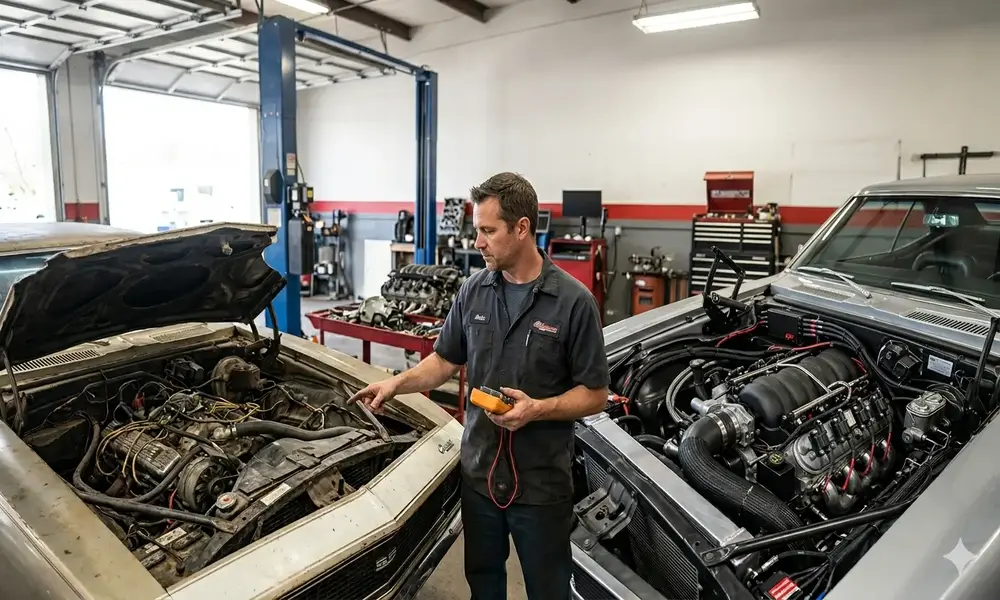
Yes—upgrading the wiring system is mandatory for reliability, performance, and safety.
Why Factory Wiring Fails
Classic wiring systems were designed for:
- Carburetors
- Minimal sensors
- Low electrical load
- Basic fuse protection
Many of these systems also operated on outdated electrical standards, which is why converting a classic car from 6V to 12V is often necessary when upgrading to modern engines and electronics.
Modern engines require:
- ECU-controlled fuel and ignition
- Sensor networks (O2, MAP, crank, cam)
- Relay-controlled circuits
- High amperage capacity
- Stable voltage regulation
Old wiring simply cannot meet these demands.
Core Electrical Concepts
- Voltage: Electrical pressure that powers components
- Current: Flow of electricity through the system
- Resistance: Opposition to current, often caused by corrosion
- Signal Integrity: Clean, uninterrupted communication between sensors and ECU
- Electrical Load: Total power demand from components
Why Old Wiring Cannot Support Modern Engines
Because it cannot deliver stable voltage, proper grounding, or clean signals required by ECU systems.
What Goes Wrong
- Sensors send incorrect data
- ECU miscalculates fuel and timing
- Engine performance becomes unstable
LS Swap vs EFI Conversion (Electrical Differences)
LS Swap (Full Engine Conversion)
- Standalone ECU
- Coil-on-plug ignition
- High amperage systems
- Complex sensor network
- Relay-controlled circuits
Requires a fully modern electrical system
EFI Conversion (Fuel System Upgrade)
- High-pressure fuel pump
- Stable voltage supply
- Clean sensor signals
- Proper grounding
Still depends on modern wiring infrastructure
LS Swap vs EFI Conversion: Which Requires More Wiring Upgrades?
LS swaps require a complete electrical system overhaul, while EFI conversions require upgrades but are less complex.
Key Differences in Wiring Requirements
LS Swap
- Full wiring harness replacement
- High electrical load management
- Complete ECU integration
- Full relay + fuse system
Requires a complete electrical redesign
EFI Conversion
- Partial system integration possible
- Focus on fuel system + sensors
- Less complex than LS swap
Still requires stable voltage and grounding upgrades
Which One Should You Choose?
- LS Swap: Maximum performance + full modernization
- EFI Conversion: Simpler upgrade + improved drivability
Critical Insight
Regardless of choice, wiring upgrades are NOT optional
Can You Run an LS Engine Without Rewiring?
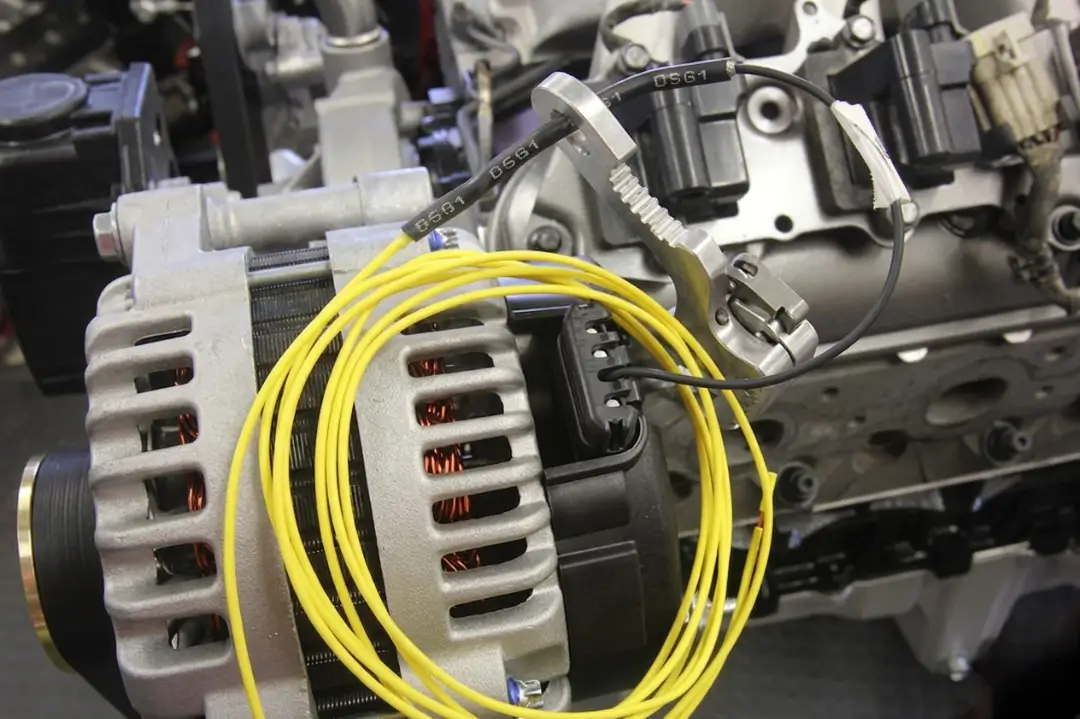
No—you cannot reliably run an LS engine using factory wiring.
Why Not?
- Insufficient amperage
- Weak grounding
- Poor voltage regulation
Results:
- Hard starting
- Random stalling
- ECU fault codes
- Lean running conditions
What Happens If You Don’t Upgrade Wiring
- Stalling
- ECU errors
- Sensor failure
- Electrical shorts
- Fire risk
Wiring—not the engine—is usually the root cause.
3 Signs Your Wiring Is Killing Your Swap
- Heat soak failure (starts cold, fails hot)
- Ghost gauges (fluctuating instruments)
- ECU brownouts (voltage drops under load)
These indicate electrical instability—not mechanical failure
Real-World Scenario
A common issue:
“We just finished an LS swap… but it keeps stalling.”
Typical causes:
- Voltage drop under load
- Poor grounding
- Signal disruption
Fixing this later often requires a complete rewire
What Wiring Upgrades Are Required?
- Custom or vehicle-specific wiring harness
- Standalone ECU integration
- Dedicated grounding system
- Relay + fuse distribution center
- High-output alternator (130A+)
- Proper circuit routing and protection
Choosing the right harness is critical—understanding the differences between options like Painless, American Autowire, and factory wiring systems can determine the long-term reliability of your build.
The Big Three Grounding Upgrade
Upgrade:
- Battery ground
- Engine ground
- Alternator ground
Ensures stable current flow across the system.
Common Wiring Mistakes to Avoid
- Cheap universal wiring kits (CCA wiring)
- Twist-and-tape connections
- Reusing low-output alternators
- Daisy-chained grounds
- Final installation before testing
These shortcuts lead to major failures.
Do You Need a New Fuse Box?
Yes—modern systems require relay-controlled fuse panels for proper load management.
Wiring Cost (Huntington Beach & Orange County)
- Integration: $3,000–$6,000
- Full rewire: $6,000–$15,000+
Doing it correctly once is always cheaper. (Further, it depends upon factors & inspection).
Why Coastal Cars Need Better Wiring
Salt air causes:
- Corrosion
- Increased resistance
- Signal degradation
Coastal builds require higher-quality materials and sealing.
When Should You Upgrade Wiring?
Always before or during the engine swap—not after.
Quick Diagnosis Table
| Problem | Cause | Solution |
|---|---|---|
| Stalling | Voltage drop | Rewire + grounding |
| ECU errors | Signal noise | Clean wiring + shielding |
| Hard start | Weak alternator | Upgrade system |
| Flickering | Load imbalance | Add relays |
Why LS Swaps Fail Electrically
- Poor grounding
- Outdated wiring
- Voltage instability
These are electrical failures—not engine failures.
Why Professional Wiring Matters
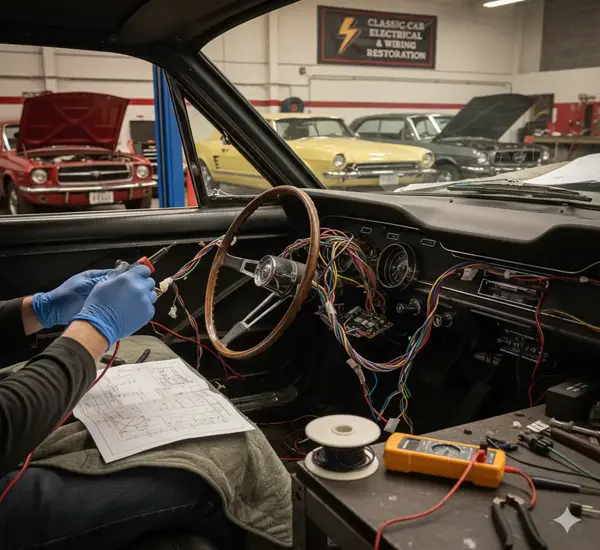
Electrical systems require precision design and integration.
At Coastline Classic Car Restorations in Huntington Beach:
- Full system design
- Load balancing
- Signal optimization
- ECU integration
We build systems that perform reliably in real-world conditions.
Final Verdict
Wiring upgrades are not optional—they are foundational.
Without proper wiring:
- Performance fails
- Reliability drops
- Safety risks increase
With proper wiring:
- Stable ECU operation
- Accurate sensor data
- Long-term reliability
Get Expert LS Swap Wiring in Huntington Beach
If you’re building or troubleshooting:
Contact Coastline Classic Car Restorations for professional wiring solutions.
Frequently Asked Questions
Can you use factory wiring for an LS swap?
No—factory wiring cannot support LS engines because it lacks the voltage stability, grounding, and signal integrity required for modern ECU-controlled systems.
Why does my LS swap stall?
LS swaps usually stall due to voltage instability, poor grounding, or wiring issues that disrupt ECU performance and sensor communication.
Do I need a standalone wiring harness?
Yes—a standalone harness is necessary to properly integrate the ECU, sensors, and electrical components for reliable operation.
Is EFI worth it without rewiring?
No—EFI systems require stable voltage and clean signals, which factory wiring cannot reliably provide.
What causes electrical issues in LS swaps?
Most issues are caused by outdated wiring, poor grounding, voltage drop, or improper system integration—not the engine itself.