

A classic-car cooling system controls engine temperature by circulating coolant through the engine, transferring absorbed heat through the radiator, moving air across the radiator core, and maintaining the correct system pressure.
Most systems rely on:
- Water pump
- Engine water jackets
- Thermostat and bypass circuit
- Radiator
- Fan and shroud
- Pressure cap
- Hoses
- Coolant
- Overflow or recovery container
These components operate as one system. Good coolant circulation cannot compensate for inadequate radiator airflow, and a larger radiator cannot correct pressure loss or restricted coolant passages.
How Does a Classic Car Cooling System Work?
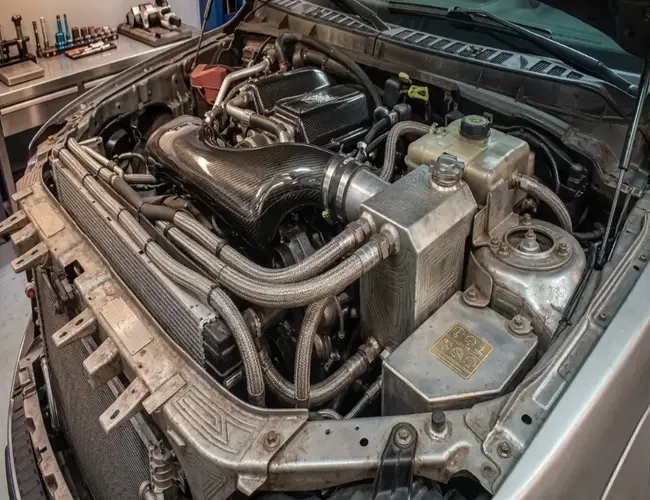
The basic cooling cycle follows these steps:
- The water pump circulates coolant through the engine
- Coolant flows through passages in the engine block and cylinder heads
- The coolant absorbs heat from the surrounding metal
- The thermostat regulates flow through the radiator
- Hot coolant enters the radiator
- Air passing through the radiator core removes heat
- Cooled coolant returns to the engine
- The cycle continues while the engine operates
Flow direction, thermostat placement, and bypass routing vary by engine. The factory configuration should be followed when selecting the water pump, thermostat, hoses, and coolant routing.
How Coolant Absorbs Engine Heat
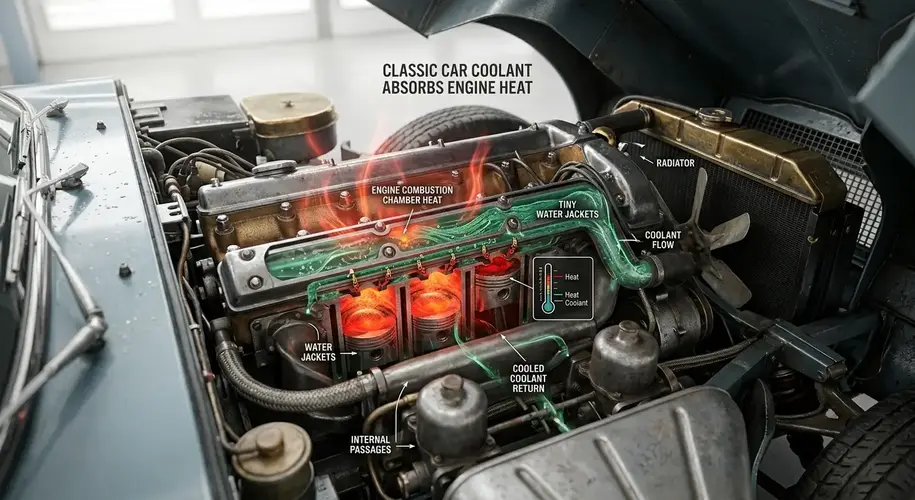
Combustion creates heat inside each cylinder. Some of that heat transfers into the pistons, cylinder walls, combustion chambers, and cylinder heads.
Internal passages called water jackets surround critical areas of the engine block and cylinder heads. Coolant absorbs heat from the metal as it moves through these passages.
The cooling system is not designed to keep the engine cold. It maintains a controlled operating temperature that supports:
- Proper lubrication
- Stable component clearances
- Efficient combustion
- Consistent performance
- Protection of gaskets and seals
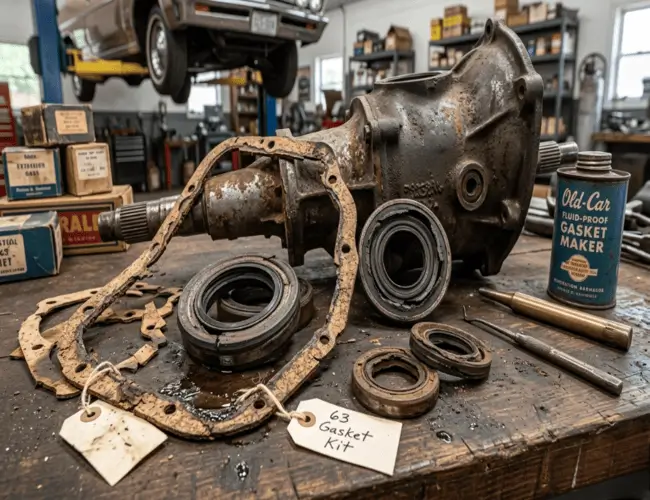
Engine materials also influence thermal behavior.
Cast iron and aluminum transfer and expand under heat differently, so coolant must be compatible with the metals, seals, solder, and gaskets throughout the system.
What Does the Water Pump Do?
The water pump circulates coolant between the engine and radiator.
Most classic vehicles use a belt-driven pump. Its performance depends on:
- Correct rotation direction
- Impeller design and condition
- Impeller-to-housing clearance
- Pulley ratio
- Belt tension
- Coolant routing
- System restriction
A replacement pump may fit the engine but still have the wrong rotation direction, impeller design, or clearance for the application.
Rust, scale, sediment, or casting debris can also restrict internal water jackets and reduce coolant circulation.
Water-Pump Cavitation
Cavitation occurs when vapor bubbles form near the pump impeller and collapse.
It can be influenced by pump speed, restriction, impeller design, low pressure, coolant condition, or incompatible components. Cavitation may reduce circulation and damage the pump over time.
How Does the Thermostat Control Temperature?
The thermostat helps the engine reach and maintain its intended operating temperature.
When the engine is cold, the thermostat restricts flow through the radiator. Coolant may continue circulating through an internal or external bypass while the engine warms.
As coolant reaches the thermostat’s rated temperature, the thermostat begins opening and allows more coolant to flow through the radiator.
Thermostat ratings vary by engine. Although many classic applications use ratings between approximately 160°F and 195°F, the correct specification depends on the engine and cooling-system design.
Removing the thermostat changes the intended warm-up, bypass, and flow-control behavior. It should not be treated as a universal way to improve cooling.
How Does the Radiator Remove Heat?
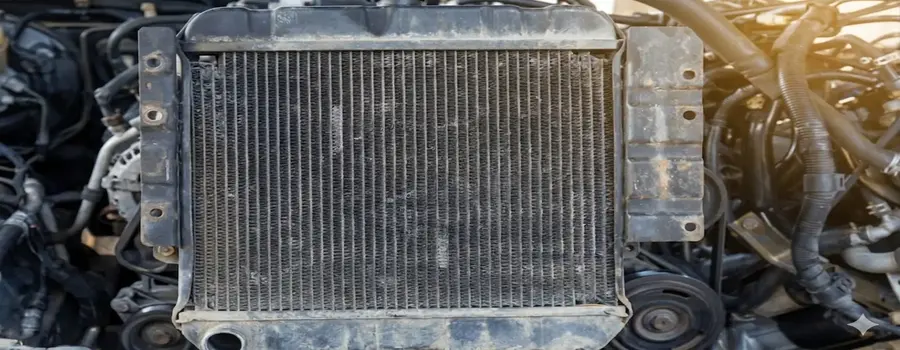
Hot coolant enters the radiator and flows through tubes connected to thin metal fins. Heat moves from the coolant into the tubes and fins, where airflow carries it away.
Radiator performance depends on:
- Tube design
- Tube-to-fin contact
- Core thickness
- Fin condition and density
- Coolant distribution
- Internal cleanliness
- Airflow
- Fan and shroud compatibility
Classic vehicles commonly use copper/brass radiators, while many modified systems use aluminum. Neither material is automatically better.
Copper has greater material conductivity, while aluminum construction may support wider tubes and different core designs. Actual cooling performance depends on the complete radiator, coolant flow, airflow, fan, and shroud.
For radiator-specific guidance, read Radiator Upgrades for Classic Cars.
How Do the Fan and Shroud Support Cooling?
The radiator cannot release heat effectively without airflow through its core.
At low vehicle speeds, the fan provides much of that airflow. As road speed increases, air entering through the grille contributes more strongly.
Classic cooling systems may use:
- Fixed mechanical fan
- Clutch-driven mechanical fan
- Electric fan
- Fan shroud
- Radiator seals and side baffles
- Lower air dam
- Grille ducting
The shroud helps the fan draw air through a larger portion of the radiator core. Seals and baffles reduce the amount of incoming air that travels around the radiator instead of through it.
Radiator thickness and fin density also affect airflow resistance. The fan must be capable of moving air through the installed radiator, condenser, grille, and shroud.
Learn more about low-speed cooling in Why Classic Cars Overheat in Traffic.
What Does the Radiator Cap Do?
The radiator or pressure cap regulates cooling-system pressure.
As coolant heats and expands, pressure rises. Increased pressure raises the coolant’s boiling point, allowing it to remain liquid at a higher temperature.
A pressure cap typically:
- Holds pressure up to its rated limit
- Releases excess pressure or coolant
- Allows coolant or air to return as the system cools, depending on its design
The correct rating varies by vehicle. A cap with too low a rating may release coolant prematurely. An excessively high rating may stress an older radiator, heater core, hoses, or soldered joints.
The pressure cap—not the overflow container—controls system pressure.
Overflow vs. Coolant-Recovery Systems
Classic vehicles may use a simple overflow arrangement or a coolant-recovery system.
Overflow system
In a basic overflow system:
- Expanding coolant exits through the cap and overflow hose
- Coolant enters a container or drains away
- Discharged coolant may not return automatically
This may be the vehicle’s original design and is not automatically defective.
Recovery system
In a recovery-style system:
- Expanding coolant moves into a recovery tank
- The cap and hose maintain a return path
- Coolant is drawn back into the radiator as the engine cools
The cap, hose, radiator neck, and tank must be compatible for coolant recovery to work correctly.
How Do Hoses, the Bypass and Heater Core Fit In?
Hoses connect the engine, radiator, water pump, heater core, and recovery components.
Their shape, routing, condition, and internal construction affect coolant flow. Some vehicles require a molded or internally reinforced lower radiator hose to resist collapse under pump suction.
The heater core is also part of the coolant circuit. It transfers coolant heat to cabin air when the heater operates.
The bypass circuit allows coolant to circulate within the engine while the thermostat is closed.
Incorrect hose routing or blocked bypass passages can interfere with warm-up and coolant distribution.
What Coolant Should a Classic Car Use?
Coolant transfers heat and protects the system against corrosion.
A classic cooling system may contain:
- Cast iron
- Aluminum
- Copper
- Brass
- Steel
- Solder
- Rubber and gasket materials
Coolant contains corrosion inhibitors that protect these surfaces. Those inhibitors can become depleted even when the coolant still looks clean.
The correct formulation depends on the materials in the complete system and applicable manufacturer guidance.
Do not select coolant by color alone or mix IAT, OAT, HOAT, or other formulations unless compatibility is confirmed.
Water quality and coolant concentration also matter. Mineral-heavy water may promote deposits, while an incorrect mixture can reduce corrosion, freeze, boiling, or heat-transfer protection.
Frequently Asked Questions
How does coolant circulate through a classic-car engine?
The water pump moves coolant through the engine’s water jackets. The thermostat regulates flow through the radiator, where heat transfers to the air before the coolant returns to the engine.
Why is a fan shroud important?
A shroud helps the fan draw air through more of the radiator core instead of only the area directly in front of the fan blades.
What does the radiator cap control?
The cap regulates cooling-system pressure and controls pressure or coolant movement according to its valve and recovery-system design.
What is the difference between overflow and recovery systems?
An overflow system receives discharged coolant but may not return it. A recovery system stores expanded coolant and draws it back into the radiator as the system cools.
Can one failed component affect the entire cooling system?
Yes. Restricted coolant circulation, inadequate airflow, poor heat transfer, or pressure loss can interrupt the complete cooling cycle.
Final Answer: How a Classic Car Cooling System Works
A classic-car cooling system circulates coolant, regulates its flow, transfers heat through the radiator, and maintains proper pressure.
Hoses, bypass passages, coolant chemistry, and the recovery system support this cycle.
For troubleshooting steps, read How to Fix Classic Car Overheating in Traffic.
Experiencing overheating, coolant loss, or unstable temperatures? Explore our classic car cooling-system restoration service at Coastline Classic Car Restorations in Huntington Beach.