A properly restored classic car transmission can provide years of reliable performance when maintained correctly.
Regular fluid service, routine inspections, proper driving habits, and early attention to potential problems can help extend transmission life and protect the investment made during restoration.
Whether your vehicle uses a manual transmission, automatic transmission, or factory-original drivetrain, ongoing maintenance plays a…
Classic car transmission restoration typically takes anywhere from 1 to 6 weeks, depending on the transmission type, parts availability, restoration complexity, machining requirements, and the condition of internal components.
A straightforward rebuild of a common manual transmission may be completed within a few days, while a complete restoration of a rare or heavily worn transmission…
Classic car transmission restoration typically costs between $1,500 and $6,500 or more, depending on the transmission type, vehicle rarity, parts availability, labor requirements, and the condition of internal components.
A basic rebuild of a common manual transmission may cost less than a complete restoration of a rare factory-original automatic transmission that requires hard-to-find parts, machining,…
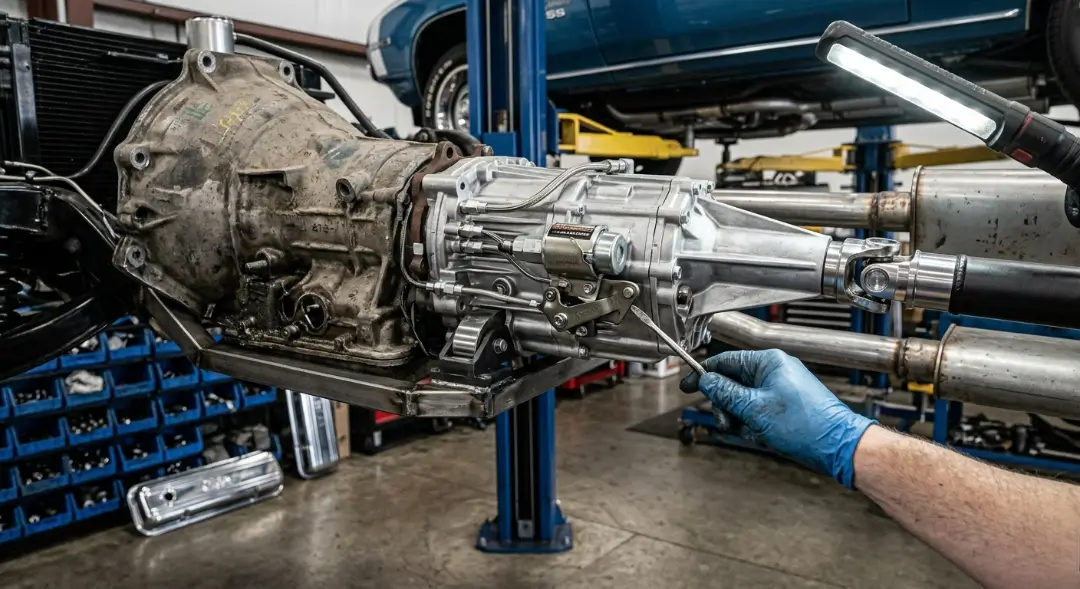
If you regularly drive your classic car on the freeway, a modern overdrive transmission like a 700R4, 200-4R, or Tremec can dramatically improve highway comfort and reduce cruising RPM.
It also makes the car far more enjoyable to drive on modern roads.
However, highly collectible or numbers-matching classics often retain stronger long-term value when the…
Classic car driveline vibrations should be diagnosed by when the vibration happens, not by guessing which component is bad first.
A proper diagnosis looks at vibration behavior based on:
Vehicle speed
Acceleration
Deceleration
Engine load
Gear selection
Temperature changes
This helps narrow down whether the issue may involve:
…
Short Answer
Bad U-joints and worn transmission slip yokes can create very similar driveline symptoms, including:
clunking when shifting into reverse
driveline slack
vibration under acceleration
highway-speed vibration
drivetrain play during takeoff
However, the root causes are different.
Failed U-joints usually create:
rotational looseness
clicking or clunking
…