


Classic car transmission restoration typically costs $1,500 to $6,500 or more.
Most standard projects fall between $2,500 and $4,500, while rare, matching-numbers, or heavily damaged transmissions may exceed $6,500.
The final price depends on the transmission type, internal condition, parts availability, labor, machining requirements, and whether preserving factory-original components is important.
These are general planning ranges—not fixed Coastline estimates. Vehicle-specific pricing requires an inspection and may change after the transmission is disassembled and measured.
Average Classic Car Transmission Restoration Cost
| Restoration type | Typical cost range |
|---|---|
| Minor rebuild | $1,500–$2,500 |
| Standard restoration | $2,500–$4,500 |
| Complete restoration | $4,500–$6,500+ |
| Rare or specialty restoration | $6,500–$10,000+ |
Pricing can differ depending on whether the transmission is delivered separately or removed from the vehicle. Installation, fluids, clutch or torque-converter service, machining, shipping, and related driveline repairs may be additional.
Because internal wear is not always visible externally, a complete teardown is usually required before the shop can confirm the final price.
What Affects Classic Car Transmission Restoration Cost?
| Cost factor | How it affects the price |
|---|---|
| Transmission type | Automatics generally require more parts and labor than manuals |
| Internal condition | Damaged gears, shafts, cases, or valve bodies increase costs |
| Parts availability | Rare, NOS, or reproduction parts may cost more |
| Labor requirements | Removal, cleaning, measurement, assembly, and testing add labor |
| Machining | Worn housings, shafts, and bearing surfaces may need specialty work |
| Originality | Preserving matching-numbers components can require additional care |
| Related components | Clutches, converters, mounts, U-joints, and driveshafts may need service |
Two similar-looking vehicles can have substantially different costs after their transmissions are disassembled and inspected.
Manual Transmission Restoration Cost
Classic manual transmission restoration generally costs $1,500 to $4,000.
Common classic manual transmissions include:
- Muncie M20, M21, and M22
- Borg-Warner T10 and Super T10
- Ford Toploader
- Chrysler A833
Restoration may involve synchronizers, bearings, bushings, seals, shift forks, gears, or shafts.
Although manuals have fewer internal components than automatics, rare gears, damaged cases, and matching-numbers requirements can increase the price.
Automatic Transmission Restoration Cost
Classic automatic transmission restoration typically costs $2,500 to $6,500 or more.
Common examples include:
- Turbo-Hydramatic 350 and 400
- Ford C4 and C6
- Chrysler TorqueFlite 727
- Powerglide
Automatic restoration may involve the valve body, hydraulic circuits, clutch packs, bands, planetary gearsets, bearings, bushings, seals, and torque converter.
Their additional hydraulic and internal components generally require more parts and labor.
What Is Included in Transmission Restoration?
A professional transmission restoration commonly includes:
- Initial evaluation: Inspecting leaks, operation, linkage, mounts, and external damage.
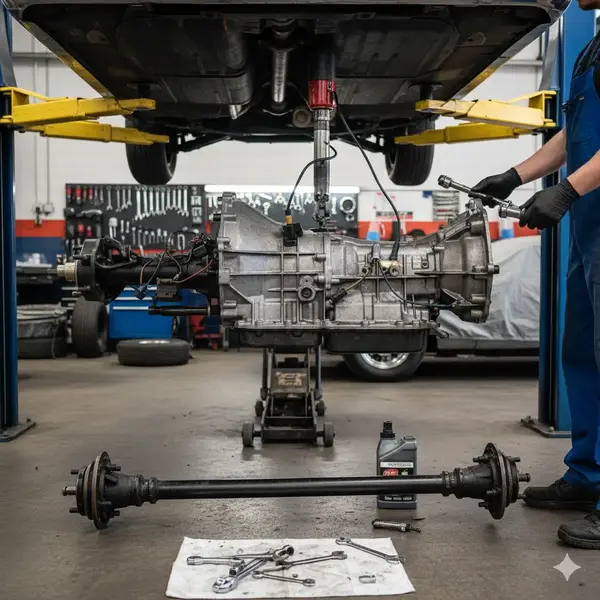
- Removal and disassembly: Removing the transmission when necessary and separating its internal components.
- Cleaning and measurement: Checking for cracks, corrosion, heat damage, wear, and incorrect tolerances.
- Parts repair or replacement: Servicing worn bearings, seals, bushings, synchronizers, clutch packs, bands, and other components.
- Specialty machining: Repairing eligible shafts, housings, valve bodies, and bearing surfaces when technically appropriate.
- Reassembly and testing: Completing applicable bench checks before installation and operational testing afterward.
The estimate should clearly state whether removal, reinstallation, fluids, testing, and related drivetrain work are included.
Why Do Rare Transmissions Cost More?
Limited-production, high-performance, and matching-numbers transmissions cost more because correct parts can be difficult to locate.
Restoration may require:
- New Old Stock parts
- Period-correct reproduction components
- Donor transmissions
- Specialty suppliers
- Custom machining
- Repairing original components instead of replacing them
If correct components cannot be sourced, review our guide on what to do when classic car transmission parts are extinct.
Transmission Rebuild vs. Restoration Cost
A rebuild primarily returns the transmission to reliable operating condition by replacing failed or worn components.
A restoration may include the same mechanical work while also preserving:
- Original housings and major components
- Factory specifications
- Casting numbers and identification marks
- Matching-numbers status
- Period-correct appearance
Because restoration can require additional documentation, careful parts sourcing, specialty repair, and preservation of original components, it generally costs more than a standard rebuild.
Internal Damage That Can Increase the Final Estimate
The initial estimate may change if teardown reveals damage that could not be confirmed during an external inspection, including:
- Damaged or missing gears
- Severely worn synchronizers
- Valve-body damage
- Torque-converter failure
- Heat or lubrication damage
- Corrosion from long-term storage
- Previous improper repairs
Not every vibration or shifting problem originates inside the transmission.
At Coastline Classic Car Restorations, the evaluation can also include related components such as mounts, U-joints, driveshafts, slip yokes, and driveline angles before a complete restoration is recommended.
See our classic car driveline vibration diagnosis guide for related inspection considerations.
What Should an Estimate Include?
Before approving the project, confirm whether the estimate includes:
- Removal and reinstallation
- Teardown and inspection
- Replacement seals and other soft parts
- Hard parts or machining allowances
- Clutch or torque-converter service
- Fluids and final testing
- Warranty coverage
- Authorization before additional work
An itemized estimate makes it easier to compare shops and understand what could change after teardown.
Is Restoring the Original Transmission Worth It?
Restoration can be worthwhile when authenticity, historical significance, or collector value matters.
Potential benefits include:
- Preserving matching-numbers status
- Maintaining factory-correct specifications
- Improving reliability and shifting
- Avoiding modification or fitment problems
- Supporting long-term collector appeal
Replacement may cost less for common transmissions.
The right choice depends on the vehicle, the original unit’s condition, replacement availability, and the owner’s goals.
Learn more about how transmission restoration affects classic car resale value.
Frequently Asked Questions
How much does it cost to rebuild a classic transmission?
Most classic transmission rebuilds cost $1,500 to $4,500. Rare parts, extensive damage, machining, and removal or installation can increase the cost.
What is usually the most expensive part?
Labor and damaged hard parts—such as gears, shafts, housings, valve bodies, and torque converters—are often the largest expenses.
Is rebuilding cheaper than replacing?
Replacing a common transmission may cost less. Rebuilding the original may be preferable when correct fitment, casting numbers, or matching-numbers value matters.
Can a shop provide an exact price before teardown?
Usually not. Hidden wear and internal damage often cannot be confirmed until the transmission is disassembled, cleaned, and measured.
How long does restoration take?
Classic transmission restoration commonly may take one to six weeks. Parts availability, machining, damage, and project complexity can extend the timeline.
Classic Car Transmission Restoration in Huntington Beach
At Coastline Classic Car Restorations in Huntington Beach, having 14+ years of restoration experience, we may restore classic manual and automatic transmissions with attention to reliability, drivability, originality, and factory-correct details.
Explore our classic car transmission and driveline restoration services to discuss your vehicle and restoration goals.


