

Short Answer
Bad U-joints and worn transmission slip yokes can create very similar driveline symptoms, including:
- clunking when shifting into reverse
- driveline slack
- vibration under acceleration
- highway-speed vibration
- drivetrain play during takeoff
However, the root causes are different.
Failed U-joints usually create:
- rotational looseness
- clicking or clunking
- vibration that changes under load
- visible joint play
A worn slip yoke often creates:
- driveline slack
- harsh engagement
- tailshaft movement
- transmission output shaft wear
- clunking during gear changes
In many classic cars, both problems can exist simultaneously — especially in older drivetrains with worn suspension, driveshaft, or transmission components.
Proper diagnosis requires inspecting:
- U-joint movement
- slip yoke wear
- transmission tailshaft play
- driveshaft condition
- overall driveline geometry
Common Symptoms of Failed U-Joints
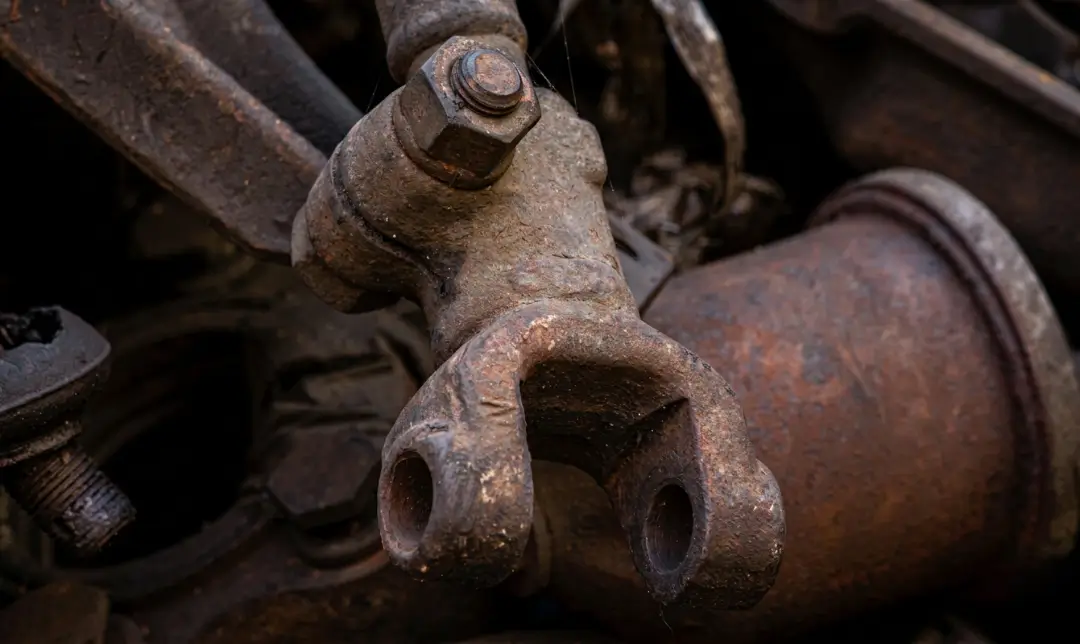
✔ Clunk when shifting into gear
✔ Vibration under acceleration
✔ Metallic clicking noises
✔ Driveline looseness
✔ Cyclic highway vibration
Common Symptoms of a Worn Slip Yoke
✔ Driveline slack
✔ Harsh takeoff engagement
✔ Tailshaft movement
✔ Clunk shifting into reverse
✔ Transmission output instability
What Does a Transmission Slip Yoke Do?
The slip yoke connects the driveshaft to the transmission output shaft while allowing the driveshaft to move slightly as the suspension travels.
This movement is necessary because the distance between:
- the transmission
and - the rear differential
changes slightly during suspension movement.
The slip yoke helps accommodate:
- suspension travel
- driveline movement
- rear axle motion
- driveline angle changes
Over time, the yoke splines and contact surfaces may wear, creating excessive movement inside the transmission tail housing.
What Do U-Joints Do?
U-joints allow the driveshaft to rotate smoothly while operating through changing driveline angles.
They help transfer rotational force between:
- the transmission
- driveshaft
- rear differential
As suspension geometry changes during driving, U-joints compensate for angle movement while maintaining driveline rotation.
When U-joints wear out, excessive play develops inside the bearing caps and cross assembly.
This often creates:
- driveline looseness
- vibration
- clunking noises
- rotational slack
Why Both Problems Feel Similar
Many driveline symptoms overlap because both components affect rotational driveline movement.
These overlapping symptoms are one reason many owners struggle to identify what causes driveline vibration in classic cars before replacing multiple parts unnecessarily.
Both worn U-joints and damaged slip yokes may create:
- clunking during gear engagement
- driveline play
- vibration at highway speed
- harsh acceleration feel
- rotational slack
This is why many owners replace:
- tires
- driveshafts
- rear suspension parts
without identifying the actual source of the problem.
Common Signs of Failed U-Joints
Failed U-joints often create symptoms that worsen under drivetrain load.
Common U-Joint Symptoms
- Vibration during acceleration
- Metallic clicking noises
- Clunk when shifting into drive or reverse
- Cyclic vibration at highway speed
- Visible rust around bearing caps
- Rotational looseness in the driveshaft
In severe cases, failed U-joints may create:
- binding
- driveline shudder
- aggressive vibration
- catastrophic driveline failure
Common Signs of a Bad Slip Yoke
A worn slip yoke often creates more noticeable driveline slack and engagement harshness.
Common Slip Yoke Symptoms
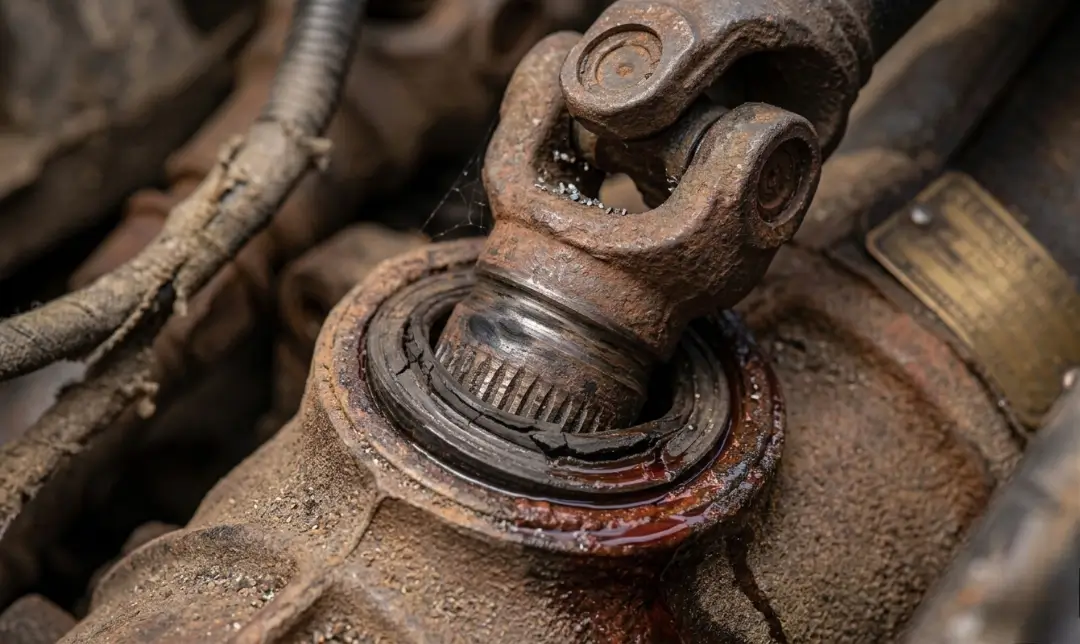
- Clunk shifting into reverse
- Driveline “play” during takeoff
- Harsh engagement feel
- Driveshaft movement inside tail housing
- Tailshaft bushing wear
- Fluid leakage near transmission output
In many classic cars, slip yoke wear gradually develops over decades of drivetrain movement and spline contact wear.
Why Clunking Into Reverse Is So Common
One of the most common driveline complaints is:
“Why does my car clunk shifting into reverse?”
This often happens because drivetrain slack becomes most noticeable when rotational load suddenly changes direction.
Common causes include:
- worn U-joints
- slip yoke wear
- excessive drivetrain backlash
- worn transmission mounts
- differential play
In many older classic drivetrains, multiple worn components contribute to the clunk simultaneously.
Why Vibration Under Acceleration Often Points to U-Joints
Vibration during acceleration is frequently associated with worn U-joints because the joints experience higher operating loads under torque.
As driveline load increases:
- worn bearing caps shift
- rotational looseness increases
- driveline harmonics worsen
This often creates vibration that becomes more noticeable:
- during acceleration
- uphill driving
- freeway merging
- heavier throttle input
However, driveline geometry problems and slip yoke wear may also contribute to acceleration-related vibration, especially after drivetrain modifications like overdrive swaps versus original transmission rebuilds in classic cars.
What Causes Excessive Driveline Slack?
Driveline slack refers to excessive free movement before drivetrain power fully transfers through the driveline.
Common causes include:
- worn U-joints
- slip yoke wear
- differential backlash
- worn splines
- transmission output shaft wear
- loose driveline components
Many classic cars develop some driveline slack naturally over time, but excessive movement usually indicates wear somewhere within the drivetrain system.
How Shops Diagnose Slip Yoke vs U-Joint Problems
Proper driveline diagnosis requires inspecting multiple components throughout the drivetrain system.
Understanding how to diagnose driveline vibration correctly helps identify whether the problem originates from U-joints, slip yoke wear, driveline geometry, or transmission-related issues.
Technicians typically inspect:
- driveshaft movement
- rotational play
- U-joint stiffness
- yoke spline wear
- tailshaft bushing condition
- driveline operating angles
Experienced driveline shops may also inspect:
- transmission mount condition
- pinion angle
- driveline phasing
- rear suspension geometry
because multiple small driveline issues often create overlapping symptoms.
Why Some Vibrations Continue After U-Joint Replacement
Some owners replace U-joints only to discover the vibration remains.
This may happen because:
- the slip yoke is also worn
- driveline geometry remains incorrect
- the driveshaft is out of balance
- the tailshaft bushing is damaged
- pinion angle problems still exist
In many older classic drivetrains, replacing one worn component sometimes reveals additional underlying wear elsewhere in the system.
This exact problem of “throwing parts” at a persistent vehicle shake is a common trap.
As discussed in Hagerty’s Piston Slap column on tracking down stubborn driveline vibrations, owners often replace various wheels, tires, and suspension pieces before realizing the root issue stems from overlapping issues hidden further up the drivetrain.
Common Mistakes During Diagnosis
Some driveline problems are repeatedly misdiagnosed because symptoms overlap heavily.
Common Diagnosis Mistakes
- Assuming all vibration is tire-related
- Replacing U-joints without inspecting the slip yoke
- Ignoring tailshaft bushing wear
- Overlooking driveline geometry problems
- Missing transmission mount deterioration
- Ignoring driveshaft balance issues
A driveline may contain multiple small wear problems simultaneously rather than a single obvious failure.
Real-World Restoration Perspective
Many classic car driveline vibrations and clunking problems develop gradually over decades of wear.
In some restorations, owners replace:
- wheels
- tires
- driveshafts
- suspension parts
before discovering the real problem involves worn driveline components hidden underneath the vehicle.
A worn slip yoke may create symptoms that feel nearly identical to bad U-joints, especially during:
- acceleration
- reverse engagement
- highway cruising
- driveline load changes
Accurate diagnosis usually requires evaluating the entire driveline system rather than focusing on a single component.
Why Older Classic Cars Often Develop Multiple Driveline Problems Together
Around Huntington Beach and Southern California, many classic cars still operate with:
- original driveline components
- aged suspension systems
- worn bushings
- decades-old drivetrain parts
Over time, wear accumulates across:
- U-joints
- slip yokes
- transmission mounts
- tailshaft bushings
- differential components
Because of this, driveline problems in older classics are often cumulative rather than isolated to one part alone.
Frequently Asked Questions
What causes clunk shifting into reverse?
Common causes include worn U-joints, slip yoke wear, driveline slack, differential backlash, or worn drivetrain mounts.
Can bad U-joints cause vibration under acceleration?
Yes. Worn U-joints often create vibration that becomes more noticeable during acceleration or under drivetrain load.
What does a bad slip yoke feel like?
A worn slip yoke may create driveline slack, harsh engagement, clunking during gear changes, and tailshaft movement.
Can a bad slip yoke damage the transmission?
In some cases, excessive slip yoke wear may contribute to tailshaft bushing wear and drivetrain instability over time.
Why does my classic car still vibrate after balancing?
The problem may involve driveline geometry, U-joint wear, slip yoke wear, or other drivetrain-related issues rather than wheel balance alone.
Classic Car Driveline Diagnosis & Restoration Services in Huntington Beach
At Coastline Classic Car Restorations in Huntington Beach, CA, we understand how difficult driveline vibrations, clunking, and drivetrain slack can be to diagnose in classic cars and vintage restorations.
Our restoration approach focuses on:
- driveline inspection
- slip yoke evaluation
- U-joint diagnosis
- driveshaft analysis
- driveline geometry correction
- restoration-focused drivetrain repair
Whether your classic car experiences vibration under acceleration, clunking into reverse, or persistent driveline slack, proper driveline diagnosis plays a major role in restoring smooth operation and long-term drivetrain reliability.
Need help diagnosing driveline vibration or drivetrain play in your classic car?