

Quick Answer
A grounding issue in a classic car is an electrical problem where current cannot properly return to the battery due to corrosion, loose connections, or poor contact, causing voltage drop and unstable system performance.
What Is a Grounding Issue?
A grounding issue in a classic car is a failure in the return path of electrical current, usually caused by rust, corrosion, or weak connections on the chassis.
In classic cars:
- The metal body acts as the ground path
- Electricity must return through the chassis to complete the circuit
How Grounding Issues Cause Electrical Failures
This chain explains most electrical issues in classic vehicles.
Why You Should Care About Grounding
Most electrical problems in classic cars are caused by poor grounding, not faulty parts.
In real-world diagnostics:
- New batteries don’t fix slow cranking
- New headlights still appear dim
- Electrical issues keep returning
Because the ground path is weak, not the components.
How Grounding Actually Works
Every electrical circuit must complete a loop:
Battery → Wiring → Component → Ground → Battery
- Power flows through wires
- Returns through the chassis
No proper return path = no stable circuit
Key Insight
A bad ground is one of the most common causes of voltage drop in classic cars.
This leads to:
- Reduced voltage at components
- Performance loss
- Increased resistance and heat
What Causes Grounding Issues in Classic Cars?
1. Rust & Corrosion (Most Common)
Rust blocks electrical conductivity, weakening the ground connection.
Since it is a proven rule of automotive repair that most electrical problems are due to bad grounds, even a ground that looks tight can be failing due to hidden oxidation between the terminal and the chassis.
Especially in coastal areas like Orange County:
- Salt air accelerates corrosion
- Copper oxidizes (“green death”)
- Resistance increases
Corrosion turns a solid ground into a weak connection, especially when relying on patched wiring.
2. Loose or Weak Ground Connections
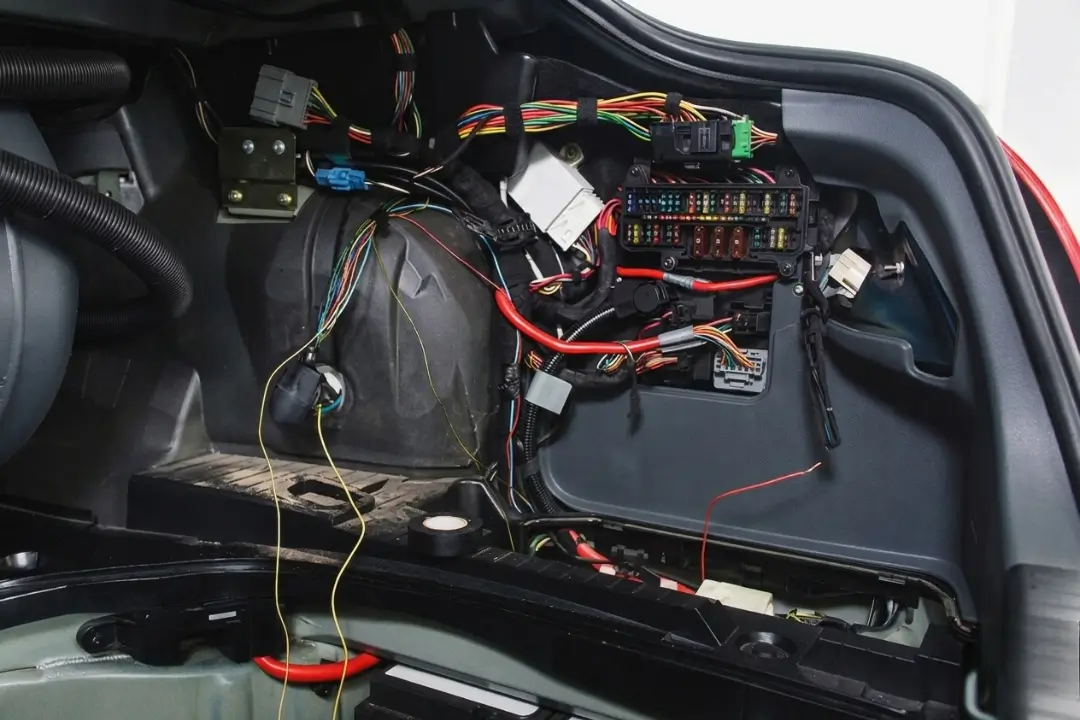
Loose connections create intermittent grounding.
This causes:
- Flickering lights
- Random electrical failures
3. Dirty or Painted Surfaces
Ground connections must contact bare metal.
Paint, grease, or dirt:
- Act as insulators
- Block current flow
4. Aging Ground Straps
Ground straps degrade internally, increasing resistance.
Even if they look fine:
They may fail under load
5. Missing Grounds After Modifications
Modern upgrades require stronger grounding systems.
Examples:
- LS swaps
- HEI ignition
- High-output alternators
- Audio systems
Factory grounding becomes insufficient.
Symptoms of Grounding Issues
Grounding problems cause unstable electrical behavior.
Common symptoms:
- Flickering or dim lights
- Slow cranking
- Erratic gauges
- Intermittent systems
- Battery drain
Grounding should always be your first check.
Quick Answers
Why does my car struggle to start with a new battery?
Poor grounding reduces current to the starter.
Can a bad ground cause flickering lights?
Yes, unstable voltage causes fluctuations.
Real Technician Insight
“On older builds, one rusty ground point causes more issues than bad alternators or batteries.”
Example:
- Radiator support ground → dim headlights
How to Test Grounding Issues (Step-by-Step)
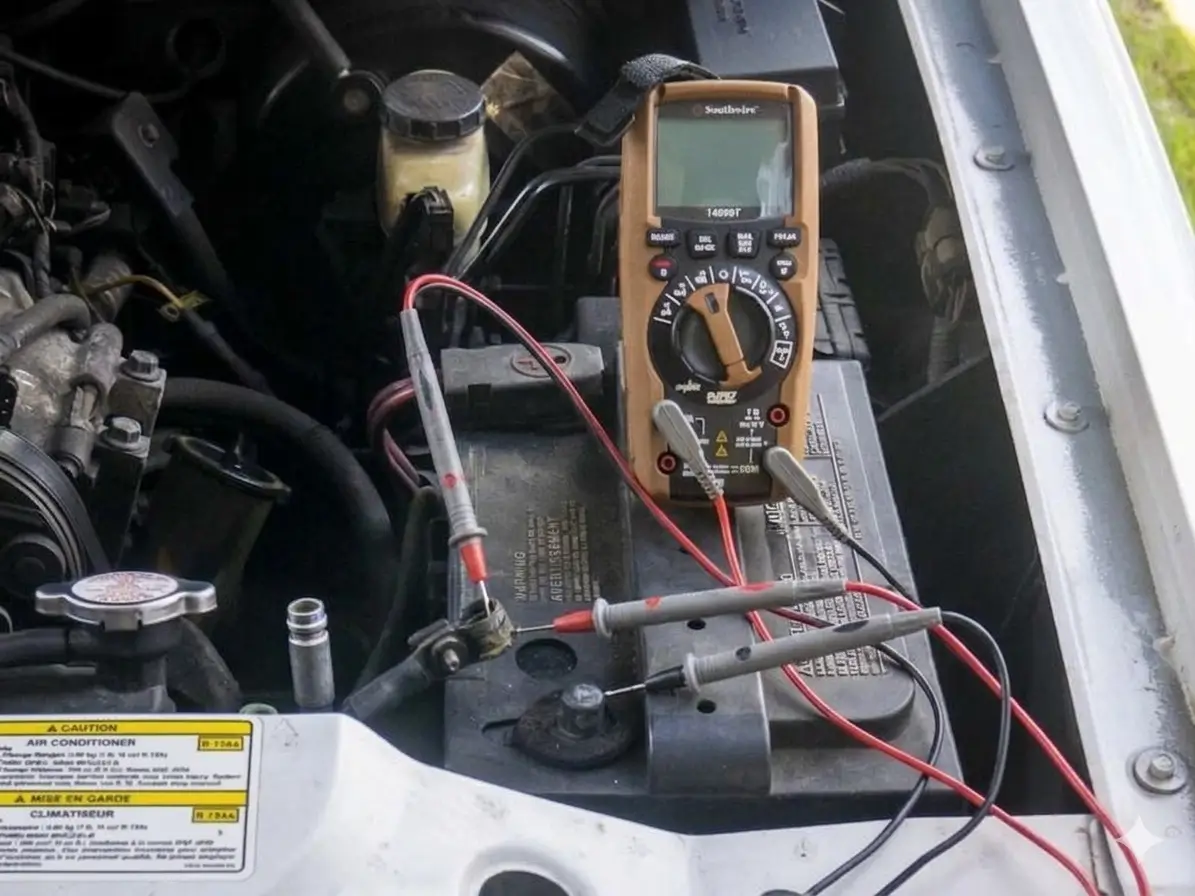
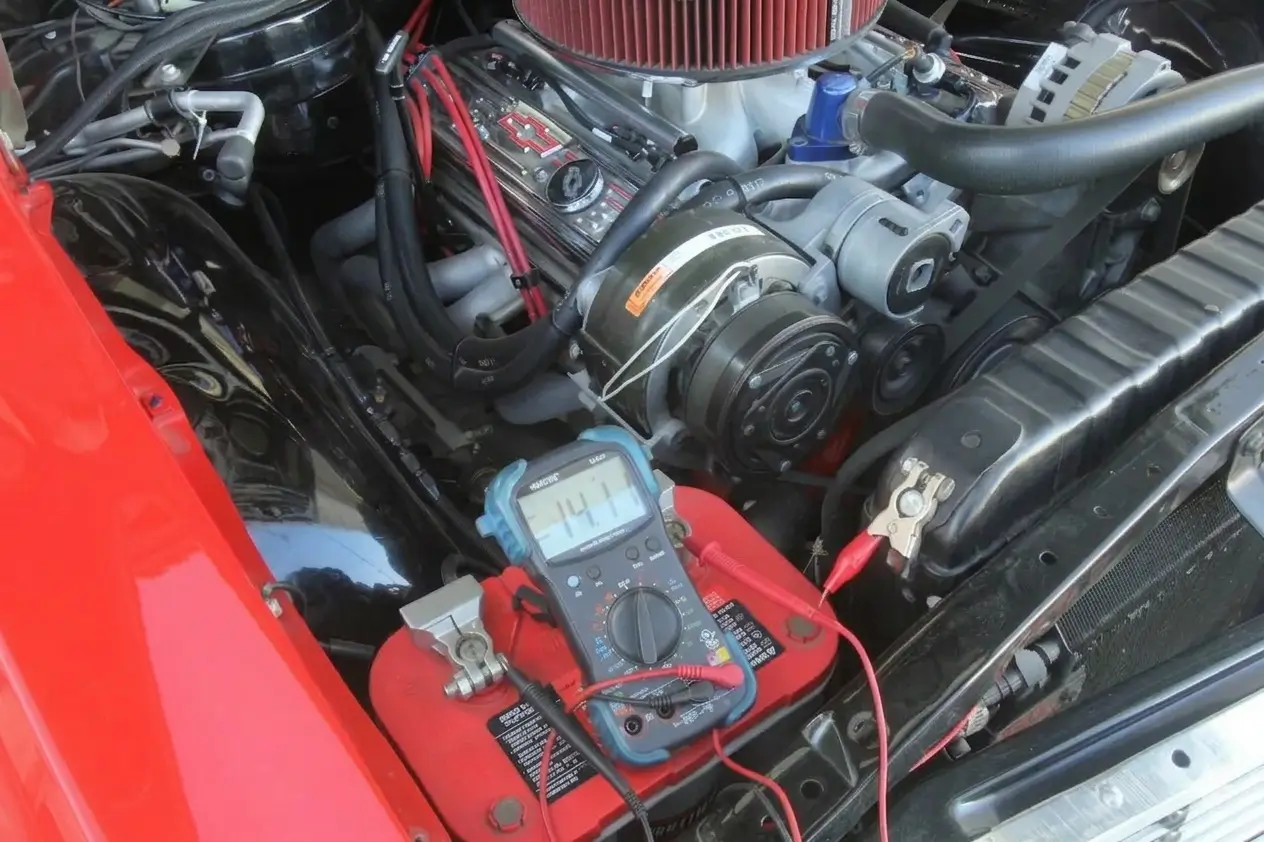
Use a voltage drop test to confirm grounding problems.
Step 1: Visual Inspection
Check for:
- Rust
- Corrosion
- Loose connections
Step 2: Voltage Drop Test
- Red lead → component ground
- Black lead → battery negative
Step 3: Read Results
- 0.0–0.2V → Good
- 0.3–0.5V → Weak
- 0.5V+ → Bad ground
Above 0.5V = confirmed issue
Step 4: Test Under Load
Turn on:
- Headlights
- Accessories
- Engine
Problems often appear under load
How to Fix Grounding Issues Properly
Proper grounding repair restores electrical stability.
1. Clean to Bare Metal
Remove rust → expose clean metal
2. Tighten Connections
Loose grounds = unstable circuits
3. Apply Dielectric Grease
Prevents corrosion
4. Replace Ground Straps
Upgrade for better conductivity
5. Add Additional Grounds
Required for modern upgrades
Especially for:
- LS swaps
- High-output alternators
- Modern accessories
More grounding = more stability
Grounding Path Checklist
Check:
- Battery → Frame (main return path)
- Engine Block → Firewall (critical for ignition & gauges)
- Body → Frame (often missed after restoration)
- Dashboard → Chassis (fixes erratic gauges)
- Radiator Support → Frame (common headlight issue)
Missing even ONE of these can cause system-wide problems
Why Grounding Issues Get Worse Over Time
Grounding problems worsen due to increasing resistance.
Cycle:
- Resistance increases
- Heat builds
- Connections degrade
Can Grounding Issues Be Dangerous?
Yes — poor grounding can cause electrical damage and fire risk.
Risks:
- Electrical arcing
- Heat buildup
- Insulation failure
Temporary Fix vs Real Solution
| Fix | Result | Long-Term Outcome |
|---|---|---|
| Tighten bolt | Temporary | Issue returns |
| Clean ground | Good | May degrade |
| Replace strap | Better | Reliable |
| Full upgrade | Best | Long-term stability |
How Grounding Connects to Other Electrical Problems
Grounding issues directly cause:
Common Questions
What happens if a car has a bad ground?
Electrical systems become unstable.
How do I know if my ground is bad?
Voltage drop above 0.5V confirms it.
Can a bad ground damage an alternator?
Yes, it increases load and wear.
Final Summary
A grounding issue in a classic car is caused by:
- Corrosion
- Loose connections
- Poor contact
- Aging ground components
Fixing the grounding system restores stable voltage, reliable performance, and prevents recurring electrical problems.
Professional Inspection
If electrical issues persist:
Professional grounding inspection ensures:
- Accurate diagnosis
- Reliable repairs
- Long-term stability
Contact Coastline Classic Car Restorations in Huntington Beach for expert electrical wiring diagnosis and repair.