

Quick Answer
Yes—for most classic car owners, converting from 6V to 12V is worth it if you want:
- Faster engine starting
- Brighter headlights
- More reliable electrical performance
- Compatibility with modern accessories
However, the conversion must be done correctly. Improper upgrades can damage gauges, wiring, and original components—often leading to electrical problems in classic cars.
Why Do Classic Cars Use 6-Volt Systems?
Most vehicles built in the 1940s–1950s used 6V systems because:
- Electrical demand was low
- Technology was limited
- Components were simple
Back then, 6V worked perfectly.
Today, it struggles with:
- Modern driving conditions
- Cold starts
- Additional electrical loads
When Is a 6V System Still Worth Keeping?
You may want to keep your 6V system if:
- The car is fully original (show-quality restoration)
- Wiring is in excellent condition
- The vehicle is rarely driven
- Authenticity matters more than convenience
The 6V Headache: Why Your Classic Feels Unreliable
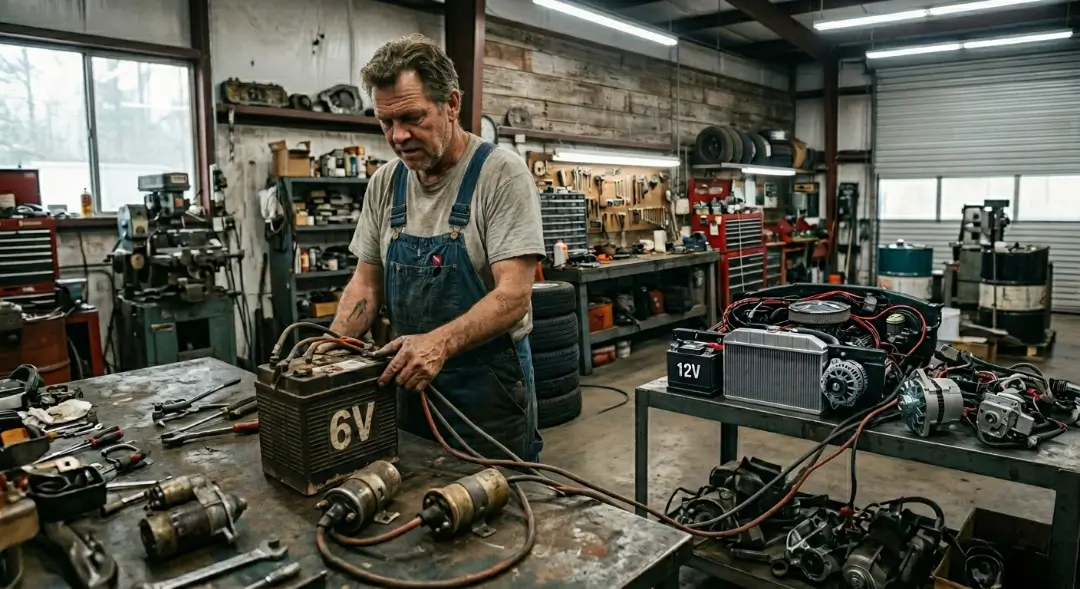
Common problems with 6V systems include:
- Slow cranking or hard starts
- Dim headlights (especially at idle)
- Voltage drops under load
- Weak performance in cold weather
These issues are often connected to problems like:
The Real Technical Advantage of 12V (Why It Works Better)
A 12V system delivers the same power at lower amperage
This means:
- Less heat in wiring
- Reduced strain on old connections
- More efficient electrical flow
This becomes especially important if your car suffers from parasitic drain issues.
Expert Insight: The Starter Motor Myth
In many cases:
- You can keep your original 6V starter
- It will spin faster on 12V, improving starting
But you MUST:
- Upgrade the solenoid
- Ensure proper electrical compatibility
This is a critical detail that prevents costly mistakes. For a technical breakdown on the risks and realities of powering these motors, read this guide on 6-volt jump-starting myths and best practices.
6V vs 12V: Real-World Comparison
| Feature | 6V System | 12V System |
|---|---|---|
| Starting Power | Slow | Fast & reliable |
| Headlights | Dim | Bright & stable |
| Electrical Reliability | Sensitive | Strong |
| Modern Add-ons | Limited | Full compatibility (Bluetooth, USB, AC) |
| Maintenance | Higher | Lower |
How Much Does a 6V to 12V Conversion Cost?
- Basic conversion: $800 – $1,500
- Full professional conversion: $1,500 – $3,500+
Cost depends on vehicle type, wiring condition, and labor complexity.
For deeper insight, see classic car wiring restoration cost guide.
What’s Included in a Proper Conversion?
- 12V battery
- Alternator
- Voltage regulator
- Bulb replacements
- Gauge protection (resistors/reducers)
- Wiring adjustments
In many cases, wiring must be inspected or replaced—especially if you notice a burning smell in your classic car.
Biggest Risk: Damaging Original Components
Improper conversion can:
- Burn out gauges
- Damage wiring
- Overheat components
- Cause electrical failures
Why Gauges Are at Risk (Expert Warning)
Classic gauges are built for 6V.
Without protection, 12V will:
- Overload them
- Permanently damage them
Always use proper voltage reducers to protect your factory instruments.
Real-World Scenario
“I converted to 12V and now my gauges don’t work…”
Usually caused by:
- Missing voltage reducers
- Incorrect wiring
Fixing it later is often more expensive.
Can You Keep Some 6V Components?
Yes—but carefully.
You can use:
- Voltage reducers
- Resistors
- Converters
Mixing systems increases complexity and risk.
DIY vs Professional Conversion
| Approach | Result | Risk |
|---|---|---|
| DIY | Inconsistent | High |
| Partial upgrade | Mixed | Moderate |
| Professional | Reliable | Low |
Huntington Beach & Orange County Factor: Why It Matters
Coastal environments cause:
- Salt corrosion (“green death”)
- Increased resistance
- Electrical inefficiency
6V systems are highly sensitive to this.
Even minor corrosion can prevent starting.
12V systems handle resistance better, making them more reliable locally.
When Conversion Requires More Than Voltage
If wiring is:
- Old
- Brittle
- Corroded
Conversion alone won’t fix the issue.
You may need:
- Wiring repair
- Full harness replacement
What Happens If You Stay on 6V Long-Term
- Ongoing starting issues
- Poor lighting
- Increased strain
- Higher maintenance
Why Professional Conversion Matters
A proper conversion requires:
- Balanced electrical system design
- Safe voltage distribution
- Component compatibility
At Coastline Classic Car Restorations in Huntington Beach, we:
- Perform full electrical evaluations
- Protect original components
- Ensure long-term reliability
Start With a Proper Evaluation
Begin with a 6V system health check
This includes:
- Cranking amp testing
- Wiring inspection
- Resistance analysis
Not every car needs conversion—diagnosis comes first.
Frequently Asked Questions
Can you run a 6V starter on a 12V system?
Yes, in many cases you can keep the original 6V starter.
It will spin faster on 12V, which can improve starting performance.
However, the solenoid and supporting components must be upgraded to avoid damage.
Do I need to rewire my car for a 12V conversion?
Not always—but it depends on the condition of your wiring.
- If wiring is clean and intact → it may be reused
- If wiring is brittle or corroded → replacement is recommended
A professional inspection is critical.
Will a 12V system damage original gauges?
Yes—if installed incorrectly.
Without voltage reducers:
- Gauges will overload
- Permanent damage can occur
Proper resistors or reducers are required to protect them.
How much does it cost to convert a classic car to 12V?
Most conversions cost between:
- $800 – $1,500 (basic)
- $1,500 – $3,500+ (professional)
Final cost depends on wiring, parts, and labor complexity.
Is converting to 12V worth it for a classic car?
For most drivers, yes.
It improves:
- Reliability
- Starting performance
- Lighting
- Compatibility with modern accessories
For show cars, keeping 6V may still be preferred.
Can I add modern accessories to a 6V system?
Limited.
6V systems struggle with:
- Bluetooth stereos
- Phone charging
- AC systems
12V systems fully support modern upgrades.
Final Verdict: Is It Worth the Cost?
Yes—for most classic car owners, a 12V conversion is worth it
Because it:
- Improves reliability
- Enhances drivability
- Supports modern features
- Reduces long-term issues
But only if done correctly.
Get Expert Help in Huntington Beach & Orange County
Visit Coastline Classic Car Restorations in Huntington Beach for professional classic car electrical wiring repair and safe 12V conversion services.
Further Reading (Recommended Resources)
To better understand classic car electrical systems, explore: