

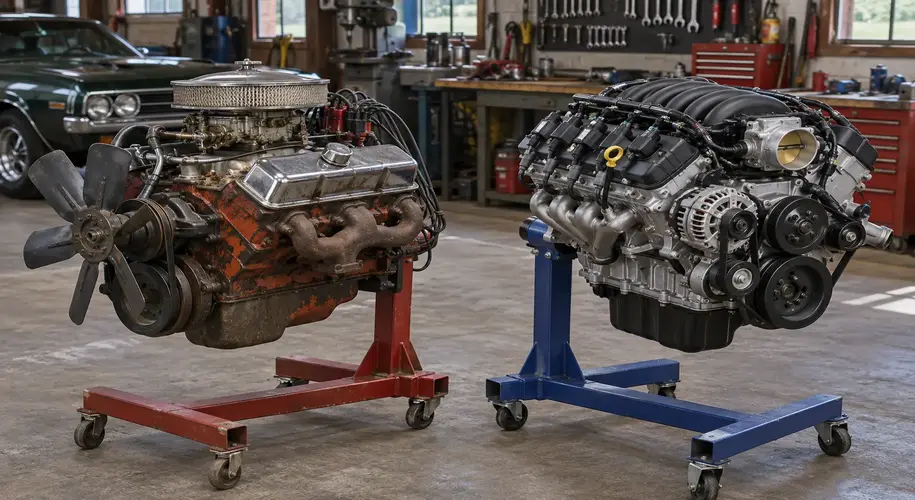
Rebuilding: Often makes sense when the existing engine is repairable and retaining it supports originality, intended use, and budget.
Replacement: May be more practical when reliable repair is impossible or another engine better meets the project’s requirements.
What to consider: A non-original engine can still be worth rebuilding. Decide from condition, compatibility, parts availability, collector priorities, and complete installed cost—not smoke, noise, or an initial estimate alone.
Engine Rebuild vs. Replacement: Quick Comparison
| Factor | Rebuild | Replacement |
|---|---|---|
| Engine identity | Retains the existing engine | Installs a different engine |
| Originality | Can preserve original castings | May change factory configuration |
| Performance | Stock specifications or compatible upgrades | Stock, crate, or modern options |
| Cost uncertainty | Hidden damage and machining | Package exclusions and installation changes |
| Compatibility | Usually retains the existing layout | May require supporting modifications |
Neither option is automatically cheaper or more reliable. Parts, machining, assembly, lubrication, installation, cooling, and tuning determine the result.
Establish Engine Condition First
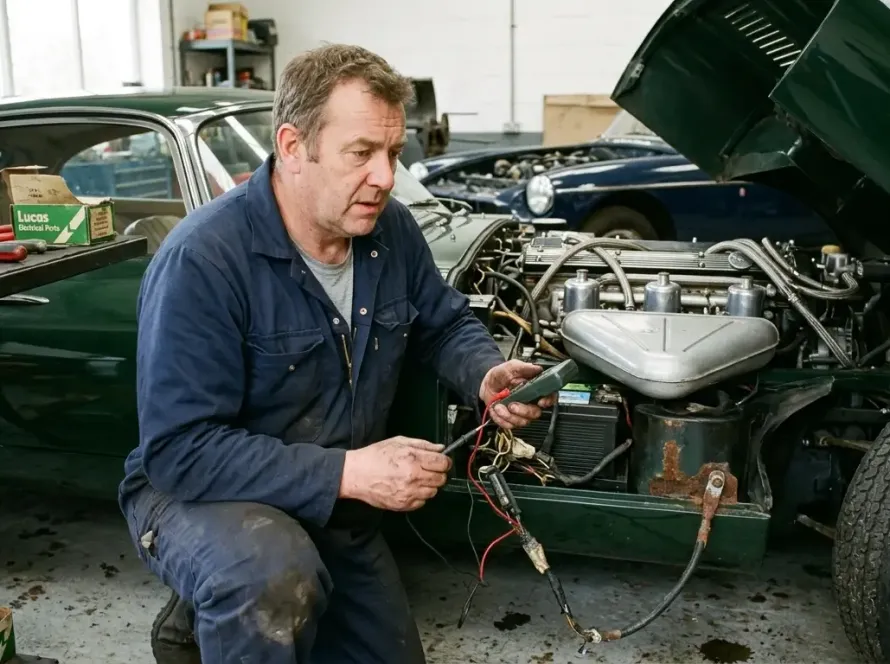
Check other systems: Fuel, ignition, cooling, accessory, and drivetrain faults can imitate internal wear. The common classic-car engine problems guide explains diagnostic starting points.
Establish repairability: Testing guides the investigation, but final repairability may require disassembly, cleaning, crack inspection, and measurement.
Ask about certainty: Which findings are confirmed, and which remain uncertain?
When Is Rebuilding the Better Choice?
Preserving the original engine matters
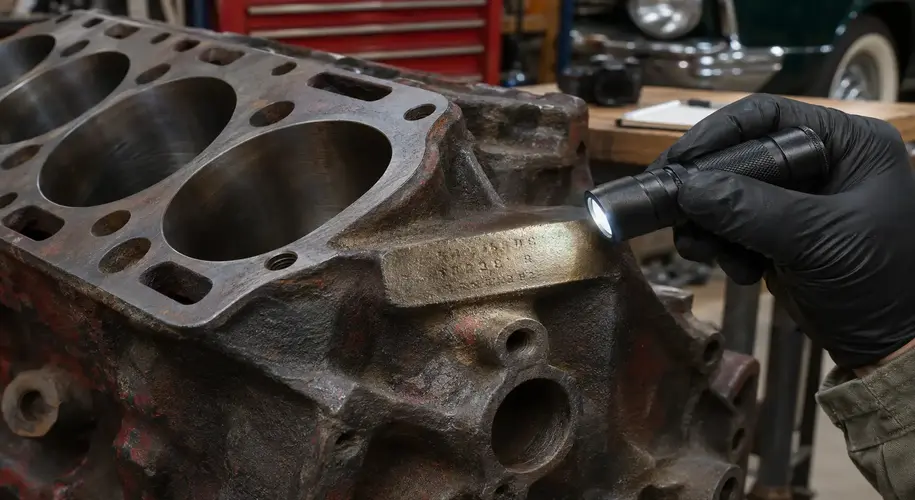
Original engines can contribute to authenticity and collector value, particularly in factory-correct, concours, and preservation projects.
Before disassembly, document:
- Engine stampings, casting numbers, and dates
- Existing components
- Vehicle identification and condition
Hagerty explains why machining a matching-numbers engine block requires protecting factory identification from resurfacing.
What rebuilding may retain: Engine type, displacement, external appearance, induction, accessories, and factory-style performance.
The components provide a repairable foundation
Inspect the block, heads, crankshaft, and connecting rods.
Findings that can support rebuilding:
- Machinable bores
- Repairable decks and threads
- Serviceable crankshaft journals
- Available replacement or custom parts
Typical rebuild work: Disassembly, inspection, necessary machining, and replacement of worn bearings, rings, seals, gaskets, and other components, followed by assembly to documented specifications and startup testing.
The goal: Restored compression, oil control, clearances, and reliability. Accurate measurements, compatible components, clean assembly, and proper lubrication matter as much as new parts.
Compatible improvements meet your goals
Improved sealing materials, bearings, oil-control components, appropriate valve-seat work, or discreet ignition changes may improve serviceability without changing the car’s identity.
Before approving upgrades, assess:
- Compatibility
- Appearance
- Reversibility
- Originality
When Is Replacement More Practical?
Reliable Repair Is Not Feasible
Replacement may be necessary because of:
- Structural cracks
- Extensive corrosion
- Severe freeze damage
- Insufficient material for further machining
A crack does not automatically condemn a block. Specialist repair depends on location, severity, casting material, available methods, and intended use.
Have the casting cleaned and inspected before rejecting it.
A Different Engine Better Suits the Build
Replacement may support:
- Higher horsepower or electronic fuel injection
- Highway drivability
- Modern accessories
- Easier parts sourcing
Evaluate compatibility:
- Mounts and clearance
- Transmission and driveline
- Cooling and fuel delivery
- Ignition and exhaust
- Wiring and controls
Preserve future options: Keep the original engine and documented components when practical to preserve future restoration options.
What If the Engine Is Already Non-Original?
Assess whether the installed engine:
- Is repairable
- Suits the intended use
- Has parts and service support
- Works with the transmission and supporting systems
Rebuilding: A sound existing installation may justify retaining and rebuilding it.
Period-correct replacement: Can restore the appropriate type and appearance, but should not be presented as the factory-installed engine.
Replacement Engine Options
- Crate engine: An assembled package with specified output and possible supplier warranty. Confirm included components; installation and supporting-system changes may be additional.
- Used engine: Potentially lower purchase cost, with uncertain history. Inspect compression, oil pressure, casting identity, storage condition, and signs of overheating or wear.
- Period-correct engine: Appropriate type for the vehicle, although not its original engine. Useful when factory-style appearance matters and the original is unavailable.
Which Option Costs Less?
When comparing rebuild and replacement options in our shop, we include the work needed to make each engine ready to drive, because mounts, accessories, cooling, and tuning can change which option offers better value.
| Cost category | Rebuild proposal | Replacement proposal |
|---|---|---|
| Engine preparation | Teardown, cleaning, inspection, measurement | Purchase, shipping, condition verification |
| Engine completion | Machining, parts, assembly | Components or assembly excluded from the package |
| Installation | Removal and reinstallation | Mounts, clearance, adapters, accessories |
| Supporting systems | Required repairs | Required repairs and conversion work |
| Handover | Fluids, startup, tuning, testing | Fluids, startup, tuning, testing |
Identify exclusions, provisional allowances, warranty coverage, and approval procedures for additional work. Rebuild uncertainty includes hidden damage and unavailable parts; replacement uncertainty includes installation complications and package omissions.
The classic-car engine rebuild cost guide explains scope, exclusions, and inspection-related price changes.
How Does the Decision Affect Collector Value?
The effect depends on model, rarity, documentation, modifications, and buyer expectations.
When originality matters more: Preserving the original engine generally matters more when value depends on factory configuration and provenance.
When replacement may matter less: An already modified vehicle or a buyer prioritizing drivability.
Preserve future options: Keeping the original engine with the car preserves future options without guaranteeing a particular value.
Maintain records of:
- Identification and inspection findings
- Machining
- Retained and replaced parts
- Assembly specifications
- Testing and tuning
Before Approving Either Option
- Verify identity: Original, numbers-matching, period-correct, or previously replaced.
- Define use: Concours, preservation, weekend driving, touring, regular street use, or restomod performance.
- Confirm the diagnosis and repairability: Rule out external faults and inspect major components before committing.
- Compare completed scope: Include supporting modifications, tuning, warranty, and post-installation responsibilities.
Review what to expect after an engine rebuild when planning break-in, monitoring, and follow-up service. Avoid discarding original components, machining unidentified castings, or overlooking transmission, driveline, cooling, and fuel-system compatibility.
Discuss Which Engine Strategy Fits Your Classic
Owner Chuck brings more than 14 years of classic car restoration experience to helping owners weigh repairability, originality, and intended use.
Bring these details:
- Available engine identification
- Test results
- Restoration goals
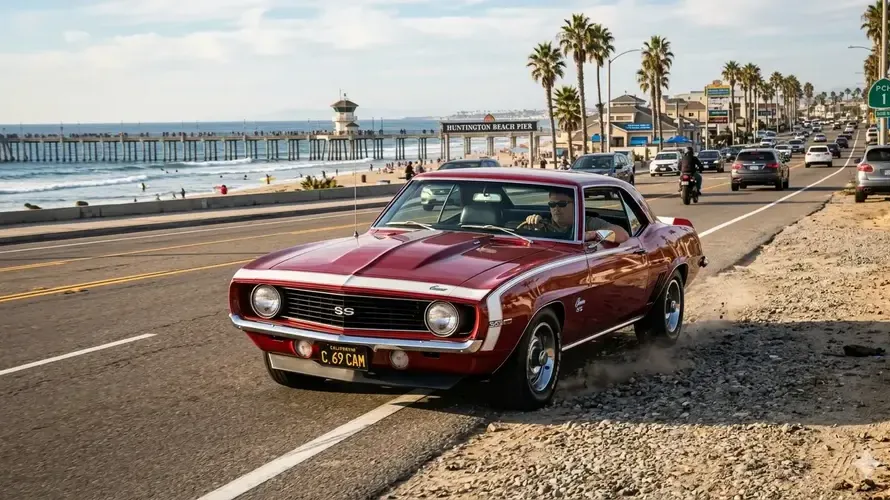
Schedule an Engine Evaluation at our Huntington Beach shop, or explore Coastline’s classic-car engine rebuilding and restoration services.