

Whether you should restore or upgrade your classic car suspension depends on your goals for the vehicle. Suspension restoration is often the preferred choice for owners who want to preserve originality, authenticity, and collector value.
Suspension upgrades may be worth considering for owners seeking improved handling, ride comfort, steering response, and drivability in modern driving conditions.
For many classic car owners, the best solution is a balanced approach that restores worn suspension components while selectively incorporating upgrades that enhance performance without dramatically altering the vehicle’s original character.
Is It Better to Restore or Upgrade a Classic Car Suspension?
There is no single answer that applies to every classic vehicle. If maintaining factory-correct specifications, originality, and collector appeal is your primary goal, restoration is often the best path.
If you regularly drive your vehicle and want improved handling, ride quality, and stability, carefully selected suspension upgrades may provide significant benefits.
Many owners choose a combination of both approaches by restoring worn components while integrating modern suspension technology that improves drivability without compromising the vehicle’s appearance or heritage.
Understanding the Difference Between Suspension Restoration and Suspension Upgrades
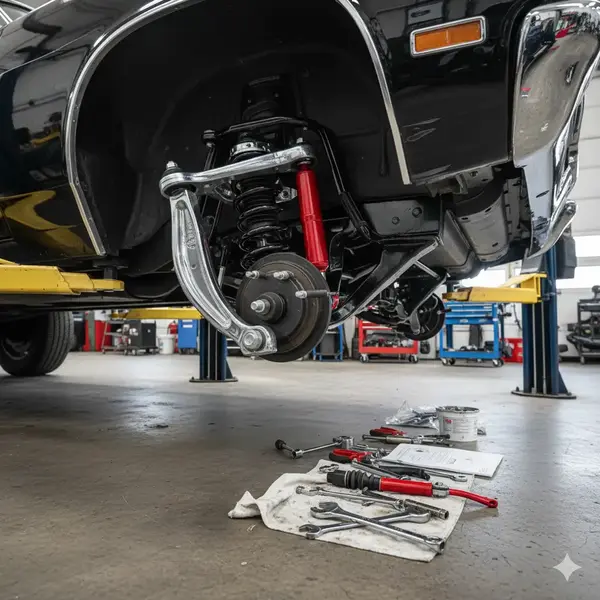
Before deciding which approach is right for your vehicle, it is important to understand the difference between suspension restoration and suspension modification.
A suspension restoration focuses on returning the suspension system to factory-correct specifications. This typically involves rebuilding or replacing worn components with parts that closely match the vehicle’s original design, ride characteristics, and handling behavior.
A suspension upgrade involves installing modern or performance-oriented components that improve handling, ride quality, steering feel, stability, or overall driving performance beyond what was originally available from the manufacturer.
Both approaches can improve vehicle performance, but they serve different purposes.
Common Suspension Components Found on Classic Cars
A classic vehicle’s suspension system is made up of multiple components that work together to provide ride comfort, stability, and steering control.
Many owners are surprised by what is included in a complete suspension restoration, from bushings and ball joints to steering linkage and suspension geometry corrections.
Common suspension components include:
- Coil springs
- Leaf springs
- Shock absorbers
- Struts
- Control arms
- Ball joints
- Tie rods
- Sway bars
- Suspension bushings
- Steering linkage
- Steering gearboxes
- Chassis mounting points
As these components age, wear can affect vehicle handling, ride quality, and safety. Evaluating the condition of the entire suspension system is often the first step in determining whether restoration or upgrades are appropriate.
Signs Your Classic Car Suspension May Need Attention
Many owners begin considering suspension work after noticing changes in vehicle performance.
Common signs of suspension wear include:
- Excessive body roll during turns
- Loose or vague steering feel
- Uneven tire wear
- Vehicle pulling to one side
- Clunking or rattling noises
- Excessive bouncing after bumps
- Front-end nose dive during braking
- Poor highway stability
- Increased vibration through the steering wheel
These symptoms may indicate worn bushings, aging shocks, damaged springs, worn ball joints, deteriorated steering components, or alignment issues.
Learning more about the causes and warning signs of classic car suspension wear can help prevent larger restoration issues later.
When Suspension Restoration Makes More Sense
For many collector vehicles, restoration remains the preferred option.
Owners often choose restoration when preserving originality is a priority. Vehicles that are historically significant, highly collectible, or intended for concours competition are frequently restored using factory-correct components and specifications.
Suspension restoration may be the better choice when:
- Maintaining vehicle authenticity is important
- The vehicle is a rare or highly collectible model
- Original factory engineering is part of the vehicle’s appeal
- Collector value is a primary concern
- The vehicle participates in judged car shows
- Matching original specifications is a restoration goal
Examples may include classic Chevrolet Bel Airs, early Ford Mustangs, Pontiac GTOs, Chevrolet Corvettes, Dodge Chargers, Buick GS models, and other collectible vehicles where originality contributes to long-term value.
When Suspension Upgrades May Be Worth Considering
Many classic car owners regularly drive their vehicles rather than displaying them at shows.
Modern roads, highway speeds, traffic conditions, and driver expectations can expose the limitations of suspension designs developed decades ago.
Suspension upgrades may be worth considering when:
- The vehicle is driven frequently
- Long-distance cruising is common
- Improved handling is desired
- Increased ride comfort is a priority
- Better cornering stability is important
- Enhanced steering response is desired
- Modern driving performance is a goal
Owners of classic muscle cars, vintage trucks, restomods, and weekend cruisers often choose suspension upgrades to create a more enjoyable driving experience while retaining the appearance of a classic vehicle.
Common Suspension Upgrades for Classic Cars
Modern suspension technology has created numerous upgrade options for classic vehicles.
Popular upgrades may include:
- Gas-charged shock absorbers
- Performance coil springs
- Upgraded sway bars
- Polyurethane suspension bushings
- Tubular control arms
- Coilover suspension systems
- Rack-and-pinion steering conversions
- Adjustable suspension components
- Performance steering systems
- Upgraded ball joints and steering linkage components
These upgrades are designed to improve vehicle control, steering accuracy, ride comfort, and overall handling characteristics.
The specific upgrades that make sense depend on the vehicle’s intended use and restoration objectives.
How Suspension Upgrades Can Improve Drivability
One reason many owners choose suspension upgrades is the noticeable improvement in day-to-day driving performance.
Modern suspension components can help reduce body roll, improve steering feedback, increase cornering stability, and create a more controlled ride.
Drivers often report improvements such as:
- More predictable handling
- Better highway stability
- Reduced suspension movement
- Improved steering feel
- Increased driver confidence
- Greater ride comfort on uneven roads
For vehicles that spend significant time on the road, these improvements can substantially enhance the overall ownership experience.
Suspension Restoration vs Upgrade Cost Considerations
Cost is often an important factor when deciding between restoration and upgrades.
Owners researching the cost of classic car suspension restoration can benefit from understanding how vehicle condition, parts availability, and labor requirements influence the overall investment.
A suspension restoration may be more cost-effective when many original components can be rebuilt or replaced with factory-style parts. However, rare vehicles may require specialized components that increase restoration costs.
Suspension upgrades can range from relatively simple improvements, such as shock absorber replacements and sway bar upgrades, to more extensive modifications involving coilover systems, steering conversions, and custom suspension setups.
The total investment depends on the condition of the vehicle, the availability of parts, labor requirements, and the owner’s long-term goals for the project.
How Suspension Upgrades Can Affect Collector Value
While suspension upgrades can improve performance, they may also influence a vehicle’s appeal to future buyers.
Some collectors strongly prefer factory-correct restorations and original engineering. Others appreciate tasteful upgrades that improve drivability without permanently altering the vehicle.
Potential advantages of upgrading may include:
- Improved driving experience
- Enhanced safety and control
- Greater reliability
- Increased owner satisfaction
- Potential drawbacks may include:
- Reduced originality
- Lower appeal among restoration purists
- Possible impact on concours judging
- Deviation from factory specifications
The effect on value often depends on the specific vehicle, the quality of the upgrades, and the preferences of potential buyers.
Can You Combine Suspension Restoration and Upgrades?
Many classic car owners choose a middle-ground approach.
Rather than performing a completely original restoration or a full performance conversion, they restore worn suspension components while incorporating carefully selected upgrades.
This approach is commonly seen in restomod builds and driver-focused restorations.
Examples may include:
- Restoring original suspension geometry
- Installing modern shock absorbers
- Upgrading sway bars
- Replacing deteriorated bushings with improved materials
- Improving steering components while maintaining factory appearance
This strategy allows owners to preserve much of the vehicle’s original character while benefiting from modern suspension technology.
Factors That Influence the Best Suspension Choice
Several factors can help determine whether restoration or upgrades make the most sense for your vehicle.
Consider:
- Vehicle rarity
- Historical significance
- Driving frequency
- Restoration goals
- Budget
- Long-term ownership plans
- Future resale objectives
- Collector market expectations
The ideal solution often depends on how the vehicle will be used and what aspects of ownership are most important to you.
Frequently Asked Questions
Does upgrading a classic car suspension reduce its value?
Not necessarily. The impact depends on the vehicle, the quality of the upgrades, and the preferences of potential buyers. Some collectors prefer originality, while others appreciate improvements that enhance drivability.
Can suspension upgrades be reversed later?
In many cases, yes. Certain upgrades can be removed and replaced with factory-style components if future restoration goals change.
Are suspension upgrades worth it for a weekend cruiser?
Many owners find that suspension upgrades improve comfort, steering response, and handling, making occasional driving more enjoyable.
What suspension components wear out most often on classic cars?
Shock absorbers, bushings, ball joints, tie rods, springs, and steering linkage components are among the most commonly worn suspension parts found on aging vehicles.
Professional Classic Car Suspension Services in Huntington Beach
At Coastline Classic Car Restorations in Huntington Beach, we help classic car owners evaluate whether suspension restoration, suspension upgrades, or a combination of both is the best solution for their vehicle.
Our team also provides professional classic car suspension repair services for vehicles experiencing worn components, handling issues, steering instability, or ride quality concerns
Our technicians carefully inspect suspension geometry, steering linkage, ball joints, control arms, bushings, springs, shock absorbers, chassis mounting points, and overall vehicle stability before recommending a restoration or upgrade strategy.
Whether you are pursuing a factory-correct restoration, preparing a concours-level vehicle, or enhancing the driving experience of a weekend cruiser, selecting the right suspension approach can help preserve performance, comfort, and long-term enjoyment for years to come.