Restore your classic car’s original radio when it is complete, repairable, and important to the vehicle’s authenticity.
Convert it when you want modern features while retaining the factory appearance.
Replace it when the original radio is missing, incorrect, severely damaged, or unsuitable for how you use the car.
For a vehicle with an uncut dashboard, restoration or another…
A classic car radio may have static or no sound because of a failed speaker, damaged wiring, a poor ground, an antenna problem, electrical interference, incompatible components, or an internal radio fault.
If the radio lights up but produces no sound, power may be reaching the unit while the audio signal is failing somewhere between the…
Yes. Bluetooth can be added to many classic cars without cutting the dashboard, replacing the original radio face, or visibly changing the factory interior.
The three main options are:
Convert the original radio internally
Install a hidden Bluetooth receiver
Use a properly fitted factory-look Bluetooth stereo
The right option depends on whether the original…
Classic car mechanical restoration focuses on repairing and rebuilding the systems that make a vintage vehicle run safely and reliably.
This includes the engine, transmission, clutch, brake system, fuel system, cooling system, steering, suspension, and exhaust system.
Unlike cosmetic restoration, mechanical restoration is about drivability. The goal is to make the car start, shift, brake,…
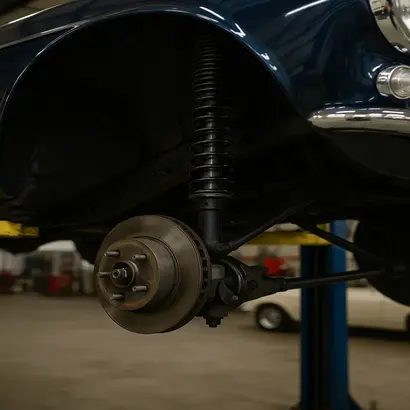
Yes. Worn suspension components can make a classic car unsafe by reducing steering control, braking stability, tire traction, and overall vehicle handling.
As suspension parts deteriorate, the vehicle may become more difficult to control during emergency maneuvers, highway driving, cornering, and sudden braking situations.
While suspension wear often develops gradually, severely worn components can increase stopping distances,…
Several warning signs can indicate that your classic car needs suspension repair, including excessive bouncing, uneven tire wear, steering wander, clunking noises, vehicle pulling, excessive body roll, and a rough or unstable ride.
These symptoms often develop gradually as suspension components age, wear, or lose their ability to properly support and control the vehicle.
Addressing suspension problems…