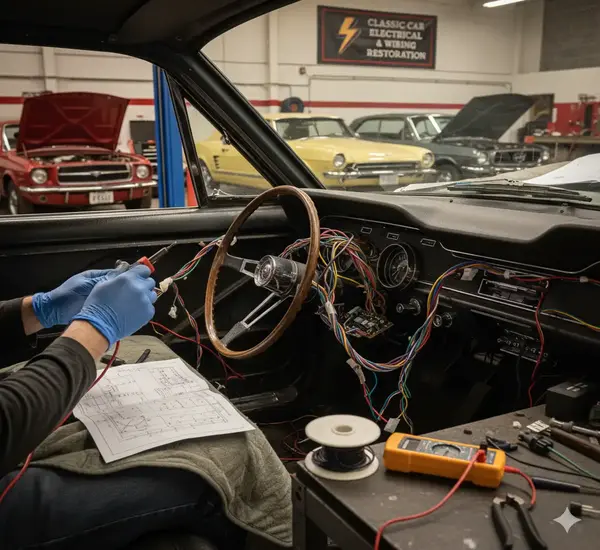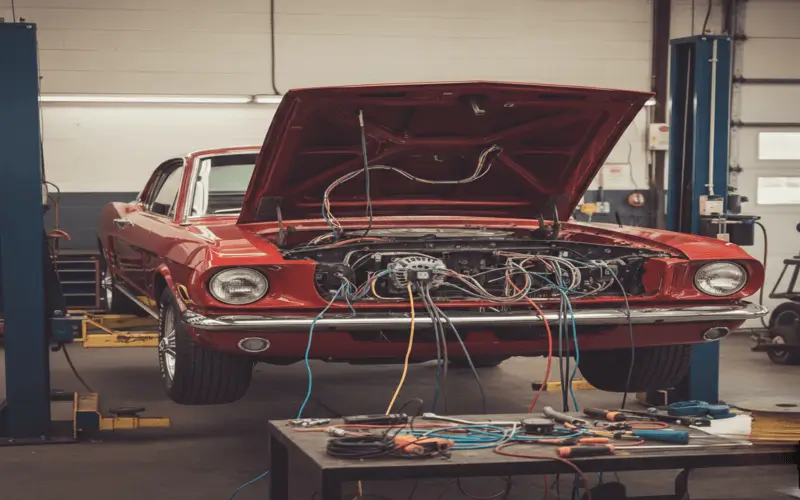


A rough ride in a classic car is often caused by worn suspension components, aging shock absorbers, deteriorated bushings, sagging springs, tire issues, or steering system wear.
Because many classic vehicles retain older components or have spent years in storage, ride quality can gradually decline without obvious signs of failure.
If your classic car feels harsher over bumps, less stable on the road, or noticeably less comfortable than before, a suspension and steering inspection may help identify the underlying cause.
These are often among the warning signs that a classic car may need suspension repair.
Quick Guide to Common Causes of a Rough Classic Car Ride
| Symptom | Possible cause | Recommended response |
|---|---|---|
| Repeated bouncing after bumps | Worn shocks or weak springs | Schedule a suspension inspection |
| Harsh impacts over small bumps | Hardened bushings, incorrect tire pressure, or limited suspension travel | Check tires and suspension components |
| Vibration after long-term storage | Tire flat spots or aged tires | Inspect tire condition before suspension repairs |
| Uneven ride height | Sagging spring or damaged suspension component | Inspect before continued regular driving |
| Rough ride with steering wander | Suspension, steering, tire, or alignment problem | Diagnose the complete system |
| Sudden change in ride quality | Broken component, tire failure, or suspension damage | Stop driving and inspect promptly |
A rough ride does not always confirm suspension failure. Tires, wheel condition, steering wear, ride height, and previous vehicle modifications should also be evaluated.
What Causes a Rough Ride in a Classic Car?
A properly functioning suspension system helps absorb road imperfections while maintaining stability and control.
Over time, suspension components wear, rubber parts deteriorate, and springs lose their original strength.
Understanding how suspension wear develops in classic cars can help owners identify problems before ride quality and handling noticeably decline.
In many classic vehicles, ride quality declines gradually, making it difficult for owners to recognize the extent of the deterioration until handling and comfort noticeably worsen.
What Does a Rough Ride Feel Like?
A rough ride can describe several different driving sensations, and each may point to a different underlying cause.
- A harsh ride feels as though bumps and road imperfections are transmitted directly into the cabin.
- A bouncy ride continues moving after the vehicle passes over a bump.
- A vibrating ride may be felt through the steering wheel, seat, or floor.
- An unstable ride may include wandering, body movement, or reduced highway confidence.
- Bottoming out occurs when the suspension reaches the limit of its available travel.
Identifying the exact sensation, when it occurs, and whether it comes from the front or rear of the vehicle can help narrow the diagnosis.
Worn Shock Absorbers
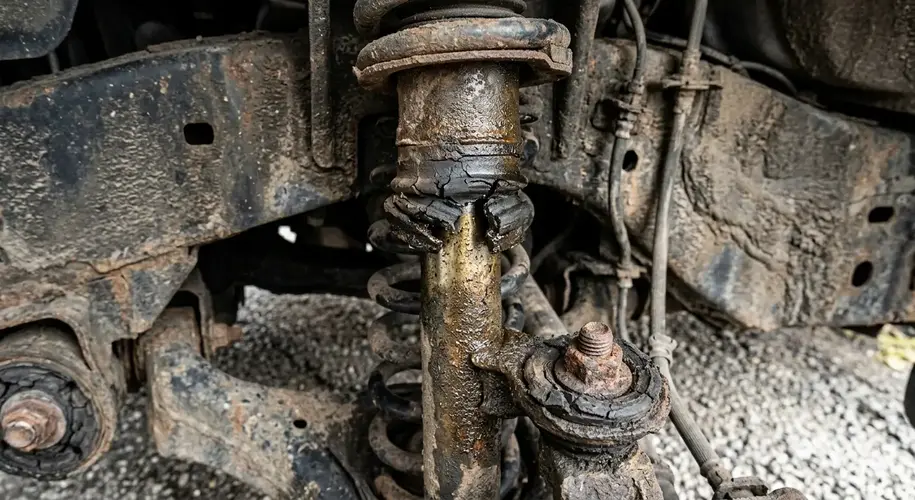
Worn or incorrectly matched shock absorbers are common contributors to poor ride control in classic cars.
Shock absorbers help control spring movement and prevent excessive bouncing after encountering bumps or uneven pavement.
As shocks age, they may lose their ability to dampen suspension movement effectively, resulting in:
- Increased bouncing
- Reduced ride control
- Harsh impacts over road imperfections
- Excessive body movement
- Less stable handling
Even if shock absorbers show no visible leaks, internal wear can significantly reduce their performance.
However, worn shocks do not always create a harsh ride by themselves. Weak shocks more commonly allow excessive bouncing and uncontrolled body movement, while an overly stiff or incorrect shock absorber can make the vehicle feel unnecessarily harsh.
Shock selection should match the vehicle’s spring rate, weight, suspension design, and intended use rather than being based only on physical fitment.
Aging Suspension Bushings
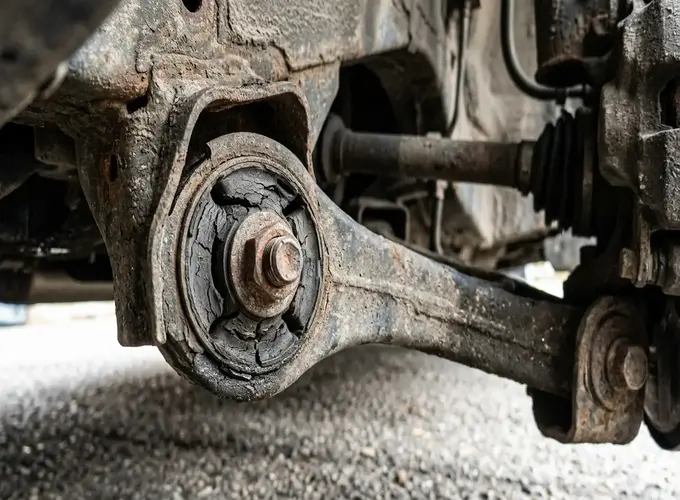
Suspension bushings are designed to absorb vibration and cushion the movement of suspension components.
Most classic vehicles use rubber bushings that naturally deteriorate with age, regardless of mileage.
When bushings become hardened, cracked, or worn, drivers may notice:
- Increased vibration
- Harsh ride quality
- Clunking noises
- Reduced steering precision
- Additional suspension movement
In many restoration inspections, bushings appear acceptable externally but have lost much of their flexibility internally.
Sagging or Fatigued Springs
Springs support vehicle weight and help maintain proper ride height.
Over decades of use, coil springs and leaf springs can gradually weaken or sag.
Symptoms of spring fatigue may include:
- Uneven ride height
- Bottoming out over bumps
- Increased body roll
- Reduced ride comfort
- Poor suspension performance
Because spring deterioration often occurs slowly, many owners become accustomed to changes in ride quality without realizing suspension performance has declined.
Tire Problems Affecting Ride Comfort
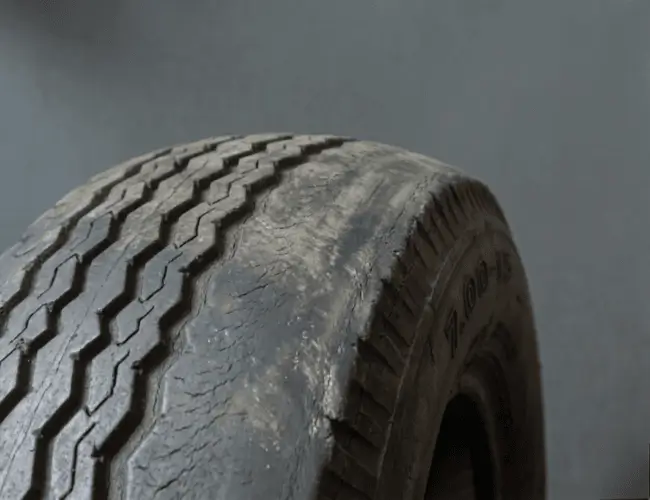
Not every rough ride originates within the suspension itself.
Tires can significantly influence ride quality, especially on classic vehicles.
Potential tire-related causes include:
- Overinflated tires
- Uneven tire wear
- Flat spots from long-term storage
- Tire age and deterioration
- Incorrect tire sizing
Classic cars that have remained parked for extended periods may develop tire flat spots that create vibration and ride harshness even after the vehicle returns to regular use.
Tire construction can also influence ride quality. A vehicle originally designed around a taller sidewall may ride more harshly after being fitted with low-profile tires, oversized wheels, or tires requiring higher inflation pressure.
Old tires may also become harder with age even when the tread depth appears acceptable.
For this reason, tire age, pressure, construction, size, balance, and storage history should be checked before assuming the suspension is the only cause.
Steering Component Wear
The steering system and suspension work together to maintain vehicle stability and ride quality.
As steering components wear, the vehicle may feel less controlled and less comfortable to drive.
Common wear items include:
- Tie rods
- Steering linkage
- Idler arms
- Pitman arms
- Steering box components
Wear in these areas can contribute to vibration, wandering, and an overall feeling of instability.
Long-Term Storage Can Accelerate Ride Quality Problems
Many classic cars spend months or years in storage.
Although limited driving reduces mileage accumulation, prolonged inactivity can still affect suspension and steering components.
Common storage-related issues include:
- Hardened rubber components
- Corrosion
- Dry rot
- Tire flat spotting
- Seized suspension components
For this reason, low-mileage classic vehicles sometimes require suspension repairs despite relatively little road use.
Can Suspension Modifications Cause a Rough Ride?
Yes. A classic car may ride poorly even when its suspension components are relatively new if the parts are not correctly matched to the vehicle.
Possible modification-related causes include:
- Springs that are too stiff or too short
- Incorrect shock absorbers
- Lowered suspension with insufficient travel
- Oversized wheels or low-profile tires
- Worn or incorrectly installed polyurethane bushings
- Air suspension operated at an unsuitable ride height
- Missing bump stops
- Incorrect front-end geometry
- Suspension components tightened while hanging rather than at normal ride height
A modified suspension should be evaluated as a complete system. Replacing one part may not correct the ride if spring rate, shock damping, tire construction, ride height, and available suspension travel do not work together.
How Do You Know If the Suspension Is Causing the Rough Ride?
Several symptoms may indicate that suspension wear is contributing to ride quality problems.
Common warning signs include:
- Excessive bouncing
- Clunking noises
- Steering wander
- Uneven tire wear
- Vehicle pulling to one side
- Increased body roll
- Harsh impacts over bumps
If multiple symptoms occur simultaneously, a suspension inspection is often recommended.
Can a Rough Ride Affect Vehicle Safety?
A rough ride is not always an immediate safety problem, but it should not be dismissed when it occurs with steering wander, pulling, excessive bouncing, uneven tire wear, braking instability, or sudden ride-height changes.
These combinations may indicate that the suspension is no longer controlling wheel movement or maintaining consistent tire contact.
A sudden or severe change in ride quality should be inspected before the vehicle is driven regularly.
How Is the Cause of a Rough Ride Diagnosed?
Diagnosing ride quality requires more than checking whether the shocks are leaking.
A classic car inspection may include evaluating:
- Tire pressure, age, size, balance, and flat spotting
- Shock absorber condition and resistance
- Spring condition and ride height
- Rubber or polyurethane bushing condition
- Ball-joint and steering-linkage movement
- Wheel-bearing play
- Suspension travel and bump-stop clearance
- Front and rear ride-height differences
- Corrosion or damage at suspension mounting points
- Whether the vehicle has been lowered or otherwise modified
The technician should also consider when the symptom occurs.
A vibration at a particular speed may point toward tires or wheels, while repeated bouncing after a bump more strongly suggests a ride-control problem.
Harshness over small road imperfections may indicate hardened bushings, incorrect tire pressure, stiff components, or limited suspension travel.
How Suspension Restoration Improves Ride Quality
Suspension restoration focuses on returning the vehicle to proper operating condition by repairing or replacing worn components.
Vehicle owners often ask about the cost of restoring a classic car suspension system before beginning a restoration project.
Depending on the vehicle’s condition, repairs may include:
- Shock absorber replacement
- Spring replacement or restoration
- Bushing replacement
- Ball joint replacement
- Steering component repairs
- Ride height correction
- Suspension alignment adjustments
Restoring these components can significantly improve comfort, handling, stability, and overall driving confidence.
Professional Classic Car Suspension Inspection in Huntington Beach
At Coastline Classic Car Restorations in Huntington Beach, we inspect and restore suspension systems for vintage, antique, muscle cars, and collector vehicles throughout Orange County.
Our team evaluates ride quality concerns by examining shock absorbers, springs, bushings, steering linkage, suspension geometry, ride height, and related components.
Whether your classic car feels harsh over bumps, unstable at highway speeds, or noticeably less comfortable than it once was, we perform detailed inspections tailored specifically to vintage automobiles.
Our classic car suspension repair and restoration services are designed to identify worn components and restore proper ride quality, handling, and driving comfort.
A properly functioning suspension helps your classic car deliver the comfort, stability, control, and driving experience it was originally designed to provide.
If you’re experiencing ride quality or handling issues, explore our classic car suspension repair and restoration services to learn how our team helps restore comfort, stability, and confidence behind the wheel.