

Classic car suspension work may cost approximately $1,500 for a limited restoration involving accessible wear components.
A comprehensive front-and-rear suspension project may cost $10,000 or more when it includes steering components, spring work, corrosion repair, difficult disassembly, specialty parts, or custom fabrication.
Minor repairs may cost less than this range, while rare vehicles, structurally damaged mounting areas, concours-level work, and projects requiring extensive rebuilding or fabrication may cost substantially more.
These figures are planning estimates rather than fixed prices. The final cost depends on what is discovered during inspection and disassembly.
Typical Cost Ranges for Classic Car Suspension Restoration
Classic car suspension restoration costs vary significantly depending on the vehicle, the condition of the suspension system, parts availability, and the level of restoration required.
While every project is unique, the following ranges provide a general overview of what owners can expect:
| Type of suspension work | Estimated range* | What may affect the price |
|---|---|---|
| Inspection and diagnosis | $100–$500+ | Road testing, measurements, disassembly, alignment checks, and diagnostic time |
| Shock absorber replacement | $300–$1,500+ | Access, shock type, number of shocks, hardware condition, and specialty fitment |
| Bushing replacement | $500–$2,000+ | Number of bushings, control-arm removal, pressing labor, seized hardware, and alignment |
| Ball-joint and steering repairs | $500–$2,500+ | Component count, steering design, parts availability, difficult disassembly, and alignment |
| Spring restoration or replacement | $500–$3,000+ | Coil versus leaf springs, re-arching, spring removal, ride-height correction, and related hardware |
| Comprehensive suspension restoration | $1,500–$10,000+ | Front/rear scope, steering work, corrosion, refinishing, fabrication, parts rarity, and restoration standard |
Planning estimates only. Actual costs depend on the vehicle, labor required, parts pricing, structural condition, and the agreed scope of work.
This is why a professional suspension inspection is often the most accurate way to determine restoration costs and identify which components require repair, rebuilding, or replacement.
Understanding exactly what is included in a classic car suspension restoration can also help owners better estimate project costs and restoration requirements.
How We Estimate Classic Car Suspension Restoration Costs
During an initial evaluation, we review the vehicle’s symptoms, ride height, suspension design, steering condition, tire wear, visible corrosion, mounting points, previous repairs, and restoration goals.
We then separate the project into three categories:
- Components that remain serviceable
- Components that can be rebuilt or restored
- Components that should be replaced for proper operation and reliability
When possible, the estimate also identifies expected parts, labor, alignment requirements, structural repairs, and optional refinishing work.
If hidden corrosion, seized hardware, damaged mounting points, or previous modifications are discovered after disassembly, the scope and estimate may need to be revised before additional work proceeds.
What Is Included in a Classic Car Suspension Restoration?
Suspension restoration involves more than replacing worn parts. The process focuses on restoring ride quality, handling, safety, and vehicle-appropriate suspension geometry.
Common restoration services may include:
- Suspension inspection
- Ride height evaluation
- Bushing replacement
- Ball joint replacement
- Tie rod replacement
- Steering component restoration
- Shock absorber replacement
- Coil spring or leaf spring restoration
- Suspension hardware replacement
- Alignment and geometry correction
The exact scope depends on the condition of the vehicle and the goals of the restoration project.
Does the Cost Cover the Front Suspension, Rear Suspension, or Both?
Cost depends heavily on whether the project covers:
- Front suspension only
- Rear suspension only
- Steering components
- Front and rear suspension
- Chassis and mounting-point repairs
- Complete disassembly, refinishing, and reassembly
A quote described as a “complete suspension restoration” should clearly state whether steering components, springs, shocks, hardware, refinishing, alignment, brakes, wheel bearings, and structural repairs are included.
Example of How a Suspension Estimate May Be Structured
A vehicle requiring front suspension work might have an estimate organized around:
- Initial inspection and measurements
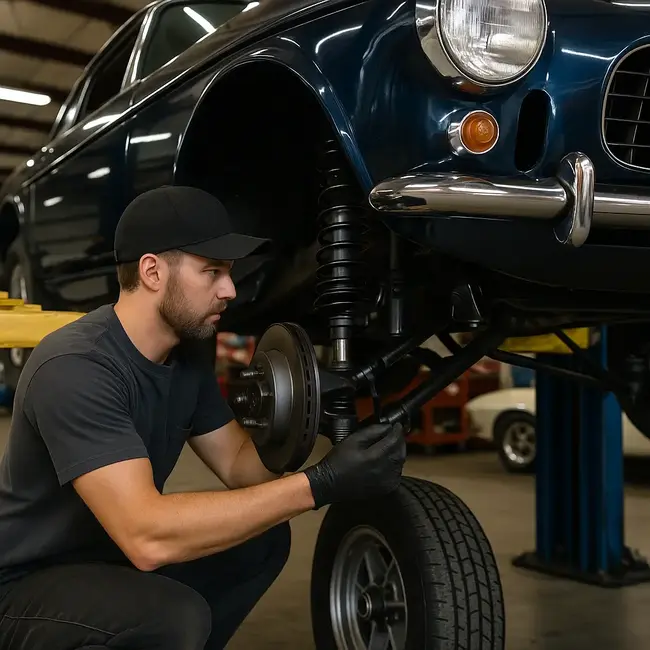
- Control-arm removal and installation
- Bushing and ball-joint replacement
- Steering-linkage repairs
- Spring and shock evaluation
- Replacement hardware
- Cleaning or refinishing
- Wheel alignment
- Road testing and final adjustments
This is an example of estimate structure, not a fixed package. Actual parts, labor, and pricing depend on the specific vehicle.
Why Do Suspension Restoration Costs Vary So Much?
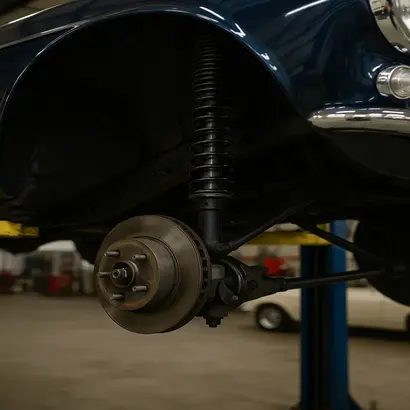
No two classic vehicles require the same level of restoration.
Some owners choose to maintain factory specifications, while others decide to restore or upgrade their classic car suspension to improve ride quality, handling, and overall drivability.
Several factors influence the final cost:
- Vehicle make, model, and suspension design: Some systems are simpler to service, while others require specialty tools, procedures, or extensive disassembly.
- Parts availability: Common components may be readily available, while rare parts may require rebuilding, reproduction sourcing, or fabrication.
- Front, rear, or complete scope: Restoring one axle is different from rebuilding the complete suspension and steering system.
- Component condition: Worn parts may be replaceable, while cracked, bent, seized, or corroded parts can add labor and repair requirements.
- Previous modifications or repairs: Incorrect parts, altered mounting points, and mixed suspension components may require additional diagnosis and correction.
- Structural corrosion: Damaged spring hangers, control-arm mounts, crossmembers, or chassis areas may need repair before suspension work can continue.
- Originality goals: Rebuilding and refinishing original components can require more labor than installing readily available replacements.
- Finishing requirements: Cleaning, plating, painting, powder coating, and factory-style markings can add significant labor and materials.
- Labor complexity: Seized bolts, difficult access, and unexpected damage can substantially change the time required.
A vehicle requiring only a few replacement components will cost considerably less than a complete suspension rebuild.
Suspension Inspection and Diagnosis Cost
Before restoration begins, a comprehensive inspection is usually necessary to identify worn or damaged components.
Many owners first seek an inspection after noticing signs their classic car needs suspension repair, such as poor handling, uneven tire wear, or excessive vehicle movement.
Inspections often evaluate:
- Suspension geometry
- Steering system condition
- Ride height
- Shock absorber performance
- Spring condition
- Alignment measurements
- Structural mounting points
Accurate diagnosis helps prevent unnecessary repairs and ensures the restoration plan addresses the actual cause of handling concerns.
Suspension Bushing Restoration Costs
Suspension bushings are among the most commonly replaced components on classic vehicles.
As rubber ages, bushings can crack, dry out, deform, or separate from their housings.
Replacing worn bushings may improve:
- Steering response
- Ride quality
- Suspension stability
- Alignment consistency
Because many classic vehicles contain numerous bushings throughout the suspension system, labor requirements can vary significantly.
Ball Joint and Steering Component Restoration Cost
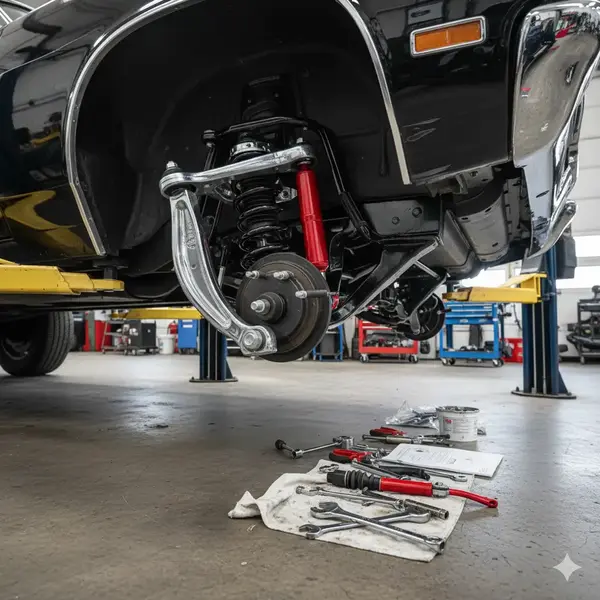
Ball joints and steering components are critical for vehicle control and suspension movement.
Components frequently replaced during restoration include:
- Ball joints
- Tie rod ends
- Center links
- Drag links
- Idler arms
- Pitman arms
Replacing worn steering and suspension components helps restore predictable handling and directional stability.
Spring Restoration or Replacement Cost
Coil springs and leaf springs gradually lose their original tension after decades of use.
When springs sag, the vehicle’s ride height changes, affecting suspension geometry and overall handling.
Depending on the vehicle, restoration may involve:
- Spring reconditioning
- Spring replacement
- Leaf spring rebuilding
- Ride height correction
Restoring proper ride height is often necessary before final alignment adjustments can be performed.
Shock Absorber Replacement or Rebuilding Cost
Most standard shock absorbers are replaced, but certain specialty, lever-arm, rebuildable, or historically significant dampers may be rebuilt by an appropriate specialist.
Cost depends on shock design, access, mounting condition, parts availability, and whether the vehicle requires standard replacements or specialty restoration.
Shock absorbers help control suspension movement and improve ride comfort.
Worn shocks may contribute to:
- Excessive body movement
- Reduced stability
- Poor ride quality
- Increased suspension wear
Replacing aging shocks is a common part of many suspension restoration projects.
Does Parts Availability Affect Restoration Cost?
Yes. Parts availability is often one of the largest factors influencing restoration cost.
Common muscle cars and popular classic vehicles generally have strong aftermarket support, making replacement parts easier to obtain.
Rare vehicles may require:
- Specialty suppliers
- Reproduction components
- Custom fabrication
- Refurbishment of original parts
These factors can significantly increase restoration costs and project timelines.
Is a Complete Suspension Restoration Worth It?
For many classic vehicle owners, suspension restoration improves more than ride comfort.
Benefits may include:
- Improved handling
- Better steering response
- Increased driving confidence
- Enhanced braking stability
- Reduced tire wear
- Improved vehicle safety
- Preservation of vehicle value
A properly restored suspension helps the vehicle perform closer to its original factory characteristics.
How Long Does Suspension Restoration Take?
Project timelines vary depending on:
- Vehicle condition
- Parts availability
- Scope of restoration
- Additional repairs discovered during inspection
Minor restoration projects may be completed relatively quickly, while comprehensive factory-correct restorations often require additional time to source parts and perform detailed work.
How to Reduce Classic Car Suspension Restoration Costs
Preventative maintenance can help reduce future restoration expenses.
Owners may reduce unnecessary restoration expense by:
- Obtaining a complete diagnosis before ordering parts
- Correcting tire and brake issues before assuming the suspension requires rebuilding
- Repairing mechanical looseness before paying for final alignment
- Avoiding repeated replacement of individual parts without inspecting the complete system
- Deciding early whether originality, drivability, or performance is the main goal
- Approving a written scope that identifies included and excluded work
- Addressing corrosion before it spreads into suspension mounting areas
- Maintaining tires, lubrication points, alignment, and steering components after restoration
Buying parts before the vehicle is inspected can sometimes increase costs if the components are incorrect, incompatible, or unnecessary.
Addressing small issues early often prevents larger and more expensive repairs later.
The cost ranges on this page are general planning estimates and are not binding quotes.
Pricing may change based on inspection findings, disassembly, parts availability, supplier pricing, fabrication requirements, and owner-approved changes to the restoration scope.
Professional Classic Car Suspension Restoration in Huntington Beach
At Coastline Classic Car Restorations in Huntington Beach, we perform detailed suspension inspections and restoration services for vintage, antique, and muscle cars throughout Orange County.
Our restoration process focuses on restoring factory suspension geometry, ride height, steering precision, and overall handling performance.
Whether your vehicle requires bushing replacement, spring restoration, steering repairs, shock replacement, or a complete suspension rebuild, our team develops a restoration plan tailored to the condition and goals of your classic vehicle.
For professional help, explore our classic car suspension repair services in Huntington Beach.
A properly restored suspension helps preserve vehicle value while delivering a safer, smoother, and more enjoyable driving experience.