

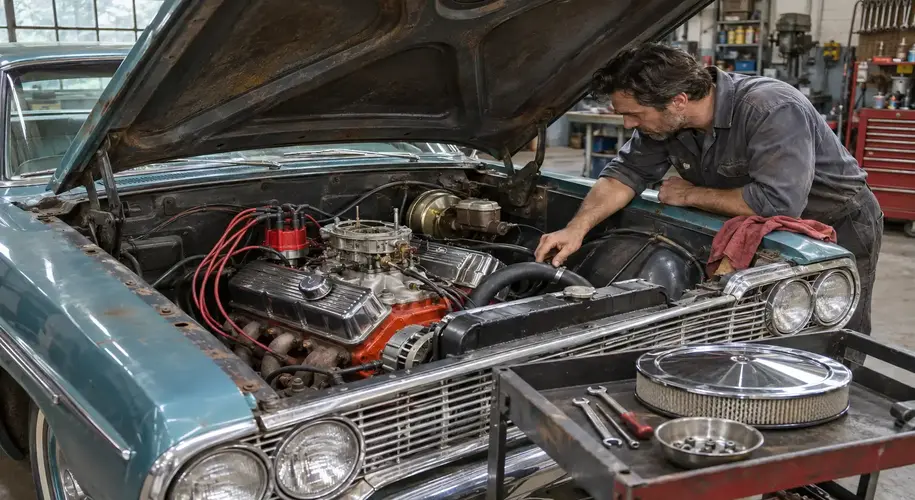
Common classic car engine problems include rough idle, hard starting, power loss, unusual noises, exhaust smoke, overheating, and oil leaks.
Possible causes: Ignition, fuel, and cooling faults, or internal wear.
Note when symptoms occur:
- During startup
- After warm-up
- At idle
- Under acceleration
Use the table below to identify initial checks and findings that require further investigation.
When to stop: Stop operating the engine if it develops sudden oil-pressure loss, deep knocking, or severe overheating.
Classic Car Engine Problems at a Glance
Checks vary by engine and installed equipment; carburetor, distributor, and PCV checks apply where fitted.
| Symptom | What to check first | Findings requiring further diagnosis |
|---|---|---|
| Rough idle or hard starting | Spark, timing, choke, fuel delivery, vacuum leaks, battery and grounds | Persistent misfire, valve leakage, or low compression |
| Loss of power | Timing advance, throttle operation, fuel supply, exhaust restriction | Compression loss, valve leakage, or camshaft wear |
| Knocking or ticking | Accessories, exhaust leaks, detonation, valvetrain, loose drivetrain components | Deep knock, bearing material, or verified low oil pressure |
| Blue smoke or oil consumption | External leaks, PCV system, valve seals and guides | Excessive blow-by and confirmed ring or cylinder leakage |
| Black smoke | Choke, air filter, carburetor, fuel pressure | Usually a fuel-mixture problem; assess any resulting oil contamination |
| Persistent white exhaust | Whether vapor clears after warm-up and whether coolant is disappearing | Internal coolant leakage, head-gasket failure, or a cracked casting |
| Overheating | Temperature reading, coolant, radiator, fan, thermostat, pump and belts | Compression loss, contaminated oil, or confirmed heat damage |
| Low oil pressure | Oil level, correct viscosity, gauge and sending unit | Low mechanical-gauge readings, bearing wear, or lubrication-system damage |
These are starting points for diagnosis. Similar symptoms can have different causes, and more than one fault may be present.
1. Rough Idle, Misfires, and Hard Starting
Start by checking:
- Spark plugs, wires, distributor cap, and rotor
- Ignition timing and advance
- Carburetor mixture, choke, and fuel delivery
- Intake and vacuum-hose leaks
- Battery condition, cranking speed, and grounds
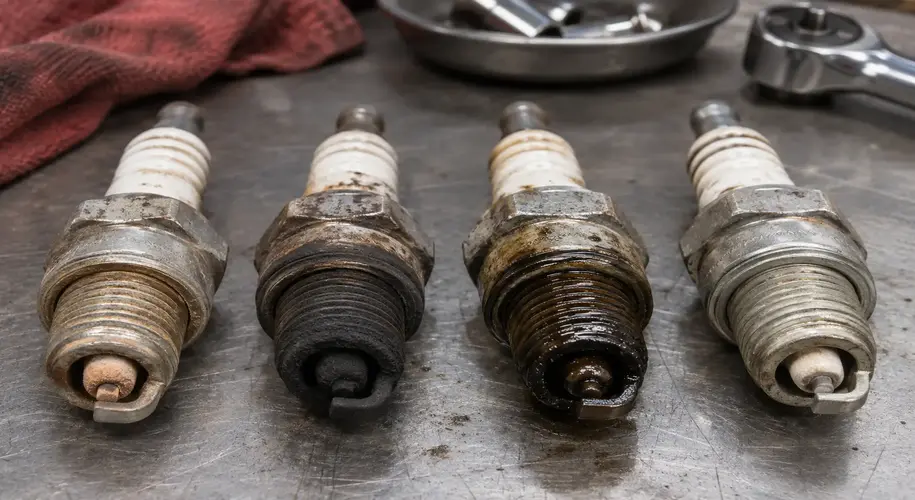
Record whether the problem occurs cold, hot, or throughout operation. Inspect the spark plugs for differences: oil fouling may indicate oil entering a cylinder, while a fuel-wet plug may reflect weak ignition or excess fuel.
If these checks do not explain the symptom, investigate valve adjustment, cylinder sealing, and valve timing.
2. Loss of Power or Poor Acceleration
Reduced power does not automatically mean internal engine wear. Ignition, fuel delivery, or restricted exhaust flow can also limit performance.
What to check first:
- Throttle: Full travel and proper linkage operation.
- Ignition: Initial timing and mechanical or vacuum advance, where fitted.
- Fuel delivery: Fuel pressure, volume, and carburetor accelerator-pump operation.
- Other resistance: Exhaust restrictions, brake drag, or transmission problems.
Note the pattern: Does the engine hesitate briefly, remain weak, or lose power only under load or at higher speeds? These differences help direct testing.
Next diagnostic step: If these checks do not explain the problem, assess cylinder sealing and valve operation.
3. Knocking, Ticking, and Other Engine Noises
A light tick near the cylinder head and a deep knock in the lower engine require different investigations.
Possible sources include:
- Loose pulleys, brackets, or accessory bearings
- Exhaust-manifold leaks
- Detonation related to fuel or ignition timing
- Incorrect valve adjustment or worn valvetrain components
- Loose or damaged flexplate or related drivetrain parts
Locate the source before recommending internal repairs. Stop operating an engine with a suspected deep internal knock until it has been inspected; continued operation can increase the damage.
4. Exhaust Smoke, Oil Consumption, and Blow-By
Exhaust color can help narrow the investigation, but smoke alone cannot determine the repair scope.
Blue Smoke, Oil Consumption, and Blow-By
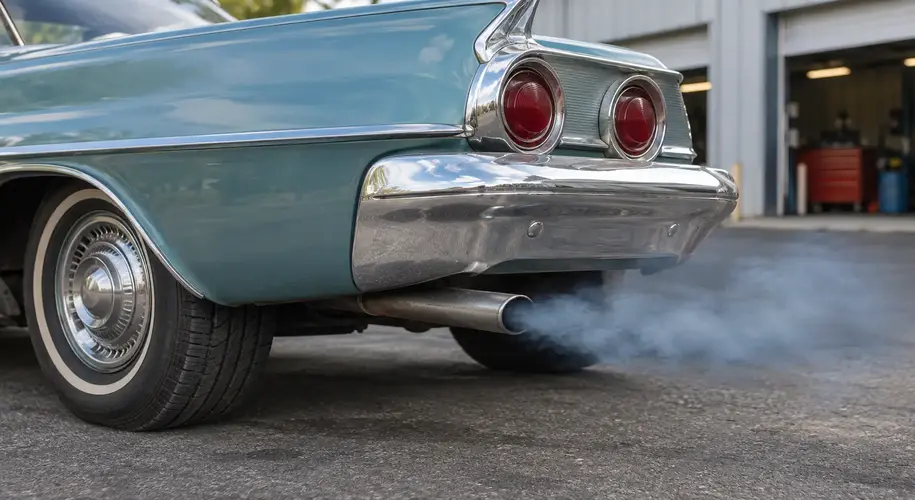
Blue smoke generally indicates burning oil. Possible causes include crankcase ventilation faults, worn valve seals or guides, piston-ring wear, and cylinder damage.
Smoke patterns that guide testing:
- At startup or during deceleration: May suggest valve-seal or guide wear.
- Under acceleration with excessive blow-by: May point toward ring or cylinder leakage.
These patterns guide testing but do not confirm the cause.
What blow-by means: Combustion gas passes the rings into the crankcase. Excessive pressure can push oil through seals or into the air cleaner, but restricted ventilation can produce similar symptoms.
What to check next:
- Check crankcase ventilation and external leaks.
- Document oil consumption.
- Use cylinder testing when needed.
Black Smoke
Black smoke generally points to an overly rich fuel mixture.
What to check:
- Choke and air filter
- Carburetor float level, needle and seat
- Fuel pressure and mixture settings
What it means: Black smoke is not direct evidence that the engine needs rebuilding. Correct the cause and check oil condition if excess fuel may have contaminated it.
White Smoke or Vapor
Distinguish the pattern:
- Light vapor that clears after warm-up: May be condensation.
- Persistent white exhaust with unexplained coolant loss: Warrants investigation for an internal leak.
Fel-Pro explains how cracked heads and blown head gaskets can produce similar symptoms.
Our guide to head-gasket failure in classic cars explains diagnostic tests and alternative causes.
5. Overheating
Verify the reading first: Gauge, sending-unit, wiring, or ground faults can give misleading temperature readings.
If overheating is confirmed, check:
- Coolant: Level and leaks.
- Heat transfer: Radiator flow and airflow, fan, and shroud operation.
- Cooling components: Thermostat, water pump, belts, hoses, and radiator cap.
- Engine settings: Ignition timing and fuel mixture.
When to stop: Shut down a severely overheating engine. Check coolant only after the system has cooled, and never remove a hot pressurized cap.
After severe overheating: Testing should establish whether damage is limited to the cooling system or also involves the head gasket, castings, or internal components.
6. Oil Leaks and Low Oil Pressure
For external leaks, inspect:
- Valve-cover gaskets and oil pan
- Engine seals
- Oil-pressure sending unit and oil-filter adapter
A leak alone does not establish widespread internal wear.
For low oil pressure:
- Check oil level and specified viscosity.
- Verify pressure with a mechanical gauge at the specified temperature and engine speed.
- Interpret the reading alongside engine noise and oil-filter findings.
Abnormal pressure may involve bearing clearances, crankshaft wear, the oil pump, pickup problems, or internal leakage.
When to stop: Sudden oil-pressure loss requires shutdown and investigation.
Tests That Help Identify Internal Problems
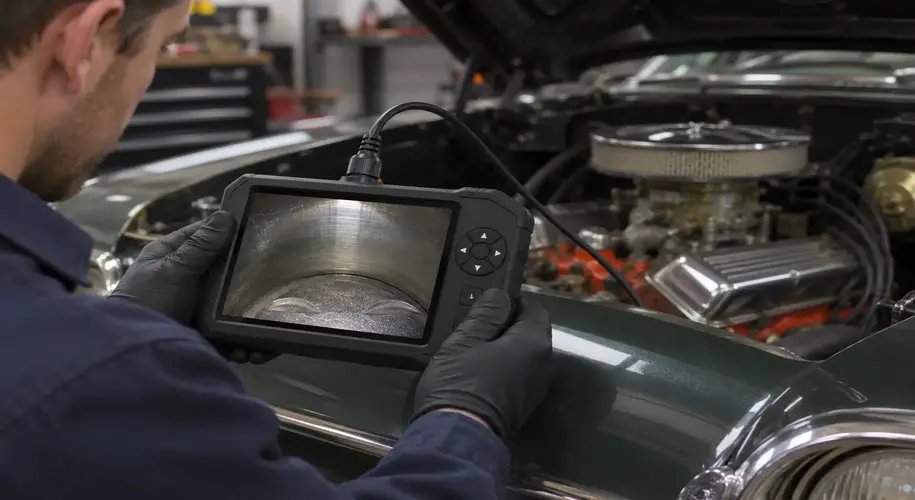
Choose tests according to the symptom and urgency. Suspected bearing failure or sudden oil-pressure loss requires immediate investigation.
| Test or inspection | What it helps establish |
|---|---|
| Compression test | Whether cylinder pressure is low or uneven |
| Leak-down test | Helps locate cylinder leakage through valves, rings, or other sealing paths |
| Mechanical oil-pressure test | Actual pressure under specified conditions |
| Oil-filter inspection | Whether abnormal wear debris is circulating |
| Borescope inspection | Visible cylinder, piston, or combustion-chamber damage |
| Cooling-system pressure and combustion-gas tests | Pressure testing checks for cooling-system leakage; combustion-gas testing checks for combustion gases in the coolant |
For the procedure and interpretation limits, learn how to perform a compression test on a classic car engine.
Ask for recorded readings and inspection findings. Abnormal metallic debris requires assessment before further operation; appearance alone cannot reliably identify its source.
Disassembly and measurement may be necessary to establish damage and repair requirements.
Can the Problem Be Fixed Without Rebuilding?
Yes. Some problems can be corrected without rebuilding the engine:
- Ignition faults and carburetor problems
- Vacuum leaks and external fluid leaks
- Localized mechanical faults
What the recommendation should explain:
- The diagnosed cause
- The proposed repair
- Evidence that the remaining engine is serviceable
When further inspection is needed: Testing that indicates broader internal damage may require additional inspection before the repair scope can be established.
Technician Insights: We’ve traced rough-running classic engines to ignition or carburetor faults that owners initially suspected were internal wear. That is why we test those systems before recommending major repairs.
When Should You Stop Driving?
Stop operating the vehicle if it develops:
- Sudden loss of oil pressure
- Severe overheating or steam with rapid coolant loss
- Fuel leakage or a strong raw-fuel smell
- Deep or rapidly worsening knocking
- Confirmed coolant contamination of the oil
- Heavy smoke with rapid oil loss
- Signs that the engine is beginning to seize
Arrange an inspection before restarting. Continuing to run a damaged engine can turn a repairable problem into crankshaft, connecting-rod, cylinder or block damage.
Get Help Identifying Your Engine Problem
Tell us:
- The symptoms
- When they occur
- What testing has already been performed
Coastline owner Chuck brings more than 14 years of classic car restoration experience to evaluating repair options.
Request an Engine Evaluation at our Huntington Beach shop to discuss the appropriate next step, or explore our classic-car engine rebuilding and restoration services.