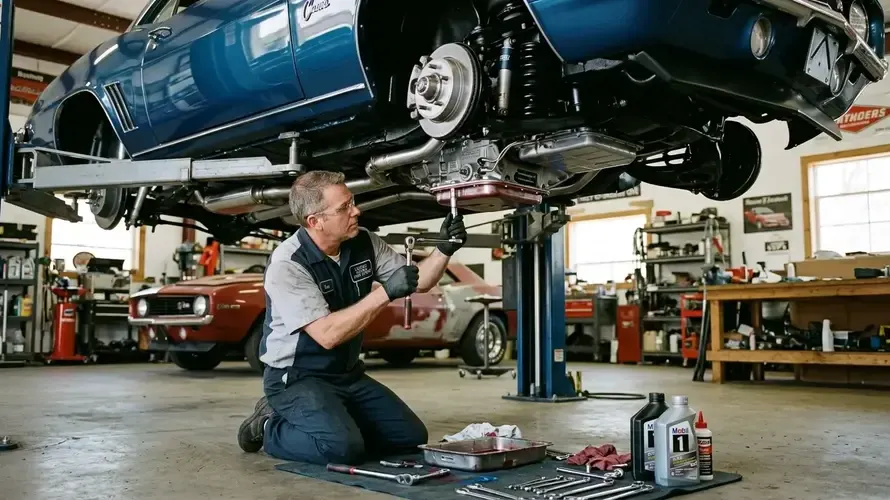


Choosing the wrong classic car transmission shop can cost thousands of dollars in poor workmanship, incorrect parts, repeat failures, and damaged collector value.
A trustworthy restoration shop should clearly explain:
- what parts are being replaced
- how the transmission is rebuilt
- whether original components are preserved
- what testing procedures are performed
- what warranty is included
- how documentation is handled
If a shop avoids detailed questions, gives vague pricing, or refuses to explain its process clearly, those are major warning signs.
The best classic car transmission shops focus on:
- transparency
- documentation
- restoration experience
- proper testing
- long-term reliability
Signs of a Trustworthy Transmission Shop
✔ Clear rebuild documentation
✔ Transparent pricing
✔ Experience with classic drivetrains
✔ Written warranty terms
✔ Proper testing procedures
✔ Careful parts sourcing
Common Red Flags
- Vague estimates
- No rebuild photos
- Unclear warranty coverage
- Cheap universal replacement parts
- Poor communication
- No testing explanation
Why Classic Car Transmission Restoration Is Different

Classic car transmissions are very different from modern commuter vehicle repairs.
Older drivetrains often involve:
- hard-to-find components
- factory-specific tolerances
- original castings
- collector authenticity concerns
- vintage drivetrain configurations
In some restorations, owners must also decide what to do when classic car transmission parts become extinct and original replacements are no longer readily available.
A shop that mainly repairs modern daily drivers may not fully understand:
- matching numbers preservation
- factory transmission markings
- OEM restoration standards
- classic driveline geometry
- collector expectations
That experience gap can become expensive quickly.
Ask About Their Experience With Your Transmission
Not every shop specializes in vintage drivetrains.
Before approving a rebuild, ask:
- Have they rebuilt your exact transmission before?
- Do they regularly work on classic cars?
- Can they explain common failure points?
- Are they familiar with factory specifications?
This matters for transmissions like:
- TH350
- TH400
- Powerglide
- C4
- C6
- 727 TorqueFlite
- Muncie
- 700R4
- 200-4R
A quality restoration-focused shop should discuss these drivetrains confidently without giving vague answers.
Ask How Parts Are Sourced
Parts sourcing is one of the biggest differences between a quality rebuild and a cheap rebuild.
Some shops use:
- low-grade universal kits
- inconsistent aftermarket parts
- incorrect clutch materials
- poor-quality seals and bushings
A professional shop should explain:
- where replacement parts come from
- whether OEM-style components are used
- how hard parts are inspected
- whether original components are preserved when possible
For collector vehicles, preserving original cases, tags, and stampings may matter significantly.
Ask Whether Original Components Will Be Preserved
For many classic cars, originality affects collector appeal and resale confidence.
Before approving a rebuild, ask:
- Will the original case be retained?
- Are factory stampings protected?
- Are original tags preserved?
- Will matching-number components remain intact?
Some careless rebuilds unintentionally damage:
- VIN stampings
- casting numbers
- factory tags
- original finishes
That can affect long-term authenticity later.
Ask About Rebuild Documentation
A trustworthy transmission shop should be willing to document the rebuild process.
Helpful documentation may include:
- teardown photos
- inspection findings
- damaged component analysis
- parts replacement lists
- rebuild invoices
This documentation helps:
- verify workmanship
- support future resale value
- build buyer confidence
Shops unwilling to document their work often create unnecessary risk for the customer.
Ask What Testing Procedures Are Performed
Testing procedures matter enormously in transmission restoration.
Ask whether the shop performs:
- hydraulic pressure testing
- leak inspection
- road testing
- converter evaluation
- shift quality verification
Some higher-end shops also use dyno testing or controlled validation procedures before delivery.
A shop unable to clearly explain its testing process is often a warning sign.
Ask Warranty Questions Carefully
Many customers ask:
“Does the rebuild include a warranty?”
A better question is:
“What exactly does the warranty cover?”
Important questions include:
- Is the warranty written?
- What failures are excluded?
- Is labor covered?
- Does improper installation void coverage?
- Are performance applications included?
Some shops advertise long warranties that contain major limitations hidden in the fine print.
A trustworthy shop should explain warranty terms clearly.
Shipping Practices Matter More Than Many Owners Realize
For owners preparing long-distance rebuilds, understanding the proper process for shipping a classic car transmission for restoration can help prevent avoidable damage and costly freight-related issues.
Improper shipping can damage freshly rebuilt transmissions before installation even begins.
Ask:
- How are transmissions packaged?
- Is the torque converter secured?
- Is freight insurance included?
- Are sensitive components protected during shipping?
Poor shipping preparation can lead to:
- cracked housings
- damaged shafts
- fluid contamination
- impact damage
Professional restoration shops usually take shipping preparation very seriously.
Warning Signs You May Be Getting Fleeced
Some transmission shops rely heavily on vague promises and low upfront pricing.
Common warning signs include:
- Extremely low quotes
- No rebuild photos
- Generic “one-size-fits-all” rebuild claims
- Unclear turnaround times
- Pressure to approve upgrades quickly
- No discussion of testing procedures
- Refusal to provide detailed invoices
A quality shop should explain its process clearly without avoiding technical questions.
Cheap Rebuilds Often Become Expensive Later
Many owners choose the cheapest rebuild quote only to later experience:
- fluid leaks
- slipping
- overheating
- poor shift quality
- premature failure
Correcting poor workmanship later often costs substantially more than rebuilding the transmission properly the first time.
Some owners also compare overdrive swaps vs original transmission rebuilds when deciding between improved drivability and preserving factory originality.
In classic car restorations, shortcuts frequently create long-term reliability problems.
Questions You Should Always Ask Before Approving a Rebuild
Important Questions
- What exactly will be replaced?
- Will original components be preserved?
- How is the transmission tested?
- Is documentation included?
- What warranty is provided?
- How are parts sourced?
- Have you rebuilt this transmission before?
- How is shipping handled?
A trustworthy shop should answer these questions comfortably and clearly.
Real-World Restoration Perspective
Many classic car owners do not realize how difficult it can be to correct a poorly rebuilt transmission until major problems appear after installation.
In some cases, the biggest issue is not mechanical failure itself — it is discovering:
- incorrect components
- damaged factory stampings
- poor assembly practices
- missing documentation
- improper driveline setup
A quality transmission restoration should improve:
- reliability
- drivability
- collector confidence
- long-term vehicle value
without sacrificing originality or creating unnecessary future problems.
Many collectors also consider how classic car transmission restoration affects resale value when evaluating drivetrain authenticity and documentation quality.
Frequently Asked Questions
How do I know if a transmission shop is trustworthy?
Look for transparency, documentation, clear communication, testing procedures, and experience with classic drivetrains.
Should a transmission shop provide rebuild photos?
Yes. Many reputable restoration shops document the rebuild process with teardown and assembly photos.
Do transmission rebuilds usually include warranties?
Many do, but warranty terms vary significantly. Always ask what is specifically covered or excluded.
Why does parts sourcing matter during a rebuild?
Low-quality aftermarket components may reduce reliability, drivability, and long-term durability.
Should matching numbers transmissions be preserved?
For many collector-grade classics, yes. Original cases, VIN stampings, and factory identifiers may affect authenticity and resale confidence.
Classic Car Transmission Restoration Services in Huntington Beach
At Coastline Classic Car Restorations in Huntington Beach, CA, we understand how important trust, documentation, workmanship quality, and drivetrain authenticity are during classic car transmission restoration.
Our restoration approach focuses on:
- Transparent rebuild processes
- Careful parts sourcing
- Collector-focused workmanship
- Proper testing procedures
- OEM authenticity preservation
- Thorough rebuild documentation
Whether your goal is long-term reliability, collector authenticity, or preserving drivetrain originality, choosing the right transmission shop plays a major role in protecting both your vehicle and your investment.
Need guidance on restoring your classic car transmission?
Contact Coastline Classic Car Restorations in Huntington Beach for professional classic drivetrain restoration consultation and collector-focused restoration planning.