

If your classic car overheats in traffic, loses coolant, or continues running hot after replacement parts have been installed, finding the cause is the first step toward a dependable repair.
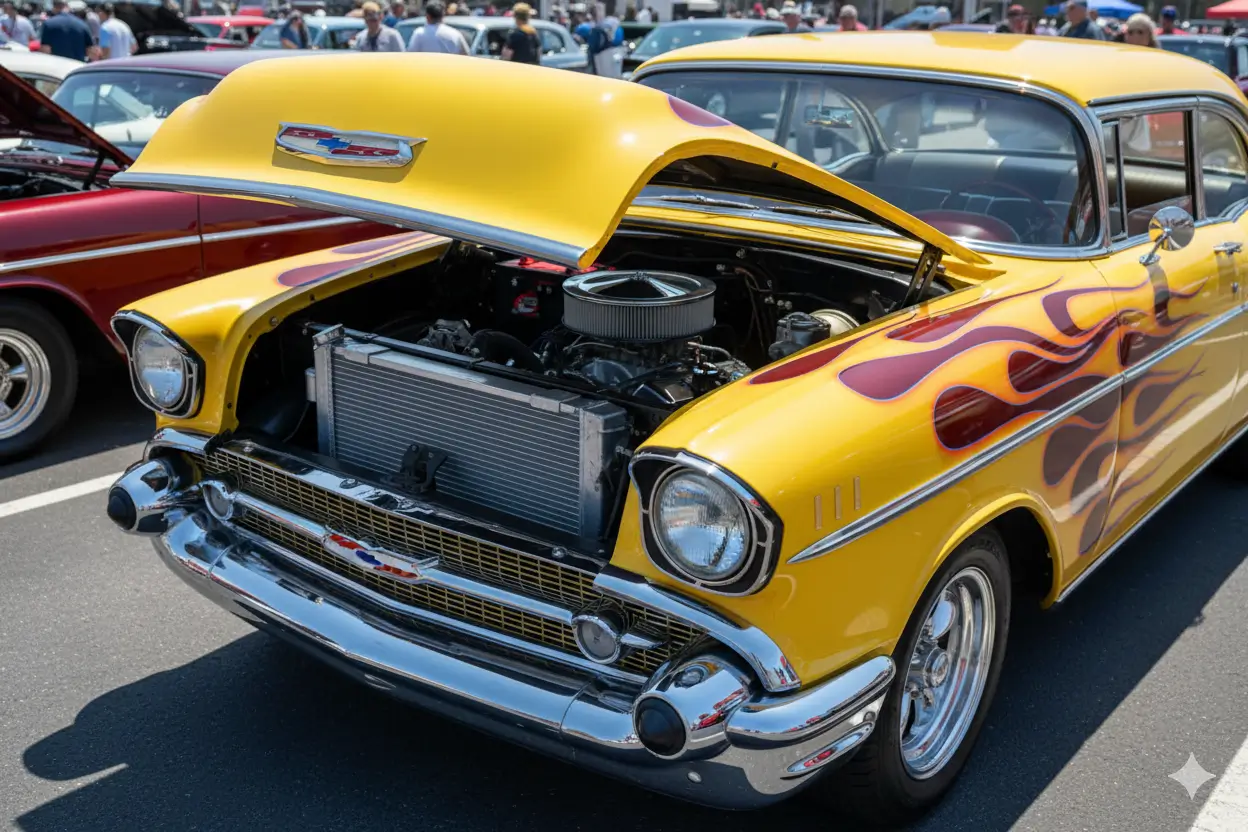
At Coastline Classic Car Restorations in Huntington Beach, we diagnose, repair, restore, and selectively upgrade classic-car cooling systems. Recommendations depend on the vehicle’s condition, original configuration, engine output, and intended use.
Your car may need one targeted repair, restoration of an original radiator, or coordinated work across several components. We explain the findings and recommended scope before work proceeds.
Based in Huntington Beach, we serve classic owners from Costa Mesa, Newport Beach and surrounding Orange County.
Cooling Problems We Evaluate
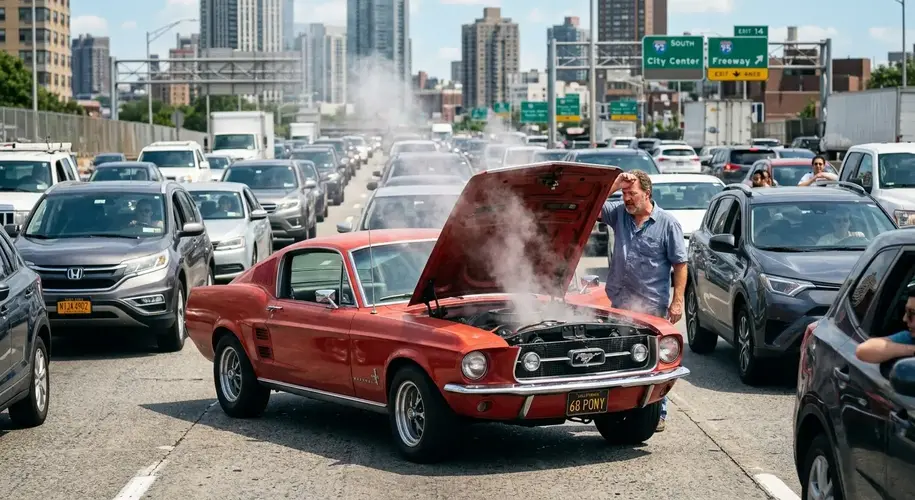
- Overheats at stoplights but cools once moving
- Develops recurring coolant leaks or unexplained coolant loss
- Runs hotter after engine modifications or added air conditioning
- Continues overheating after radiator, fan, thermostat, or water-pump replacement
These symptoms can involve airflow, coolant circulation, radiator condition, pressure loss, engine operation, or incompatible components.
If the temperature rises mainly while stationary, our guide to why classic cars overheat in traffic explains what that pattern can indicate.
If steam appears or the temperature continues climbing, pull over safely and shut down the engine. Never open a hot or pressurized radiator cap.
Our guide explains what happens if a classic car overheats and which symptoms warrant further investigation.
Classic-Car Cooling-System Services
The inspection findings determine which services are appropriate.
| Service area | Work that may be recommended |
|---|---|
| Radiator | Cleaning, localized repair, re-coring, replacement, or a capacity upgrade |
| Water pump and thermostat | Condition checks, compatibility assessment, service, or replacement |
| Fan and airflow | Mechanical-fan, fan-clutch, shroud, radiator-seal, or ducting correction |
| Hoses, belts, and connections | Replacement of deteriorated components and correction of routing or fitment |
| Pressure and coolant recovery | Cap, leak, overflow, and recovery-system correction |
| Coolant condition | Appropriate cleaning, flushing, compatible coolant replacement, and air removal |
Not every car needs every service. A confirmed hose leak may require a targeted repair, while corrosion, restrictions, or mismatched components may justify broader restoration.
For an explanation of the components and their roles, read How Classic Car Cooling Systems Work.
Our Evaluation and Restoration Process
1. Review the Vehicle and Your Goals
We begin with the engine configuration, overheating history, previous repairs, and intended use.
Tell us whether the vehicle retains its original engine, has added air conditioning, or includes changes to the radiator, fan, pulleys, or transmission cooling. We also discuss whether your priority is factory appearance, collector presentation, regular cruising, or operation in traffic.
This information helps distinguish a deteriorated original system from a configuration that no longer suits the vehicle’s requirements.
2. Identify the Cooling Limitation
Depending on the symptoms, evaluation may include:
- Actual temperature and dashboard-gauge verification
- Cooling-system, cap, and leak testing
- Thermostat, water pump, belt, hose, and pulley compatibility
- Related ignition, fuel-mixture, or engine-operation issues
We interpret the findings together before recommending parts. A temperature pattern or isolated test result does not always identify the failed component.
Our classic-car overheating diagnostic guide explains the troubleshooting sequence in more detail.
3. Explain the Recommended Work
We identify which components remain serviceable, which can be restored, and which require replacement. Optional improvements are distinguished from repairs needed to address confirmed faults.
The recommendation may involve preserving the existing arrangement, correcting previous modifications, or adding capacity when the vehicle’s heat load requires it.
4. Complete the Approved Work and Validate Operation
After the approved work, we refill the system with compatible coolant, remove trapped air using the appropriate procedure, inspect for leaks, and assess temperature behavior.
Validation may include warm-up and idle monitoring, fan-operation checks, pressure reinspection, road testing under relevant conditions, and coolant-level inspection after cooldown.
The checks depend on the work performed and the conditions that originally produced the problem.
Preserving Original Components or Selecting Upgrades
Radiator Restoration and Replacement
Original radiators may be repaired or re-cored while retaining usable components. Replacement may be needed when reliable restoration is impractical, while added capacity can address increased cooling demands.
Our radiator repair, re-core, replacement, and upgrade guide covers materials, fitment, airflow, and originality.
Mechanical Fans and Electric Conversions
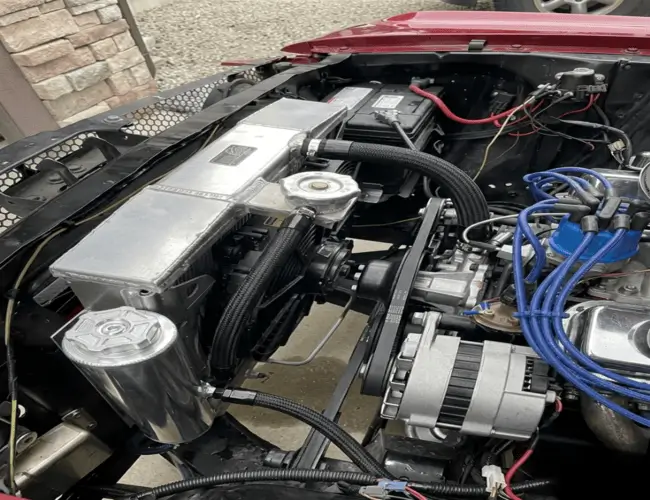
A correctly configured mechanical fan may remain the appropriate choice. We consider an electric conversion when the findings support an airflow improvement and the vehicle can accommodate the fan, shroud, controls, wiring, and electrical demand.
Read our guide to electric fan conversions for classic cars before choosing a conversion.
Why Choose Coastline for Classic-Car Cooling-System Restoration?
- 14+ years of restoration experience: Chuck brings hands-on classic car restoration experience to your project.
- Preservation-minded recommendations: We consider repairing or restoring usable original components before recommending replacement.
- Work matched to your vehicle: Recommendations account for engine modifications, originality goals, and intended use.
- Clear scope before work begins: We explain the findings and distinguish necessary repairs from optional upgrades.
- Standalone or coordinated service: Cooling-system work can be completed independently or as part of a broader mechanical restoration.
Frequently Asked Questions
How Much Does Classic-Car Cooling-System Restoration Cost?
Minor service or targeted cooling-system repairs may cost approximately $150–$500, major component work approximately $500–$1,500, and full restoration $1,500–$4,000+. These planning ranges cover different scopes. Your estimate depends on diagnosis, component condition, parts availability, accessibility, fabrication, and originality requirements.
Our cooling-system repair and restoration cost guide explains the ranges and what to compare in a written estimate.
How Long Does the Work Take?
Timing depends on the work required and the availability of parts or specialist radiator services. A targeted repair differs from a project involving re-coring, fabrication, or correction of previous modifications. We can discuss timing after evaluating the vehicle.
Can You Assess a Modified Engine or Restomod?
We consider the current engine, accessories, radiator, fan arrangement, electrical capacity, and intended use. Provide details of the modifications and any available parts or installation records when requesting an evaluation.
What Information Should I Provide When I Call?
Have the year, make, model, and engine details ready. Explain when the temperature rises, whether coolant is lost, what work has already been performed, and whether air conditioning or other modifications are fitted.
Request a Classic-Car Cooling-System Evaluation
Whether your classic needs a targeted repair, preservation of original components, or a carefully selected upgrade, start with an evaluation of the existing system.
Call (657) 540-8792 to discuss the symptoms, previous repairs, and your restoration goals.