

A classic car suspension restoration typically begins with a complete inspection of the suspension, steering, chassis, and mounting systems.
The process may then involve repairing, rebuilding, or replacing worn components such as bushings, ball joints, springs, shock absorbers, steering linkage, control arms, and suspension hardware.
Why Suspension Restoration Is Important for Classic Cars
The suspension system is one of the most important mechanical systems in any classic vehicle. It affects ride comfort, steering response, tire contact with the road, braking stability, and overall driving safety.
Many vintage and collector vehicles are several decades old. Even vehicles that have been stored indoors or driven infrequently can develop suspension issues caused by aging rubber components, metal fatigue, corrosion, and normal wear.
Understanding the most common signs of suspension wear in classic cars can help owners identify problems before they become more costly to repair.
A properly planned suspension restoration can help return the vehicle closer to its intended ride height, steering response, handling characteristics, and overall driving behavior.
Understanding Classic Car Suspension Systems
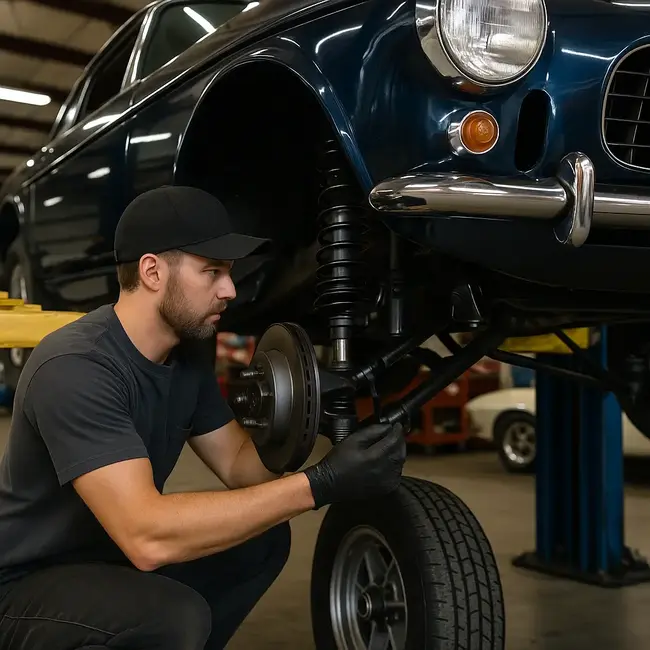
Classic vehicles were built using a variety of suspension designs depending on the manufacturer, model year, and intended vehicle use.
Common suspension configurations found on classic cars include:
- Independent front suspension
- Double wishbone suspension
- Solid axle suspension
- Coil spring suspension
- Leaf spring suspension
- Torsion bar suspension
- Kingpin front suspension systems
Whether restoring a classic Chevrolet, Ford, Pontiac, Cadillac, or vintage pickup truck, understanding the original suspension design is critical to achieving proper restoration results.
Each design requires a different inspection and restoration approach.
For example, a kingpin front suspension may require inspection of the pins, bushings, and spindle condition.
An independent front suspension may involve control arms, ball joints, coil springs, and frame-mounted pivots, while leaf-spring vehicles may also require evaluation of shackles, spring eyes, hangers, U-bolts, and axle-locating components.
For this reason, suspension restoration should follow the construction and service requirements of the specific vehicle rather than using one universal repair process.
Comprehensive Suspension Inspection and Evaluation
Every professional suspension restoration begins with a thorough inspection of the suspension, steering, and chassis systems.
Technicians evaluate the condition of components that directly affect vehicle handling, ride quality, and safety.
A typical inspection may include:
- Control arms
- Ball joints
- Suspension bushings
- Coil springs
- Leaf springs
- Shock absorbers
- Steering gearbox
- Tie rods
- Sway bars
- Frame mounting locations
- Suspension attachment points
- Ride height measurements
The inspection helps determine which components can be restored and which should be replaced.
During our suspension restoration inspections, we may document ride height, steering play, tire-wear patterns, suspension movement, visible corrosion, and previous repairs before determining which components should be restored, rebuilt, or replaced.
We also inspect the chassis and mounting areas before installing new suspension components.
Replacing bushings, springs, or steering parts without correcting a cracked mount, weakened spring hanger, or distorted attachment point may prevent the restored suspension from operating correctly.
Because every vehicle requires a different combination of repairs, many owners research classic car suspension restoration costs before beginning a full restoration project.
In many cases, owners also choose to restore or upgrade their classic car suspension system to improve drivability while maintaining the vehicle’s original character.
Suspension Bushing Inspection and Replacement
Rubber bushings are among the most frequently serviced components during a classic car suspension restoration.
Bushings allow controlled movement between suspension components while reducing vibration and noise transfer throughout the chassis.
Over time, rubber bushings can:
- Dry out
- Crack
- Harden
- Compress
- Lose elasticity
Commonly replaced bushings include:
- Control arm bushings
- Sway bar bushings
- Leaf spring bushings
- Strut rod bushings
- Body mount bushings
Replacing worn bushings restores proper suspension articulation and improves overall ride quality.
Ball Joint and Steering Component Restoration
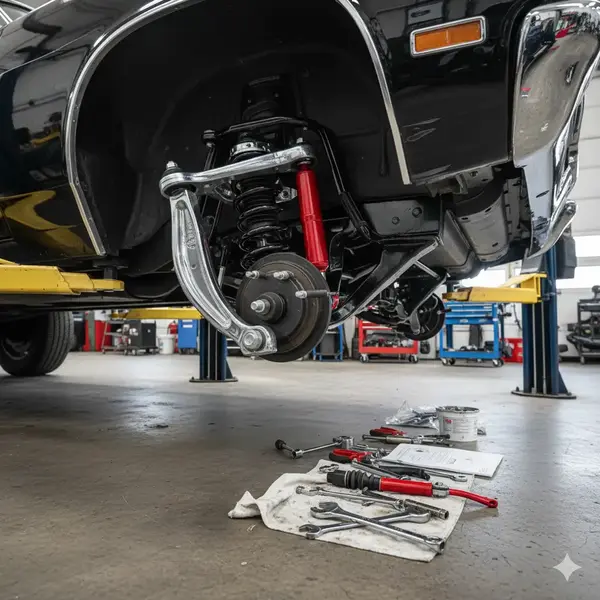
The steering system and suspension system work together to maintain vehicle control and directional stability.
As ball joints and steering linkage components wear, excessive play can develop, resulting in vague steering response and uneven handling.
Components commonly restored or replaced include:
- Ball joints
- Tie rods
- Center links
- Drag links
- Idler arms
- Pitman arms
- Kingpins
- Steering gearbox components
Restoring these systems helps improve steering precision and driver confidence.
Coil Spring and Leaf Spring Restoration
Springs support vehicle weight and play a major role in maintaining proper ride height and suspension geometry.
Over decades of use, springs may lose tension, sag, or become damaged.
Depending on the vehicle and component condition, restoration may include:
- Re-arching leaf springs
- Restoring original springs
- Replacing damaged springs
- Correcting ride height inconsistencies
- Installing factory-spec replacement components
Proper spring restoration helps ensure the vehicle maintains its intended stance and handling characteristics.
Shock Absorber Inspection and Replacement
Shock absorbers control suspension movement and help maintain tire contact with the road surface.
When shocks wear out, the vehicle may experience:
- Excessive bouncing
- Poor ride control
- Increased body roll
- Reduced handling stability
Technicians inspect shock absorbers for:
- Fluid leakage
- Corrosion
- Physical damage
- Reduced damping performance
Shock absorbers may provide reduced damping even when there is no obvious external fluid leak.
Inspection should also evaluate resistance through the shock’s travel, mounting condition, corrosion, physical damage, and whether the shock is correctly matched to the vehicle’s weight, spring rate, suspension design, and intended use.
Replacing worn shocks helps restore controlled suspension movement and driving comfort.
Suspension Hardware and Mounting Point Restoration
Suspension performance depends not only on major components but also on the hardware that secures them to the chassis.
During restoration, technicians inspect:
- U-bolts
- Mounting brackets
- Fasteners
- Spring perches
- Crossmembers
- Suspension attachment points
These components help maintain structural integrity and proper suspension alignment throughout the vehicle.
Chassis and Suspension Corrosion Repair
Corrosion is a common issue on classic vehicles, especially around suspension mounting locations and structural chassis components.
Technicians inspect for:
- Surface rust
- Pitting
- Metal deterioration
- Cracked mounting points
- Structural weakening
When necessary, damaged areas are repaired, reinforced, or restored to ensure the suspension system remains securely supported.
Addressing corrosion is essential for preserving both safety and long-term vehicle value.
Common Suspension Problems Found During Restoration
Every classic vehicle presents unique challenges during the restoration process.
Some of the most common issues discovered during suspension restorations include:
- Sagging leaf springs
- Worn kingpins
- Seized suspension fasteners
- Cracked control arm mounts
- Excessive steering play
- Corroded spring hangers
- Bent suspension components
- Previous non-original repairs
- Uneven ride height conditions
Identifying these issues early helps ensure a more complete and reliable restoration.
Original Components vs Replacement Parts
One important decision during suspension restoration is determining whether original components should be restored or replaced.
Depending on the vehicle and part availability, technicians may use:
- Restored original components
- OEM-style replacement parts
- Reproduction suspension components
- Custom-fabricated restoration parts
The appropriate approach depends on the vehicle’s intended use, restoration goals, originality requirements, and component condition.
The following general framework helps explain how component condition may influence the restoration approach:
| Component condition | Possible approach |
|---|---|
| Original and structurally sound | Clean, inspect, rebuild, or refinish |
| Worn but rebuildable | Rebuild using serviceable replacement parts |
| Severely worn or structurally damaged | Replace |
| Unavailable original part | Reproduction or custom-fabricated solution |
| Modified vehicle | Evaluate as a complete geometry and handling system |
Suspension Geometry and Wheel Alignment
Once repairs and component restoration are complete, suspension geometry must be verified and adjusted.
Technicians evaluate:
- Ride height
- Camber
- Caster
- Toe
- Steering center position
Alignment targets should account for the vehicle’s original specifications, current ride height, tire construction, steering condition, suspension modifications, and intended use.
A classic car fitted with modern radial tires, altered ride height, or non-original suspension components may require careful evaluation rather than automatically applying one universal alignment setting.
Proper alignment helps ensure predictable handling, even tire wear, and optimal suspension performance.
Road Testing and Final Adjustments
Following restoration, the vehicle undergoes road testing to verify system performance under real-world driving conditions.
Technicians evaluate:
- Steering response
- Ride comfort
- Vehicle tracking
- Suspension operation
- Noise and vibration levels
- Overall handling characteristics
Final adjustments are made as needed to ensure all suspension and steering components function together correctly.
What Drivers Typically Notice After Suspension Restoration
After a classic car suspension restoration is completed, many owners notice immediate improvements in how the vehicle feels and performs on the road.
Common improvements may include:
- A smoother and more comfortable ride
- More responsive steering input
- Increased stability during acceleration, braking, and cornering
- Reduced suspension noise and vibration
- Proper ride height and vehicle stance
- More consistent tire contact with the road surface
- Improved tire wear patterns
- Greater overall driving confidence
Because the suspension system directly affects handling, comfort, and vehicle control, restoring worn components often results in one of the most noticeable driving improvements a classic car owner can experience.
Frequently Asked Questions
How long does a classic car suspension restoration take?
The timeline depends on the vehicle’s condition, disassembly requirements, corrosion, parts availability, fabrication needs, and the overall scope of work.
A limited suspension repair may be completed more quickly, while a full suspension and chassis restoration may require substantially more time.
An accurate estimate can usually be provided only after the vehicle has been inspected and the required repairs have been identified.
Can original suspension components be restored?
Many original suspension components can be cleaned, rebuilt, repaired, or refinished when they remain structurally sound and suitable for continued use.
Components with severe wear, cracking, distortion, corrosion, or structural damage may require replacement. The decision should consider safety, originality goals, parts availability, and how the vehicle will be driven.
Is suspension restoration necessary if the vehicle is rarely driven?
Yes. Rubber components, springs, and suspension hardware continue to age even when a vehicle is stored. Restoration can help address deterioration caused by time rather than mileage.
Professional Classic Car Suspension Restoration in Huntington Beach
At Coastline Classic Car Restorations in Huntington Beach, we provide comprehensive suspension restoration services for vintage, and collector vehicles throughout Orange County.
Our restoration specialists carefully inspect suspension, steering, and chassis components, identify age-related wear and structural concerns, and perform detailed restoration work designed to preserve vehicle authenticity while improving performance and drivability.
Whether your vehicle requires a complete suspension rebuild, steering system restoration, chassis repair, or ride height correction, our team delivers the craftsmanship, attention to detail, and restoration expertise expected for professional classic car restoration.
A properly restored suspension system helps preserve ride quality, steering precision, handling performance, and the driving experience that makes classic vehicle ownership truly rewarding.